
In today’s digital-first economy, LinkedIn is more than just a resume repository—it’s a strategic platform where businesses establish credibility, attract high-value clients, and form partnerships that drive growth. A polished, intentional LinkedIn presence can position you as an authority in your field, even before a prospect meets you. Yet, many professionals treat their profiles as afterthoughts, missing out on visibility, trust-building, and opportunity. The difference between a passive profile and one that actively generates leads lies in deliberate optimization. These essential steps will help you craft a compelling, results-driven LinkedIn presence tailored for business impact.
1. Optimize Your Headline and Profile Picture
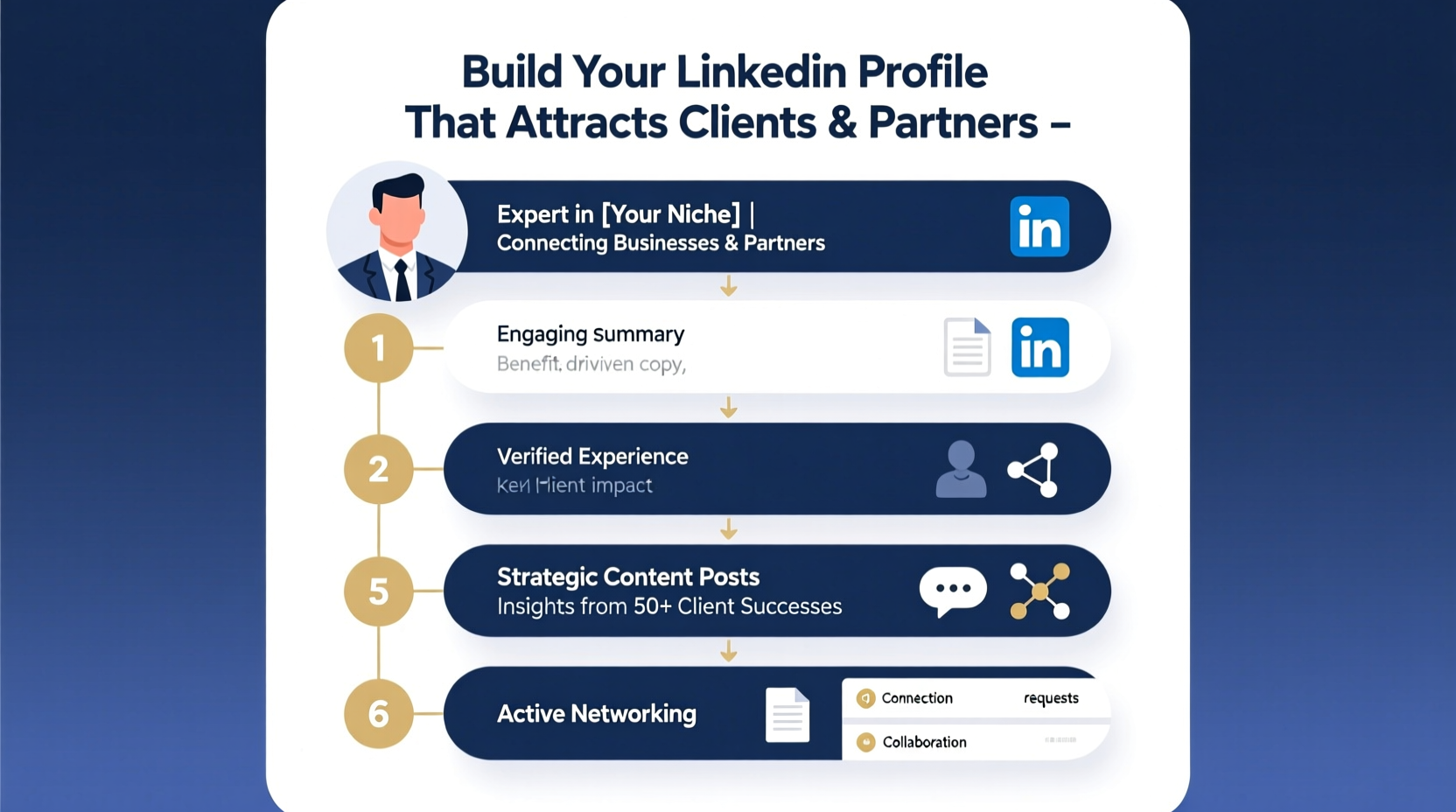
Your headline is the first thing people see under your name—don’t waste it on just your job title. Instead, use it to communicate value. Replace “Marketing Manager at XYZ” with “Helping SaaS Companies Scale Through Data-Driven Content Strategy.” This instantly clarifies who you serve and how you add value.
Your profile photo should be professional but approachable. Use a high-resolution headshot with good lighting, a neutral or branded background, and attire appropriate for your industry. Avoid group photos, selfies, or overly casual images. Remember: people form judgments within seconds. Your photo sets the tone for credibility.
2. Craft a Client-Focused Summary That Tells a Story
The About section is your elevator pitch. It should not list responsibilities—it should articulate your mission, expertise, and the transformation you offer. Begin with a strong opening sentence that speaks directly to your ideal client. For example: “I help mid-sized tech firms close 30% more enterprise deals by redesigning their sales outreach strategy.”
Structure your summary in three parts:
- Who you help – Define your target audience (e.g., founders, HR directors, startups).
- What problem you solve – Be specific about pain points you address.
- How you do it differently – Highlight methodology, experience, or unique outcomes.
Include metrics when possible (“Increased client ROI by 75%”) and end with a subtle call to action like “Let’s connect if you’re scaling your team and need better hiring systems.” Keep it concise—three to five short paragraphs max.
3. Showcase Expertise with Strategic Experience and Featured Content
Under the Experience section, go beyond job descriptions. Frame each role around achievements and client impact. Use bullet points to highlight measurable results: “Grew LinkedIn engagement by 200% in six months,” or “Secured $1.2M in new contracts through targeted outreach.”
Leverage the Featured section to pin posts, articles, case studies, or media that demonstrate your expertise. This is prime real estate—use it wisely. Feature content that showcases thought leadership, client success stories, or free resources (e.g., a downloadable guide). When prospects visit your profile, they should immediately see proof of your value.
| Do | Don't |
|---|---|
| Use active voice: “Led a rebrand that increased conversions by 40%” | Write passively: “Responsible for overseeing marketing campaigns” |
| Feature a case study showing client results | Leave the Featured section empty |
| Link to published articles or portfolio work | Only list job titles without context |
4. Build Credibility with Skills, Endorsements, and Recommendations
LinkedIn’s algorithm favors profiles with strong social proof. Select up to 10 core skills that align with your business offering—prioritize those your clients actually care about (e.g., “Lead Generation,” “Strategic Partnerships,” “Brand Positioning”). Encourage colleagues and clients to endorse these skills.
Even more powerful are written recommendations. A third-party endorsement carries far more weight than self-promotion. Politely request recommendations from past clients or collaborators. Offer to write one in return. Focus on quality over quantity—one detailed recommendation from a respected industry figure is worth ten generic ones.
“Your LinkedIn profile isn’t about you—it’s about the confidence you inspire in others. Social proof turns curiosity into trust.” — Priya Mehta, B2B Growth Consultant
5. Grow Visibility with Consistent Content and Engagement
A static profile gets overlooked. To attract clients and partners, you must be seen regularly. Share valuable content weekly—insights, quick tips, industry trends, or behind-the-scenes looks at your process. Aim for substance over frequency: one thoughtful post per week beats five shallow updates.
Engagement matters just as much as publishing. Comment meaningfully on posts from peers in your niche. Congratulate connections on milestones. Answer questions in relevant groups. This builds familiarity and positions you as accessible and generous with knowledge.
Mini Case Study: How a Financial Consultant Doubled Her Inbound Leads
Sarah Kim, an independent financial advisor for small business owners, updated her LinkedIn profile using these principles. She rewrote her headline to “Helping Service-Based Entrepreneurs Build Tax-Efficient Wealth,” crafted a story-driven About section, and added two client recommendations. She began posting biweekly tips on retirement planning for solopreneurs and engaged with local business groups online.
Within three months, her profile views increased by 320%, and she received seven inbound inquiries—all from ideal clients. Two became long-term retainers. “I didn’t change my service,” she said. “I changed how I showed up. People finally understood what I do and why it matters.”
Step-by-Step Guide to Launching Your High-Impact Profile
- Define your ideal client: Who do you want to attract? Be specific in industry, role, and challenges.
- Optimize your photo and headline: Use a professional image and a benefit-driven headline with keywords.
- Write a compelling About section: Focus on client outcomes, not job history.
- Update experience with results: Replace duties with achievements using numbers.
- Add featured content: Pin 3–5 pieces that showcase expertise.
- Gather recommendations: Request 2–3 personalized endorsements from clients or partners.
- Launch a content rhythm: Post once a week and engage daily for 10 minutes.
FAQ
How often should I update my LinkedIn profile?
Review and refresh your profile every 3–6 months. Update it immediately after landing a major client, launching a new service, or achieving a significant result. Small tweaks keep it current and signal activity to the algorithm.
Should I include personal interests in my profile?
Selectively. If your hobbies reinforce your brand—like marathon running for a productivity coach—it can humanize your profile. But avoid unrelated details unless they spark conversation with your target audience.
Can I use LinkedIn to generate B2B leads without being pushy?
Absolutely. Focus on providing value first—share insights, comment helpfully, and publish useful content. Over time, prospects will reach out. Trust precedes transactions.
Final Checklist: Is Your Profile Ready?
- ✅ Headline clearly states who you help and how
- ✅ Profile photo is professional and high-quality
- ✅ About section tells a compelling story focused on client outcomes
- ✅ Experience includes quantified achievements, not just duties
- ✅ At least three skills are endorsed
- ✅ You have 2+ written recommendations
- ✅ Featured section highlights your best content
- ✅ You’ve published or shared content in the last 30 days
Take Action Today
Your LinkedIn profile is a 24/7 ambassador for your business. It introduces you, explains your value, and invites connection—whether you’re actively networking or not. By investing time in a strategic, client-centered profile, you create a foundation for organic growth, stronger partnerships, and consistent opportunity flow. Don’t wait for the perfect moment. Audit your profile tonight. Make one improvement. Then keep going. The most powerful professional networks are built not overnight, but one intentional step at a time.




 浙公网安备
33010002000092号
浙公网安备
33010002000092号 浙B2-20120091-4
Comments
No comments yet. Why don't you start the discussion?