
A small bucket bag is a stylish and practical accessory that blends fashion with function. Compact by design, it encourages thoughtful curation of essentials rather than overpacking. Yet its limited interior can pose challenges when trying to fit everything needed for a day out or a quick trip. The key isn’t just what you carry—but how you organize it. With smart techniques, even the smallest bucket bag can hold more than expected, keeping your belongings accessible and your look polished.
Understand Your Bag’s Structure and Capacity
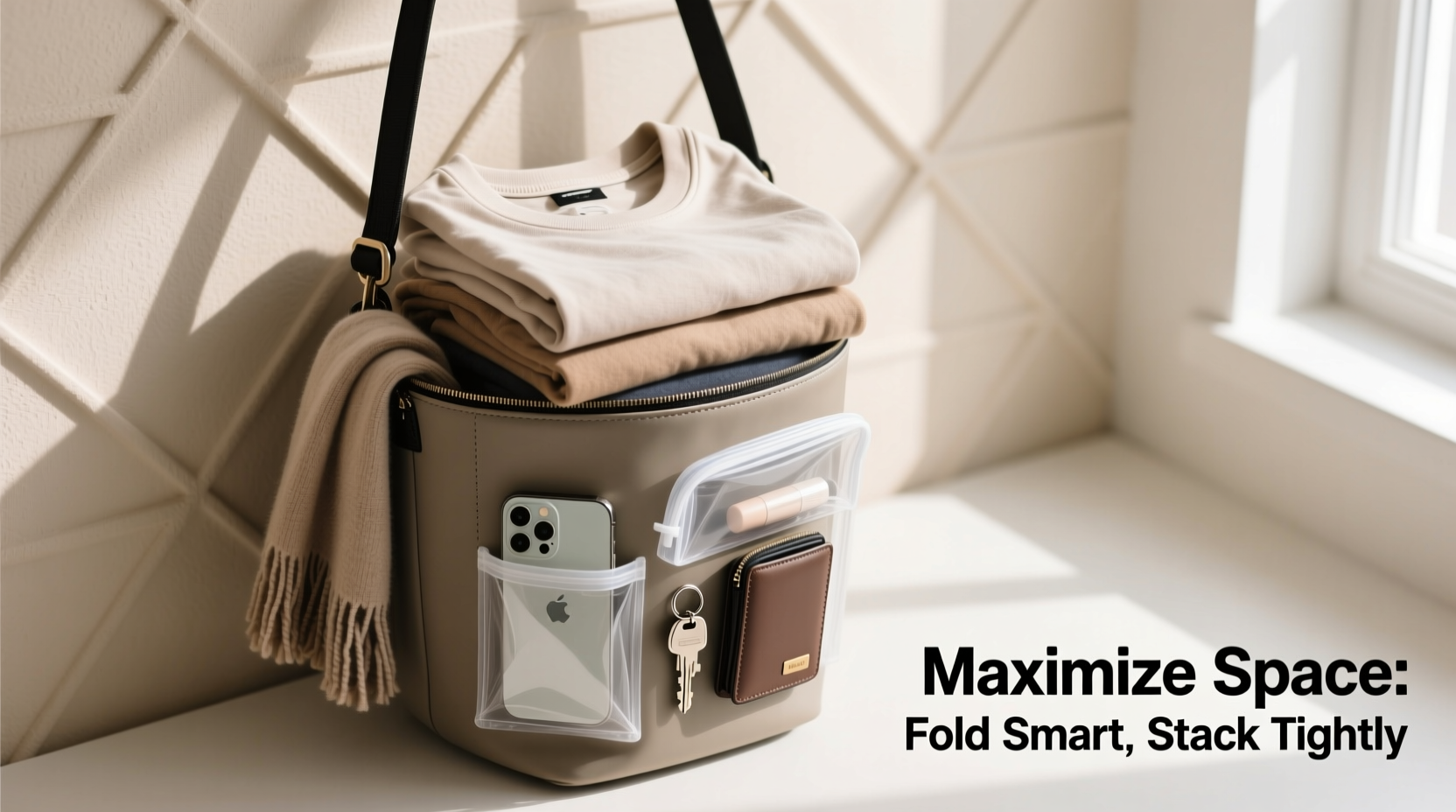
Before filling your bucket bag, take time to assess its physical layout. Most feature a cylindrical shape with a drawstring or magnetic closure, often including an internal zip pocket or slip compartment. Recognizing these built-in zones helps determine where items should go. Measure the depth and diameter if possible—many compact bucket bags offer only 5–7 inches in height and width, leaving little room for bulk.
Material also affects usability. Stiffer leather holds shape better but offers less flexibility for squeezing in extras. Soft canvas or nylon may compress under pressure but risks losing structure when overstuffed. Knowing your bag’s limits prevents frustration later.
“Efficient packing starts with understanding volume, not just capacity. A well-shaped bag has hidden cubic inches waiting to be optimized.” — Lena Torres, Travel Organizational Designer
Prioritize Essentials with a Capsule Approach
Treat your bucket bag like a capsule wardrobe: every item must earn its place. Start by listing non-negotiables based on your daily routine. For most urban dwellers, this includes phone, wallet, keys, lip balm, hand sanitizer, and sunglasses. Beyond that, additions should serve a clear purpose—not convenience or habit.
To refine further, ask three questions before adding anything:
- Will I genuinely need this within the next few hours?
- Is there a smaller or multi-use alternative?
- Can I access it easily without unpacking the whole bag?
This mindset shifts focus from “just in case” to “only because.” Over time, it becomes easier to leave behind redundant items like bulky coin purses or full-size lotion bottles.
Optimize Layout with Strategic Layering
Maximizing space isn’t about stuffing—it’s about stacking intelligently. Use the principle of functional layering: heavier, denser items at the bottom; frequently accessed ones in the middle; lightweight fillers on top.
Begin with flat, rigid objects like your phone and cardholder placed vertically along the inner wall. This creates a stable base and frees up central volume. Next, add medium-weight items such as a compact mirror or lipstick. Finish with soft, compressible pieces like a folded scarf or tissue packet to fill gaps and prevent shifting.
If your bag has an internal pocket, reserve it exclusively for high-priority smalls: medication, earbuds, or emergency cash. Avoid using it for receipts or loose change—those create clutter and reduce retrieval speed.
Step-by-Step Packing Sequence
- Empty the bag completely and wipe interior if needed.
- Place heaviest flat items against the side walls.
- Add mid-sized essentials in the center, grouped by use (e.g., beauty, tech).
- Insert frequently used items near the top third of the bag.
- Fill remaining air pockets with soft accessories like gloves or a foldable mask.
- Secure closure and test accessibility while walking.
Use Space-Saving Accessories and Hacks
Dedicated organizers can transform how much fits—and how quickly you find things. Consider investing in slim, flexible tools designed for micro-spaces:
- Mini pouches: Use clear silicone cases for makeup or pills—visible contents mean no digging.
- Flat cardholders: Replace bulky wallets with RFID-blocking sleeves holding only daily cards.
- Foldable totes: Tuck a compressed reusable bag into the bottom layer for impromptu purchases.
- Magnetic clips: Attach keys to a clip anchored inside the bag to eliminate jingle and save space.
Another effective hack is downsizing product sizes. Transfer hand cream into a 10ml travel jar, carry a single-use perfume vial instead of a full bottle, or opt for a credit-card-sized power bank. These micro-adjustments compound, freeing up critical cubic inches.
| Item | Bulk Version | Space-Smart Swap |
|---|---|---|
| Wallet | Bi-fold with 8+ cards | Slim sleeve with 3–4 essential cards |
| Hand Sanitizer | 50ml plastic bottle | 10ml refillable metal atomizer |
| Makeup | Full palette + brush | Multi-stick (cheek/lip/eye) + fingertip application |
| Keys | Keyring with fobs | Minimalist tracker tag or carabiner clip |
Real-Life Example: Commuting with Constraints
Sophie, a graphic designer in Brooklyn, switched to a mini bucket bag after years of lugging oversized totes. Initially frustrated by the reduced space, she developed a system over two weeks. She replaced her leather wallet with a fabric cardholder, transferred moisturizer into a tiny tin, and began carrying only one lipstick shade per season. She also started storing a foldable tote in the outer slip pocket—a move that eliminated last-minute grocery stress.
Within a month, Sophie found herself arriving at meetings calmer and more organized. “I don’t miss the clutter,” she said. “Now I open my bag and see exactly what I need. It’s like digital desktop versus messy files.” Her experience proves that constraints can enhance efficiency when paired with intentional habits.
Common Mistakes That Waste Space
Even experienced packers fall into traps that sabotage space optimization. Watch for these frequent errors:
- Doubling up on similar items: Carrying both chapstick and liquid lip balm wastes room.
- Keeping old receipts or wrappers: Debris accumulates and blocks access to real essentials.
- Overloading compartments: Filling every pocket defeats the purpose of organization.
- Ignoring weight distribution: Top-heavy bags tilt forward and feel unbalanced.
FAQ
Can I carry a water bottle in a small bucket bag?
Only if it’s a collapsible silicone bottle under 12oz. Rigid bottles rarely fit without distorting the bag’s shape or blocking other items.
How do I keep my bag from sagging when packed?
Maintain structural integrity by placing firm items like your phone or a small notebook upright along the perimeter. Avoid overfilling past the closure point.
What’s the best way to clean a bucket bag without damaging its form?
Spot-clean with a damp cloth and pH-neutral cleaner. Never submerge it. Let it dry upright with tissue paper inside to preserve shape.
Final Checklist for Smarter Packing
- Inventory all current contents—remove duplicates and expired items.
- Select only daily-essential categories (ID, payment, phone, hygiene).
- Downsize products to travel-friendly formats.
- Arrange items by frequency of use and weight.
- Test accessibility while moving—can you grab your phone without emptying the bag?
- Reset nightly to maintain order and prevent buildup.
Conclusion
Mastering the art of packing a small bucket bag isn’t about fitting more—it’s about needing less. By embracing minimalism, leveraging smart accessories, and organizing with precision, you turn spatial limitations into advantages. A streamlined bag reduces decision fatigue, enhances mobility, and elevates your everyday aesthetic. The discipline cultivated through efficient packing often spills over into other areas of life, promoting clarity and intentionality.




 浙公网安备
33010002000092号
浙公网安备
33010002000092号 浙B2-20120091-4
Comments
No comments yet. Why don't you start the discussion?