
Many people find themselves trapped in a cycle of endless scrolling through news feeds, social media, or viral videos long after they intended to go to sleep. This habit—commonly known as doomscrolling—often begins innocently enough: just five more minutes online before bed. But those minutes stretch into hours, leaving you mentally drained, emotionally unsettled, and physically exhausted the next day. The consequences extend beyond poor sleep; chronic doomscrolling can heighten anxiety, reduce attention span, and disrupt emotional regulation. The good news is that this behavior isn’t inevitable. With intentional changes and structured routines, it’s possible to break free from the digital vortex and restore balance to your evenings.
Understanding Doomscrolling: Why It Happens
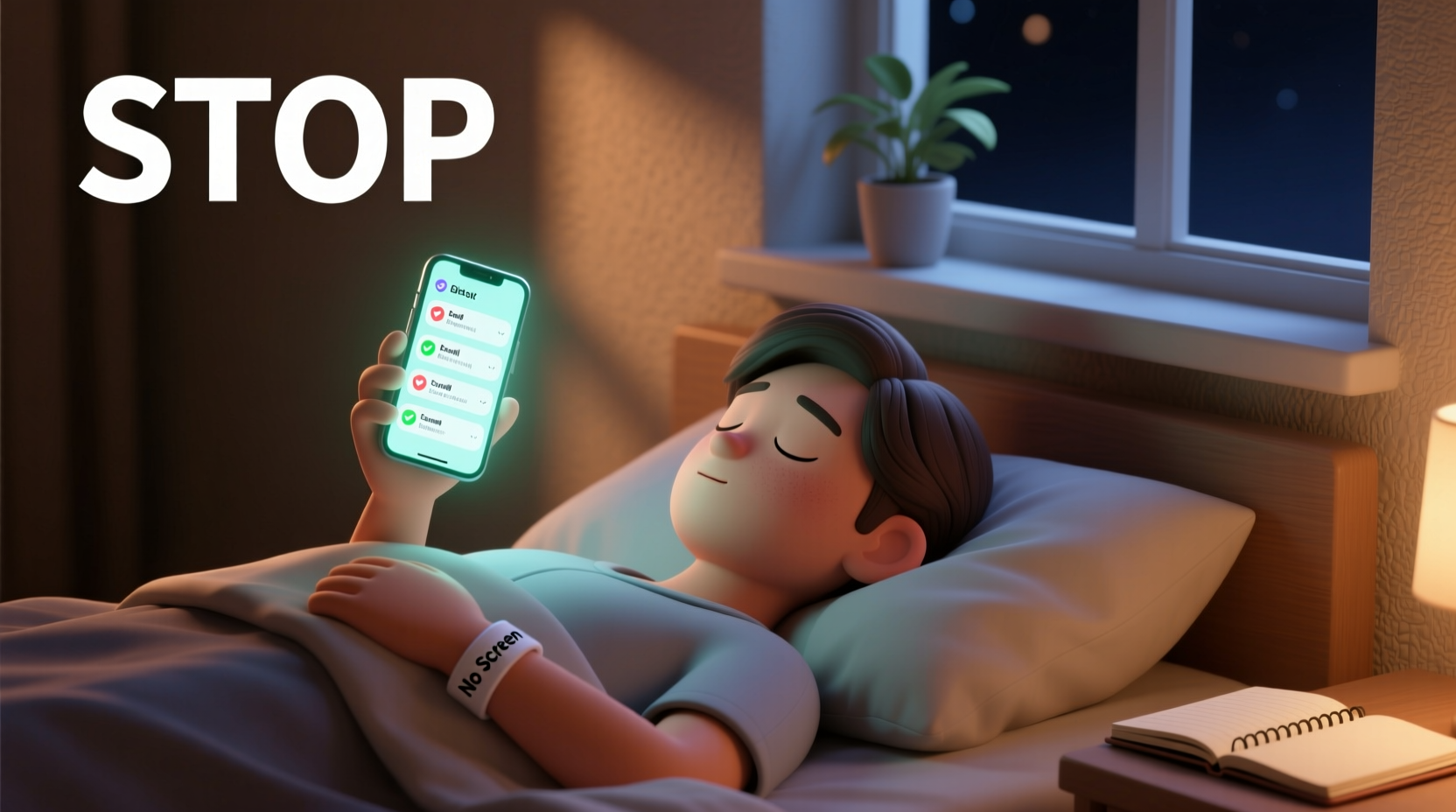
Doomscrolling refers to the compulsive consumption of negative or distressing online content, typically late at night when willpower is low and distractions are minimal. It’s not simply about using your phone too much—it’s about being drawn into a loop of emotionally charged information that feels urgent but rarely adds value. Psychologically, this behavior taps into several powerful mechanisms:
- Intermittent reinforcement: Social media platforms are designed to deliver unpredictable rewards (likes, comments, shocking headlines), which keeps users engaged longer.
- Fear of missing out (FOMO): The belief that important updates or events might occur while offline drives continuous checking.
- Emotional avoidance: Scrolling can serve as an escape from uncomfortable emotions like loneliness, stress, or boredom.
- Circadian rhythm disruption: Blue light from screens suppresses melatonin, making it harder to fall asleep and increasing wakefulness during typical rest hours.
Neuroscientist Dr. Anna Lembke, author of *Dopamine Nation*, explains:
“Every time we engage with digital content, especially emotionally provocative material, our brains release dopamine—a neurotransmitter associated with pleasure and motivation. Over time, we develop a tolerance, requiring more stimulation for the same effect, creating a dependency similar to other behavioral addictions.”
This neurological feedback loop makes stopping mid-scroll extremely difficult, even when we’re aware of the harm it causes.
Create a Digital Sunset Routine
One of the most effective ways to combat late-night doomscrolling is to establish a consistent “digital sunset”—a designated time each evening when all nonessential screens are turned off. Unlike abrupt digital detoxes, which often fail due to lack of preparation, a gradual wind-down routine supports sustainable change.
A successful digital sunset includes both logistical planning and psychological transition cues. Begin by identifying your current average bedtime and work backward. For most adults, starting the shutdown process 60–90 minutes before sleep yields optimal results.
- Set a hard cutoff time: Choose a specific hour (e.g., 9:30 PM) when phones, tablets, and laptops are powered down or placed in another room.
- Use app timers: Enable built-in screen-time controls on iOS or Android to automatically restrict access to social media and news apps after your chosen hour.
- Replace scrolling with analog activities: Stock your evening routine with low-stimulation alternatives such as reading physical books, journaling, light stretching, or listening to calming music.
- Charge devices outside the bedroom: Removing chargers from bedside tables eliminates the temptation to check notifications upon waking or during nighttime awakenings.
Reframe Your Environment for Success
Willpower alone is rarely enough to overcome ingrained habits. Instead, design your environment to make healthy choices easier and harmful ones less accessible. Behavioral psychology emphasizes that context shapes behavior far more than motivation.
Consider these environmental adjustments:
- Move your Wi-Fi router to a less convenient location if possible, or schedule it to turn off automatically overnight using smart plugs.
- Uninstall triggering apps from your phone and access them only via desktop browsers with login requirements—adding friction reduces impulsive use.
- Keep a notebook beside your bed to jot down thoughts or ideas instead of reaching for your phone when inspiration strikes at night.
- Use grayscale mode on your phone after sunset; removing color reduces visual appeal and engagement.
These small changes accumulate into significant shifts over time. As James Clear writes in *Atomic Habits*, “You do not rise to the level of your goals. You fall to the level of your systems.” Building systems that support disengagement is key to lasting change.
Actionable Checklist: Breaking the Scroll Cycle
To help you implement these strategies effectively, here’s a concise checklist to follow nightly:
- ✅ Set a fixed digital curfew (e.g., 9:30 PM)
- ✅ Activate screen-time limits for social media and news apps
- ✅ Charge your phone in another room overnight
- ✅ Replace screen time with one relaxing activity (reading, drawing, etc.)
- ✅ Turn on grayscale mode two hours before bed
- ✅ Write down three things you’re grateful for before sleeping
- ✅ Review usage data weekly and adjust boundaries as needed
Real-Life Example: How Sarah Regained Control of Her Evenings
Sarah, a 34-year-old marketing consultant, used to spend two to three hours every night scrolling through Twitter and Reddit, often staying awake until 1:00 AM despite wanting to sleep by 10:30. She noticed increased irritability, difficulty concentrating at work, and persistent fatigue. After learning about doomscrolling, she decided to experiment with a structured approach.
She began by setting her digital sunset at 9:00 PM, placing her phone in the kitchen to charge. To replace the void left by scrolling, she started reading fiction novels and practicing gentle yoga stretches. Within a week, she reported falling asleep faster and waking up feeling more refreshed. By the third week, her total screen time had dropped by 48%, according to her phone’s weekly report.
“It wasn’t easy at first,” Sarah said. “I’d catch myself walking toward my phone out of habit. But having a book already open on the couch made it easier to choose differently. Now, I actually look forward to disconnecting.”
Her success wasn’t due to sheer discipline—it came from redesigning her environment and replacing the habit with something equally satisfying but healthier.
Do’s and Don’ts of Nighttime Digital Use
| Do | Don’t |
|---|---|
| Use blue light filters or night mode settings | Scroll through news or social media in bed |
| Engage in screen-free relaxation rituals | Respond to non-urgent messages after 8 PM |
| Keep a gratitude journal or write reflections | Watch intense or emotionally charged content before sleep |
| Schedule a weekly review of screen time reports | Use your phone as an alarm clock within arm’s reach |
| Practice mindfulness or breathing exercises | Allow autoplay features on video platforms |
Build a Pre-Sleep Ritual That Works for You
Rituals signal to your brain that it’s time to shift gears. Without a clear transition from stimulation to rest, your mind remains in “alert” mode, making it difficult to relax. A personalized pre-sleep ritual doesn’t need to be elaborate—just consistent and meaningful.
Start by choosing 3–4 calming activities and perform them in the same order each night. Examples include:
- Dimming the lights and lighting a candle
- Drinking herbal tea (chamomile, passionflower, or valerian root)
- Writing in a journal to process the day’s events
- Practicing box breathing: inhale for 4 seconds, hold for 4, exhale for 4, pause for 4 (repeat 5–10 cycles)
- Listening to a short guided meditation or ambient soundscape
The goal is not to eliminate all thought but to guide your nervous system from hyperactivity to calm. Over time, these cues become conditioned triggers for relaxation, reducing the urge to seek stimulation online.
Frequently Asked Questions
Why is doomscrolling worse at night?
At night, cognitive resources are depleted after a long day, making it harder to resist impulses. Additionally, reduced external stimuli increase reliance on digital input for entertainment or distraction. The absence of natural light also disrupts circadian rhythms, amplifying alertness during typical rest periods.
Can I still check important messages before bed?
Yes—but set strict boundaries. Designate a short window (e.g., 15 minutes) to respond to urgent communications, then close all apps. Avoid opening email or messaging platforms casually, as they often lead to unintended browsing. Consider enabling “do not disturb” mode after your cutoff time, allowing only calls from priority contacts.
What if I work remotely and need my phone nearby?
If your job requires digital availability, create separation through app-level restrictions rather than device removal. Use focus modes to silence non-work notifications after hours. Communicate your boundaries clearly to colleagues and set expectations around response times. Remember: constant availability harms productivity and well-being in the long run.
Conclusion: Reclaim Your Nights, Restore Your Energy
Stopping doomscrolling isn’t just about limiting screen time—it’s about reclaiming agency over your attention, emotions, and rest. When you replace passive consumption with intentional presence, you create space for deeper relaxation, improved sleep quality, and greater daytime clarity. The strategies outlined here don’t demand perfection; they invite consistency and self-awareness. Start small: pick one change, like charging your phone outside the bedroom or setting a daily digital curfew. Track your progress, celebrate improvements, and refine your approach over time.
You don’t have to be a prisoner of your habits. Every night offers a fresh opportunity to choose differently—not because you lack willpower, but because you’ve designed a life where better choices are easier to make. Take back your evenings. Your mind, body, and future self will thank you.




 浙公网安备
33010002000092号
浙公网安备
33010002000092号 浙B2-20120091-4
Comments
No comments yet. Why don't you start the discussion?