
Cats scratch. It’s not a behavioral flaw—it’s a fundamental instinct. Scratching helps them shed old claw sheaths, stretch muscles, mark territory with scent glands in their paws, and relieve stress. Unfortunately, when that instinct collides with a favorite leather sofa or armchair, the result can be costly damage and frustration for pet owners. The good news? You don’t need to declaw your cat to protect your furniture. Declawing is widely considered inhumane by veterinary associations and banned in many countries due to the pain and long-term complications it causes. Instead, effective, compassionate solutions exist that respect your cat’s natural behaviors while preserving your home.
This guide outlines practical, science-backed strategies to redirect your cat’s scratching habits away from leather furniture. By understanding feline behavior, making smart environmental changes, and using consistent training techniques, you can coexist peacefully with your cat—without sacrificing comfort or ethics.
Why Cats Scratch Leather Furniture
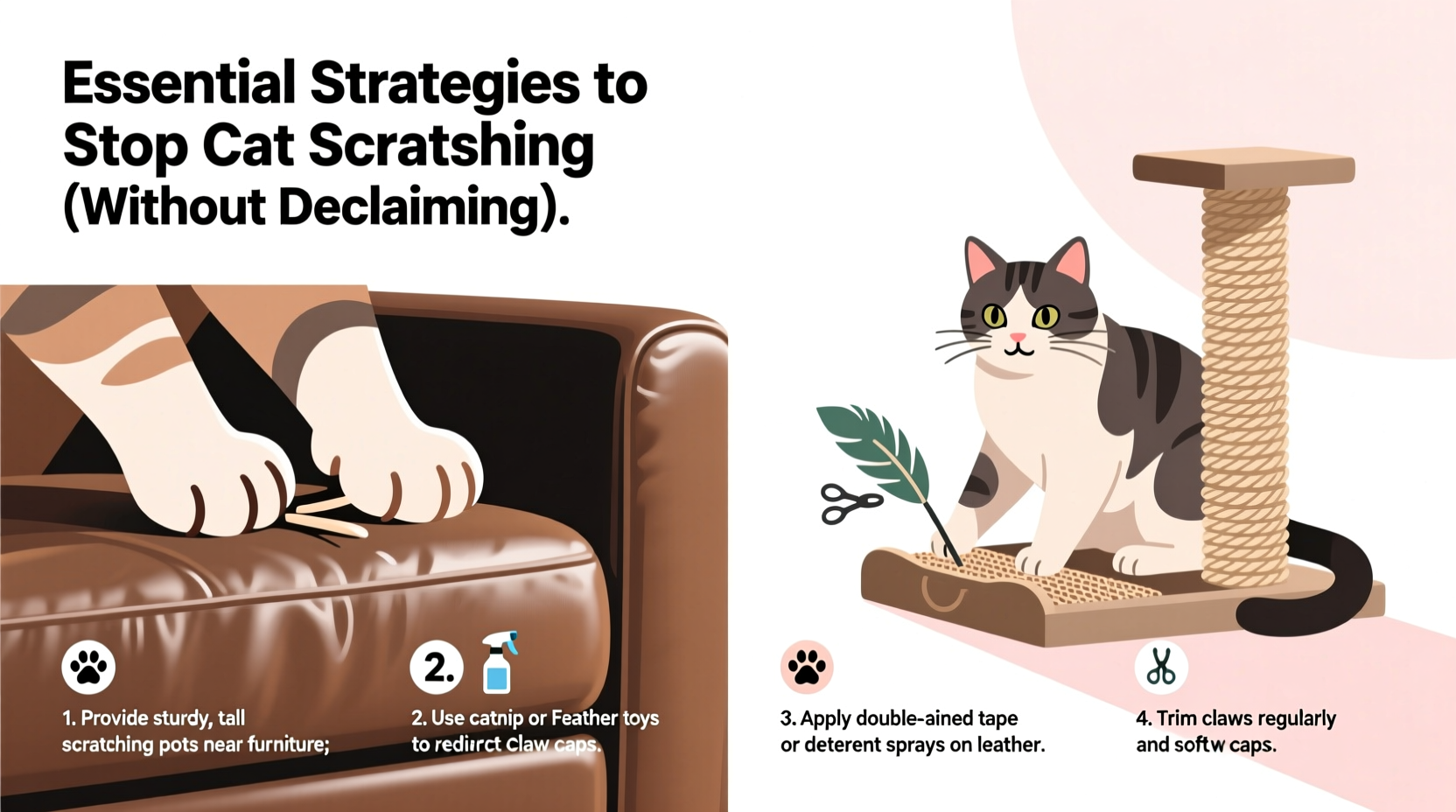
To effectively address unwanted scratching, it's crucial to understand why cats target certain surfaces. Leather is often appealing because of its texture, durability, and vertical orientation. A high-back sofa or ottoman mimics the structure of a tree trunk—the kind of surface cats would naturally scratch in the wild. Additionally, leather retains scent, which reinforces territorial marking behavior.
Scratching patterns are also influenced by location. Cats tend to scratch near entryways, sleeping areas, or places where they spend significant time. If your cat jumps on the couch every evening, it’s no surprise that the armrest becomes a prime target. Stress, boredom, or changes in routine can also increase scratching as a form of emotional regulation.
“Scratching is not destructive behavior—it’s normal behavior directed at inappropriate objects.” — Dr. Sarah Ellis, Feline Behavior Scientist, University of Lincoln
Provide Appealing Alternatives: The Right Scratching Posts
The cornerstone of any anti-scratching strategy is offering better options. Simply telling a cat “no” without giving an acceptable alternative is ineffective. Cats won’t stop scratching—they’ll just keep looking for suitable surfaces. Your goal is to make the designated scratching post more attractive than the furniture.
Not all scratching posts are created equal. Many commercially available models fail because they’re too small, unstable, or made from unappealing materials. To succeed, consider these key features:
- Height: At least 30 inches tall so your cat can fully stretch while scratching.
- Stability: The post must not wobble or tip over when used.
- Texture: Sisal rope is ideal. It’s durable, fibrous, and closely mimics tree bark.
- Orientation: Include both vertical and horizontal options. Some cats prefer side-to-side motion.
- Placement: Position near the furniture being targeted, then gradually relocate if needed.
For homes with multiple cats, provide at least one scratching station per cat, plus one extra. Rotate locations periodically to prevent territorial disputes and maintain engagement.
Make Leather Less Appealing (Without Harming Your Cat)
While providing alternatives is essential, you also need to discourage use of the furniture. This isn’t about punishment—it’s about altering the sensory experience of the leather to make it less inviting.
Several safe, non-toxic deterrents can help:
- Double-sided tape: Cats dislike sticky textures under their paws. Apply strips to arms and corners of furniture.
- Aluminum foil: Temporarily cover problem areas. The crinkly sound and cold feel deter most cats.
- Scent repellents: Use sprays containing citrus, lavender, or eucalyptus—scents cats typically avoid. Test on a hidden area first to ensure it doesn’t stain leather.
- Soft Paws (nail caps): These lightweight vinyl caps glue over your cat’s claws and last 4–6 weeks. They prevent damage while allowing normal scratching behavior.
Avoid strong scents or physical punishments like water sprayers or yelling. These can damage trust and increase anxiety, potentially worsening the behavior.
| Deterrent | Effectiveness | Duration | Notes |
|---|---|---|---|
| Double-sided tape | High | 1–2 weeks | Replace when loses stickiness |
| Aluminum foil | Medium-High | Temporary | Best during retraining phase |
| Citrus spray | Medium | 1–2 days | Reapply after cleaning |
| Nail caps | Very High | 4–6 weeks | Requires trimming claws first |
Step-by-Step Behavior Modification Plan
Changing a habit takes consistency. Follow this 4-week timeline to shift your cat’s scratching behavior humanely and effectively:
- Week 1: Assess & Prepare
Identify primary scratching zones. Purchase and place appropriate scratching posts nearby. Cover targeted furniture with deterrents like tape or foil. - Week 2: Encourage & Redirect
When you see your cat approaching the furniture, gently guide them to the scratching post. Reward with treats or affection when they use it. Avoid force or negative reactions. - Week 3: Reinforce & Expand
Continue positive reinforcement. Add secondary posts in other rooms. Begin phasing out deterrents on one section of furniture—if no scratching occurs. - Week 4: Monitor & Maintain
Observe usage patterns. Keep posts clean and upright. Reapply nail caps if used. Celebrate progress—even small wins matter.
Consistency is critical. All household members should follow the same approach. Inconsistent responses (e.g., one person rewards scratching a post while another ignores it) confuse cats and delay progress.
“Cats learn through repetition and consequence. Positive reinforcement builds trust and long-term compliance.” — Dr. Mikel Delgado, Certified Cat Behavior Consultant
Real-Life Example: Reclaiming the Living Room Sofa
Sarah, a cat owner in Portland, struggled with her 3-year-old tabby, Milo, who shredded the arms of her cream-colored leather sofa. Despite covering it with throws and using sprays, Milo returned nightly. Frustrated but unwilling to declaw, Sarah consulted a certified animal behaviorist.
Following the expert’s advice, she placed two tall sisal posts—one beside the sofa, another near the bedroom door. She wrapped the sofa arms in double-sided tape and applied a citrus-based deterrent. Each time Milo approached the sofa, she redirected him to the post and rewarded him with a treat. Within ten days, he began using the post independently. After three weeks, the tape was removed, and the sofa remained intact. Six months later, Milo uses the posts exclusively.
Sarah credits success to patience and consistency: “I stopped seeing it as defiance and started seeing it as communication. Once I gave him a better option, he took it.”
Common Mistakes That Undermine Progress
Even well-intentioned efforts can fail due to common pitfalls. Avoid these missteps:
- Using flimsy scratching posts: Wobbly or short posts teach cats that scratching leads to instability, making furniture seem more appealing.
- Placing posts in low-traffic areas: Cats scratch where they spend time. A post tucked in a basement corner will likely be ignored.
- Over-relying on sprays: Scent deterrents work best when combined with redirection, not used alone.
- Declawing as a shortcut: Beyond ethical concerns, declawed cats often develop chronic pain, litter box avoidance, or biting due to lost defense mechanisms.
- Inconsistent responses: One family member shooing the cat while another pets it during scratching sends mixed signals.
Frequently Asked Questions
Can I train an older cat to stop scratching furniture?
Yes. While kittens are more adaptable, adult and senior cats can learn new habits with patience and consistency. Older cats may have deeply ingrained routines, so expect a longer adjustment period. Focus on gradual redirection and positive reinforcement.
Are there specific breeds that scratch more?
No breed is inherently more destructive, but some—like Siamese, Bengals, and Abyssinians—are more active and may require more frequent scratching outlets. Individual personality and environment play larger roles than breed.
What if my cat scratches walls or doors instead?
The same principles apply. Identify why the spot is appealing (e.g., proximity to a window or doorway), install a vertical post nearby, and use deterrents on the wall. Wall scratching often indicates insufficient vertical space or unmet climbing needs.
Essential Action Checklist
Use this checklist to implement a comprehensive, humane solution:
- ✅ Assess current scratching behavior and identify targeted furniture areas
- ✅ Purchase sturdy, appropriately sized scratching posts (sisal preferred)
- ✅ Place posts near problem furniture and high-traffic zones
- ✅ Apply temporary deterrents (tape, foil, scent sprays) to leather surfaces
- ✅ Introduce nail caps if desired (consult vet or groomer for application)
- ✅ Trim claws regularly to minimize damage
- ✅ Redirect cat to post when caught scratching furniture
- ✅ Reward correct behavior with treats, praise, or play
- ✅ Monitor progress weekly and adjust placement or strategy as needed
- ✅ Maintain posts by replacing worn sisal or securing loose bases
Conclusion: Protect Furniture, Respect Your Cat
Stopping your cat from scratching leather furniture isn’t about dominance or convenience—it’s about understanding and guiding natural instincts. With the right tools, timing, and empathy, you can preserve your home while honoring your cat’s needs. Declawing should never be the answer. Not only does it cause physical and psychological harm, but it fails to address the root cause: a lack of appropriate outlets.
By investing in quality scratching posts, applying sensible deterrents, and reinforcing positive behavior, you create a living space where both you and your cat thrive. Change may take weeks, but the results—a happy, healthy cat and intact furniture—are worth the effort.




 浙公网安备
33010002000092号
浙公网安备
33010002000092号 浙B2-20120091-4
Comments
No comments yet. Why don't you start the discussion?