
Interstate 75 (I-75) stretches over 1,780 miles from Michigan to Florida, serving as a critical corridor for commuters, truckers, and travelers across the eastern United States. Whether you're heading north through Ohio or south into Tampa, congestion, construction, and weather can turn a routine drive into a frustrating ordeal. Knowing how to access I-75 efficiently—and when to take an alternate route—can save time, fuel, and stress. This guide delivers practical strategies, real-world alternatives, and expert-backed navigation techniques to help you reach I-75 smoothly and stay on track once you’re on it.
Understand Key Access Points by Region
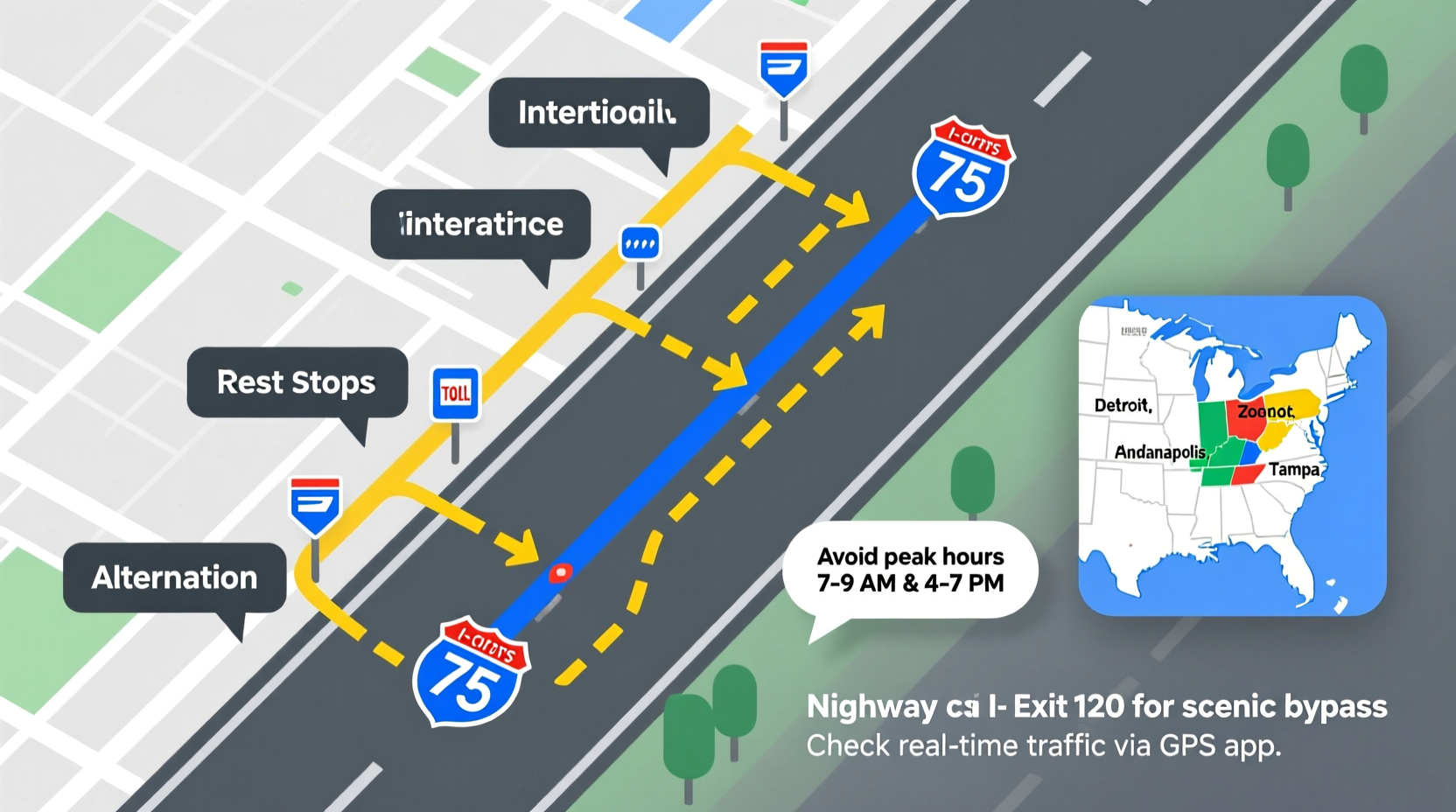
I-75 passes through major metropolitan areas including Detroit, Cincinnati, Atlanta, and Tampa. Each city presents unique challenges when entering or exiting the interstate. Familiarity with primary on-ramps and common bottlenecks is essential.
- Detroit, MI: Access via M-10 (Lodge Freeway) or I-696. Rush hour congestion peaks between 6:30–9:00 AM and 4:00–6:30 PM.
- Cincinnati, OH: Use US-27 or Ronald Reagan Cross County Highway to avoid downtown merge points.
- Atlanta, GA: The \"Downtown Connector\" (I-75/I-85 overlap) is notorious for delays. Consider arriving early or using perimeter routes like I-285.
- Tampa, FL: Approach from US-301 or SR-618 to bypass morning backups near the Lee Roy Selmon Expressway interchange.
Top Alternative Routes to Bypass Congestion
When I-75 is jammed due to accidents or roadwork, detouring onto parallel highways can cut travel time significantly. These alternatives are proven options in high-traffic zones:
| Region | Common Bottleneck | Recommended Alternate Route | Estimated Time Savings |
|---|---|---|---|
| South of Atlanta, GA | I-75 through Lovejoy | GA-20 to I-575 | 15–25 minutes |
| Kentucky Turnpike (Munfordville to Bowling Green) | Construction zones | US-31W | 10–20 minutes |
| Tampa Bay Area, FL | Lee Roy Selmon Expressway merge | SR-618 (Brandon Parkway) | 10–15 minutes |
| Dayton to Cincinnati, OH | I-75 through Lebanon | US-42 with OH-123 connection | Varies (up to 30 min during peak) |
These detours work best when used proactively. Relying solely on GPS rerouting may lead to secondary roads not designed for heavy traffic. Pre-programming alternates into your navigation app gives you control over your route choice.
“Many drivers assume GPS always picks the fastest path, but algorithms often prioritize distance over real-time flow. A planned alternate route based on local knowledge beats reactive rerouting.” — Marcus Lin, Transportation Analyst at Georgia DOT
Step-by-Step Guide: Planning Your I-75 Journey
Smart preparation reduces uncertainty and improves efficiency. Follow this timeline to ensure a smooth trip:
- 48 Hours Before Departure: Check state Department of Transportation websites for scheduled construction on I-75 in your target region. Sign up for email alerts if available.
- 24 Hours Before: Review current traffic patterns using tools like Google Traffic View, Waze, or INRIX. Identify two potential access points and one backup route.
- 1 Hour Before Leaving: Confirm weather conditions—especially critical in winter months across Ohio and Kentucky. Black ice forms rapidly on overpasses.
- At Departure: Set your GPS with a non-highway option enabled (e.g., “avoid tolls” or “avoid highways”) so it recalculates faster if needed.
- En Route: Monitor radio station 88.1 FM (Travelers Information Service) where available. It broadcasts automated updates every 5–10 minutes along I-75 corridors.
Real-World Example: Avoiding Atlanta’s Rush Hour Trap
Jamal Thompson drives weekly from Macon to his job near Cumberland Boulevard in Atlanta. Initially, he took I-75 directly through downtown each Monday morning, averaging 2 hours for a 110-mile trip. After repeated delays caused by accidents near I-20, he experimented with alternatives.
He began taking GA-20 east to I-575 North, then connecting to I-75 via Sixes Road. Though slightly longer in distance (125 miles), the route avoids the Downtown Connector entirely. His average commute dropped to 1 hour 35 minutes—a 25-minute gain per trip. Over a year, that’s nearly 17 extra hours regained.
This case illustrates how small routing changes yield significant long-term benefits, especially when consistency matters.
Essential Navigation Tips for All Seasons
Weather, time of day, and seasonal traffic affect I-75 usability. Apply these field-tested tips regardless of your starting location:
- Use HOV Lanes Strategically: In metro areas like Tampa and Atlanta, HOV lanes move faster during rush hours—even with just two occupants.
- Avoid Weekend Southbound Traffic in Winter: Every Friday from November to March, retirees and snowbirds create rolling slowdowns from Tennessee into Florida. Leave after 10:00 AM to miss the worst clusters.
- Leverage Rest Areas for Reassessment: Pull over at official rest stops to check maps without distraction. Many have Wi-Fi and updated electronic message boards showing downstream incidents.
- Watch for Merge Blind Spots: On multi-lane sections, especially near cities, merging vehicles often fail to signal. Keep scanning mirrors and maintain buffer space.
Checklist: Prepare Before You Hit I-75
Ensure you’re ready for any scenario with this pre-trip checklist:
- ✅ Verify vehicle fuel level (or charge for EVs)
- ✅ Download offline maps for regions with poor signal (e.g., rural Kentucky)
- ✅ Program at least one alternate route into your GPS
- ✅ Check tire pressure and wiper fluid
- ✅ Bookmark state DOT traffic cameras page
- ✅ Pack emergency kit: flashlight, water, reflective vest
- ✅ Confirm rest stop locations along your stretch of I-75
Frequently Asked Questions
What time should I avoid I-75 in major cities?
In Atlanta, avoid 6:45–9:15 AM southbound and 4:30–7:00 PM northbound. In Cincinnati, steer clear of I-71/I-75 junction between 7:00–8:30 AM. Tampa sees peak congestion 7:00–9:00 AM near Dale Mabry Highway.
Are there tolls on I-75?
Most of I-75 is toll-free, except in Florida. Between Wildwood and Miami, SunPass or TOLL-BY-PLATE applies on certain express lanes. No tolls exist in Ohio, Michigan, or Georgia on the mainline I-75.
How do I report a hazard on I-75?
Call *FHP (Florida), *55 in Georgia, or local highway patrol numbers posted on overhead signs. Alternatively, use the mobile app provided by your state’s DOT—many allow photo submissions of debris, stalled vehicles, or flooding.
Navigate Smarter, Arrive Sooner
Mastering access to I-75 isn’t about memorizing every exit—it’s about building situational awareness and flexibility. By combining strategic planning, real-time data, and regional insights, you transform what could be a stressful journey into a predictable, manageable experience. Whether you're commuting weekly or embarking on a cross-state road trip, applying these methods consistently will keep you moving efficiently and safely.




 浙公网安备
33010002000092号
浙公网安备
33010002000092号 浙B2-20120091-4
Comments
No comments yet. Why don't you start the discussion?