
Making a call to Australia doesn’t have to be confusing or expensive. Whether you're contacting family, scheduling a business meeting, or confirming travel plans, understanding the correct format, time zones, and cost-saving strategies can make all the difference. With mobile numbers, landlines, and VoIP services all playing roles in modern communication, knowing how to navigate the system ensures your call connects smoothly and affordably.
Australia’s telecommunications infrastructure is reliable, but international callers often face confusion over area codes, mobile prefixes, and exit/entry protocols. This guide breaks down everything you need to know—from dialing formats to timing your calls correctly—so you can reach anyone in Australia without hassle.
Understanding Australian Phone Number Structure
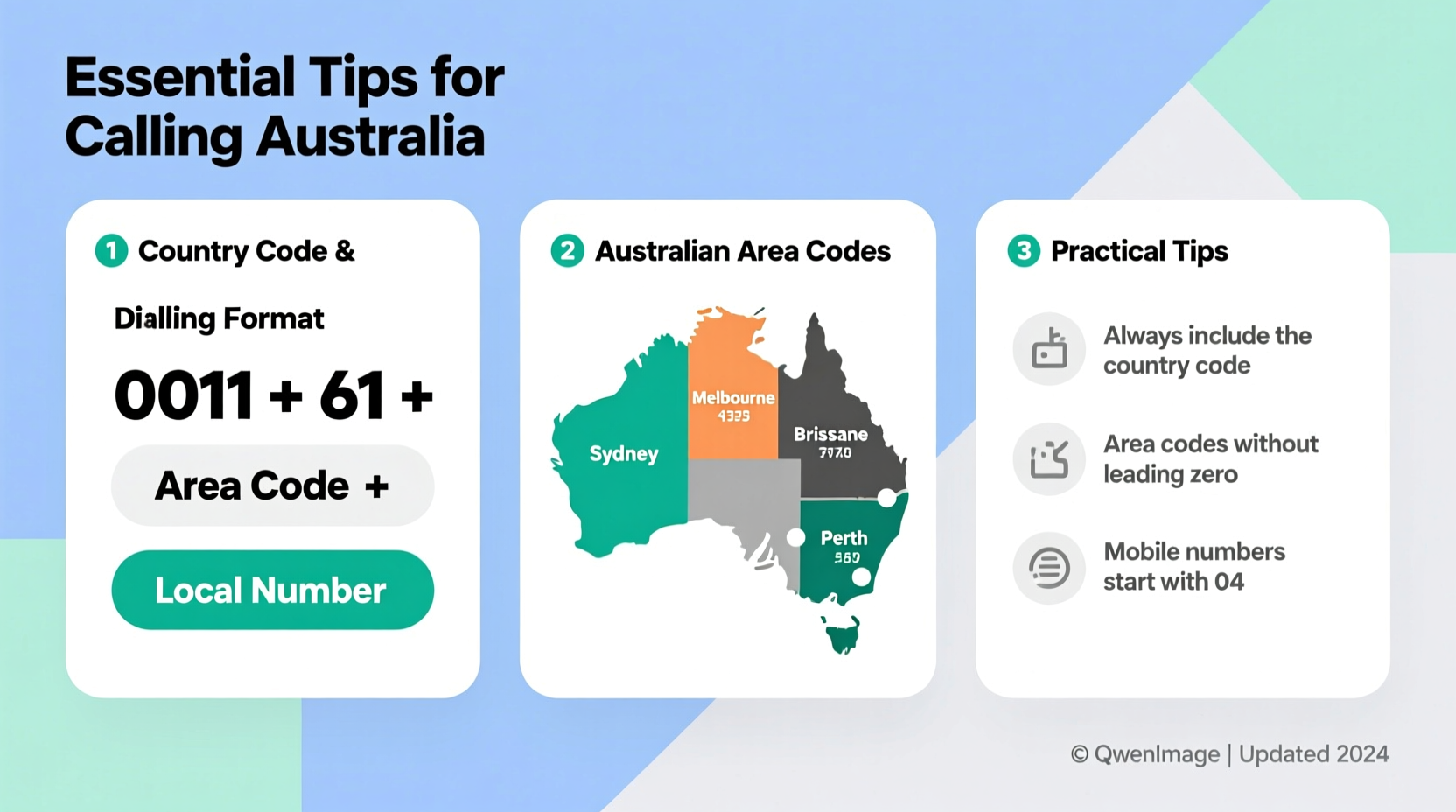
Australian phone numbers follow a standardized format that includes country code, area code (or mobile prefix), and local number. The total length is typically 10 digits after the country code.
- Country Code: +61 — used when calling from outside Australia.
- Area Codes: Begin with a leading zero when dialed domestically (e.g., 02 for Sydney), but the zero is dropped when calling internationally.
- Mobile Numbers: Start with 04 or 05 within Australia; replace the leading zero with +61 when calling from abroad.
- Local Number: Seven digits for most landlines and mobiles.
For example, a Sydney landline might appear as 02 9876 5432 locally. From overseas, you would dial +61 2 9876 5432.
Dialing Steps: How to Call Australia from Anywhere
Calling Australia requires three components: your country’s international exit code, Australia’s country code (+61), and the local number without the initial zero.
- Dial your country’s exit code (e.g., 011 from the US/Canada, 00 from Europe).
- Enter Australia’s country code: 61.
- Input the area code or mobile prefix (without the leading zero).
- Finish with the 7-digit local number.
Example: To call a Melbourne number listed as 03 9999 1234 from the United States:
Dial: 011 61 3 9999 1234
If using a mobile phone, simply save the contact with the full international format: +61 3 9999 1234. Most smartphones automatically handle the exit code when you press call.
Common Mistakes to Avoid When Calling Australia
Even experienced travelers make errors when placing international calls. These missteps can lead to failed connections or unexpectedly high charges.
| Mistake | Correct Approach |
|---|---|
| Keeping the leading '0' in the area code | Drop the '0' when dialing from outside Australia (e.g., use 2 instead of 02) |
| Using outdated or incorrect exit codes | Confirm your country's current exit code (e.g., 00 in UK, 011 in US) |
| Assuming all numbers are reachable at any time | Account for Australia’s multiple time zones before calling |
| Ignoring data roaming costs on mobile | Use Wi-Fi calling or VoIP apps to reduce fees |
| Not verifying number formats online | Cross-check numbers via official directories or websites |
“Over 30% of failed international calls to Australia result from incorrect formatting—usually due to retaining the domestic zero.” — James Lin, International Telecommunications Analyst
Cost-Saving Strategies and Communication Alternatives
Traditional voice calls via carriers can incur steep per-minute charges, especially from North America or Europe. Fortunately, several affordable or free alternatives exist.
- VoIP Services: Apps like Skype, WhatsApp, Google Meet, and FaceTime allow free calls over Wi-Fi if both parties have internet access.
- SIM Cards & Roaming Packages: If traveling, consider an Australian SIM card or activate an international plan with your provider.
- Callback Services: Some telecom providers offer reduced rates during off-peak hours or through callback systems.
- Landline vs Mobile Costs: Calls to mobiles (+61 4) are often more expensive than landlines (+61 2, 3, 7, 8).
Mini Case Study: A Business Call Gone Wrong
Sarah, a project manager in London, needed to confirm delivery timelines with a supplier in Brisbane. She dialed what she believed was the correct number: +61 07 3000 4567. Her call failed repeatedly.
After consulting her assistant, they realized Sarah had mistakenly kept the '0' in the area code. The correct format was +61 7 3000 4567. Once corrected, the call connected successfully—but two days of delay had already impacted the shipment schedule.
This case highlights how small formatting errors can lead to real-world consequences. Double-checking number formats before critical calls is essential.
Time Zone Awareness: When to Call Australia
Australia spans three main time zones:
- AEST (UTC+10): Queensland, New South Wales, Victoria, Tasmania, ACT
- ACST (UTC+9:30): South Australia, Northern Territory
- AWST (UTC+8): Western Australia
Daylight saving affects southern states (NSW, Vic, Tas, ACT, SA) from early October to early April, shifting them to AEDT (UTC+11).
To avoid calling too early or too late:
- Best window from the US: 6–9 PM Eastern Time (8–11 AM Sydney time).
- From the UK: 8–10 PM GMT (6–8 AM next day in Sydney).
- From Europe (CET): 7–9 PM (5–7 AM next day in Sydney).
Always confirm the recipient’s location within Australia to adjust for regional time differences.
Checklist: Preparing to Call Australia
Before making your call, run through this quick checklist:
- ✅ Verify the full phone number, including area or mobile code.
- ✅ Remove the leading '0' from the area/mobile code when dialing internationally.
- ✅ Confirm the correct international exit code for your country.
- ✅ Check the current time in the recipient’s region of Australia.
- ✅ Consider using a VoIP app to reduce costs and improve clarity.
- ✅ Save the contact in your phone using the +61 format for future use.
- ✅ Test your internet connection if using a digital calling service.
Frequently Asked Questions
Can I call an Australian mobile number from my smartphone?
Yes. Simply enter the number in international format: +61 followed by the 9-digit number (excluding the leading zero). For example, +61 4XX XXX XXX. Your phone will automatically route the call through your carrier or VoIP service.
Why does my call to Australia keep failing?
Common reasons include incorrect number formatting (especially keeping the '0'), poor signal strength, blocked international calling on your plan, or network restrictions. Double-check the number and ensure your service allows international dialing.
Are calls to Australia cheaper at certain times?
Some traditional carriers offer discounted international rates during off-peak hours (e.g., late night in your local time). However, VoIP services like WhatsApp or Skype provide consistent low-cost or free calling anytime, provided you have a stable internet connection.
Final Thoughts: Stay Connected with Confidence
Calling Australia doesn’t require technical expertise—just attention to detail and a bit of planning. By understanding the proper dialing format, respecting time zone differences, and leveraging modern communication tools, you can maintain seamless contact with friends, family, or colleagues Down Under.
Whether you're coordinating a remote team, checking in on loved ones, or finalizing a business deal, getting the basics right ensures your message gets through clearly and efficiently. With the tips and structure outlined here, you’re well-equipped to make successful, stress-free calls to Australia every time.




 浙公网安备
33010002000092号
浙公网安备
33010002000092号 浙B2-20120091-4
Comments
No comments yet. Why don't you start the discussion?