
Making an international call to Australia doesn’t have to be confusing or expensive. Whether you're reaching out to family, scheduling a business meeting, or confirming travel plans, understanding the correct procedures ensures your call connects smoothly and affordably. With time zone differences, varying carrier rates, and evolving communication technologies, knowing how to dial effectively can save both time and money. This guide breaks down everything you need to know—from dialing formats to cost-saving strategies—so your calls to Australia are consistently clear and reliable.
Understanding the International Dialing Format
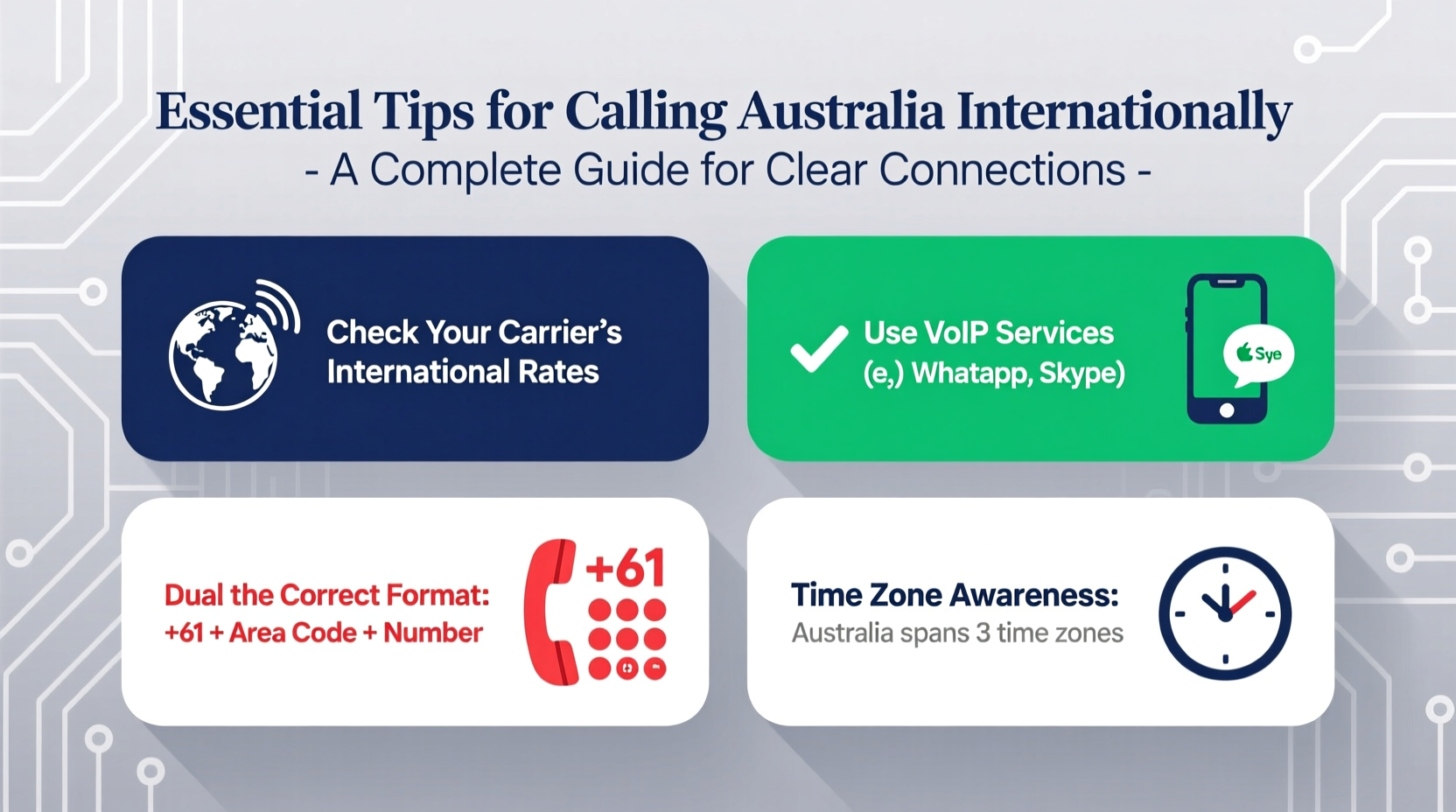
To call Australia from abroad, you must follow a standardized international dialing sequence. The format remains consistent regardless of your country of origin, though access codes may vary.
The general structure is:
- Exit code – This signals your phone network that you’re making an international call. It varies by country (e.g., 011 in the U.S. and Canada, 00 in the UK and Europe).
- Australia’s country code: +61 – Always used when calling into Australia.
- Area code – Omit the leading zero when dialing from overseas. For example, Sydney’s area code is 02 domestically, but use 2 internationally.
- Local phone number – Usually eight digits for landlines and ten digits for mobiles (including the starting 4).
For example, to call a landline in Melbourne (area code 03) with local number 9876 5432 from the United States:
011 (U.S. exit code) → 61 (Australia) → 3 (Melbourne) → 9876 5432
Choosing the Right Calling Method
Not all calling methods are equal when it comes to cost, clarity, and convenience. Your choice depends on frequency, budget, and connection quality needs.
| Method | Cost | Sound Quality | Best For |
|---|---|---|---|
| Traditional Phone Carrier | $$$ (High per-minute rates) | ★★★★☆ | Occasional calls; emergency use |
| VoIP (Skype, Zoom, Google Voice) | $ (Low or free) | ★★★☆☆ | Frequent calls; video meetings |
| International Calling Apps (Rebtel, Viber Out) | $$ (Moderate, flat rates) | ★★★★☆ | Regular voice calls |
| eSIM or Travel SIM with Roaming | $$$ (Varies by provider) | ★★★★★ | Travelers needing local connectivity |
Voice over Internet Protocol (VoIP) services like Skype offer low-cost or even free calls to landlines if the recipient also uses the app. However, they rely heavily on stable internet, so prioritize Wi-Fi or strong broadband connections.
Step-by-Step Guide to Making a Successful Call
Follow this sequence to ensure your call reaches its destination clearly and efficiently.
- Verify the number format: Confirm the Australian number includes the correct area code and omits the initial zero.
- Check your time zone difference: Australia spans three main time zones—AWST (Western), ACST (Central), and AEST (Eastern). Avoid calling outside business hours or early/late in the day unless necessary.
- Select your calling method: Decide whether to use your mobile carrier, VoIP, or a dedicated calling app based on cost and reliability.
- Dial using the correct exit code: Use your country’s international access prefix before entering +61.
- Speak clearly and confirm connection: Begin by stating your name and reason for calling, especially if the line has slight delays or static.
Common Mistakes to Avoid
Many international callers make preventable errors that result in failed connections or inflated bills.
- Forgetting to remove the leading zero from the area code when dialing +61. Example: 02 becomes 2, not 02.
- Using outdated exit codes. Some countries have updated their prefixes—always double-check if calling from a new location.
- Calling during peak rate hours. Many carriers charge more during daytime business hours in your home country.
- Assuming mobile numbers start with 04 only. While most do, some virtual numbers may begin with other digits.
- Ignoring data usage when using apps abroad. Without Wi-Fi, VoIP calls can consume significant roaming data.
“Over 30% of failed international calls stem from incorrect number formatting. Taking 30 seconds to verify the digits saves frustration later.” — James Lin, Telecommunications Analyst at Global Connect Insights
Real-World Example: Connecting Across Continents
Sarah, a project manager based in Toronto, needed to coordinate weekly check-ins with her client in Brisbane. Initially, she used her mobile carrier, spending over $40 monthly on calls plagued by echo and dropped lines. After researching alternatives, she switched to Rebtel, which offered unlimited calls to Australian landlines for $8 per month. She also adjusted her schedule to align with Brisbane’s working hours (which meant calling at 7 PM Toronto time due to the 14-hour time difference). The result? Clearer audio, predictable costs, and stronger client rapport.
This case illustrates how combining technical accuracy with strategic timing and tool selection leads to better outcomes.
Smart Cost-Saving Strategies
International calling doesn’t need to drain your budget. Consider these proven ways to reduce expenses.
- Use Wi-Fi-based calling apps
- Services like WhatsApp, FaceTime Audio, or Facebook Messenger allow free voice calls if both parties have the app installed.
- Purchase international calling bundles
- Some carriers offer monthly packages with discounted rates to Australia. Compare options through providers like AT&T International Plans or T-Mobile Global Pass.
- Schedule calls during off-peak hours
- Rates may drop significantly late at night or early morning in your local time zone.
- Leverage callback services
- Platforms like Dingtone or PopTox let you initiate a call online and receive a callback, often at lower rates than direct dialing.
FAQ: Frequently Asked Questions
Can I call an Australian mobile number the same way as a landline?
Yes, the dialing process is identical. Use +61 followed by the mobile number, replacing the leading 0 with the full country code. For example, (04) XX XXX XXX becomes +61 4 XX XXX XXX.
Why does my call go straight to voicemail?
This could be due to poor signal on the recipient’s end, their phone being off, or incorrect number entry. Double-check the digits and try again later. Also consider time zone differences—your evening might be their middle of the night.
Are calls to Australia from VoIP services always cheaper?
Generally yes, but pricing varies by provider. Some apps charge per minute for landline/mobile calls, while offering free user-to-user calls. Always review rate sheets before committing.
Final Checklist Before You Dial
- ✅ Confirm the correct international format: [Exit Code] + 61 + [Area Code without 0] + [Number]
- ✅ Check current time in Australia (use World Time Buddy or similar tools)
- ✅ Choose the most cost-effective calling method
- ✅ Ensure stable internet connection for VoIP calls
- ✅ Save contact with +61 prefix for future ease
- ✅ Test audio quality with a short trial call if possible
Stay Connected with Confidence
Calling Australia from abroad should be straightforward—not stressful. By mastering the dialing format, selecting the right tools, and avoiding common pitfalls, you maintain clear, affordable communication across continents. Whether it's a quick family update or a critical business discussion, preparation makes all the difference. Apply these insights today and transform your international calling experience into something seamless, professional, and worry-free.




 浙公网安备
33010002000092号
浙公网安备
33010002000092号 浙B2-20120091-4
Comments
No comments yet. Why don't you start the discussion?