
The Samsung Galaxy Z Fold series represents the pinnacle of foldable smartphone innovation—offering a tablet-sized display in a compact, folding design. But with that sophistication comes vulnerability. The flexible inner screen is more delicate than traditional glass, and even minor impacts or debris can cause lasting damage. A high-quality case isn’t just an accessory; it’s a critical layer of defense. Choosing the right one requires understanding the unique mechanics of the device, materials that offer real protection, and features that support long-term usability.
Understand the Unique Risks of Foldable Phones
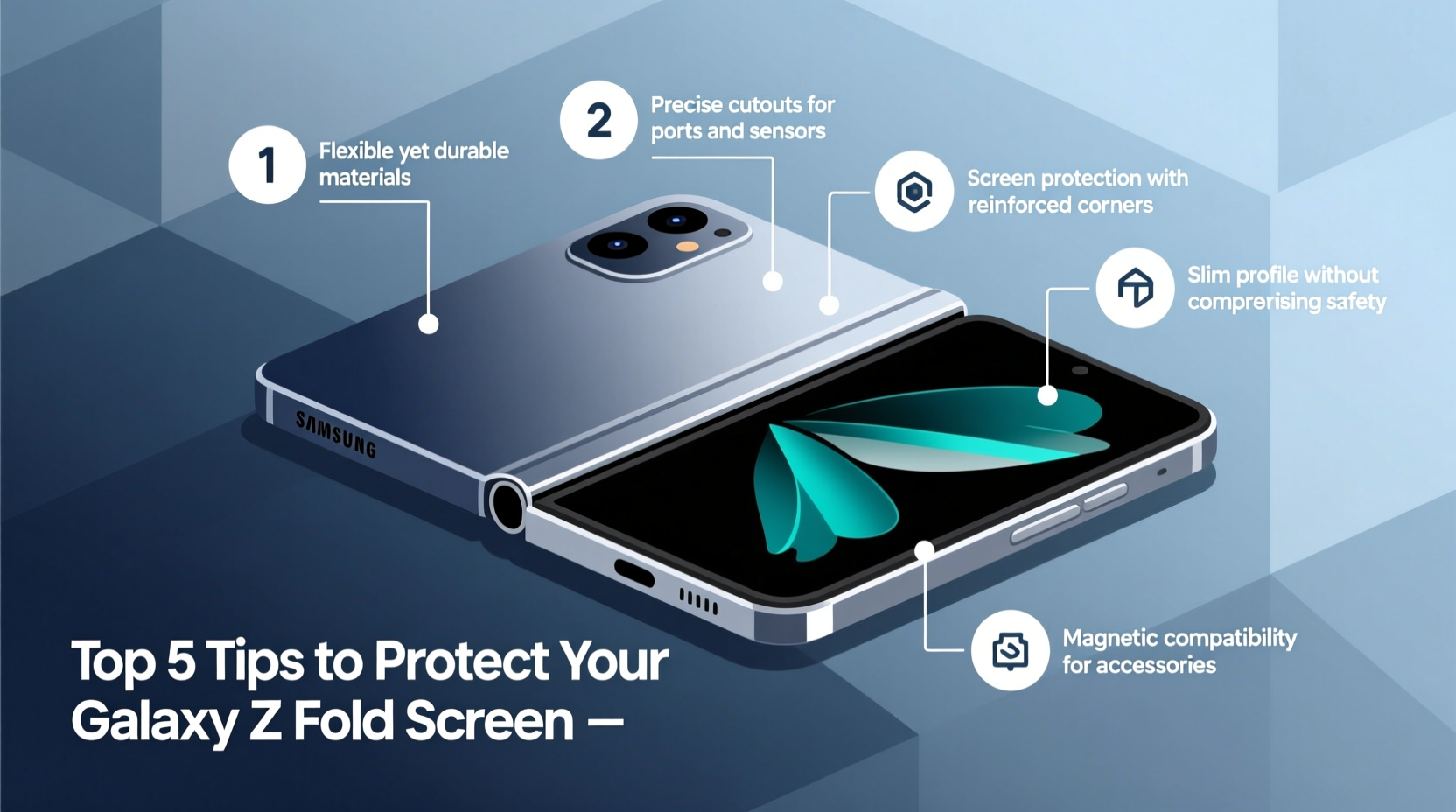
Foldable phones like the Samsung Z Fold are engineered with precision, but their hinge mechanism and ultra-thin polymer screens introduce new risks. Unlike conventional smartphones, the inner display is made from a flexible plastic material rather than rigid Gorilla Glass. This makes it more susceptible to scratches, creasing, and punctures from sharp objects. Additionally, dust and lint can accumulate in the hinge over time, potentially interfering with smooth folding and damaging internal components.
A poorly designed case may exacerbate these issues by failing to shield the screen when closed or by adding pressure to the hinge. In contrast, a well-designed case should account for the phone’s dynamic movement while offering full coverage without restricting functionality.
“Foldables demand a new standard in protection. Traditional cases won’t suffice—design must evolve with the technology.” — Dr. Lena Park, Mobile Device Materials Researcher at TechShield Labs
Key Features to Look for in a Z Fold Case
Not all cases are created equal, especially when it comes to protecting a premium foldable device. Here are the essential features to prioritize:
- Full Wrap-Around Protection: The case should cover the edges and back completely, ideally extending slightly over the front when the phone is folded to prevent direct contact between the screen and surfaces.
- Hinge Coverage: A quality case includes a reinforced or shielded hinge area to block dust and debris from entering the gap.
- Inner Screen Clearance: The case must not press against the inner display when closed. There should be a small buffer zone to avoid constant contact with the screen surface.
- Durable Materials: Look for polycarbonate, TPU (thermoplastic polyurethane), or hybrid constructions that balance flexibility and impact resistance.
- Precision Cutouts: All ports, buttons, and cameras must remain fully accessible without requiring removal of the case.
Comparison of Common Case Types for the Z Fold
| Case Type | Pros | Cons | Best For |
|---|---|---|---|
| Slim Fitted TPU | Lightweight, maintains slim profile | Limited drop protection | Users who prioritize aesthetics and minimalism |
| Rugged Hybrid | Superior shock absorption, reinforced corners | Bulkier, may not fit in tight pockets | Active users or those in high-risk environments |
| Wallet Cases | Integrated card slots, doubles as stand | Can add thickness, risk of scratching screen with cards | Minimalists wanting fewer items to carry |
| Clear Cases | Show off device design, lightweight | Prone to yellowing, limited protection | Users who want visibility of the device color |
| Samsung Official Cases | Perfect fit, optimized for S Pen and sensors | Higher price point | Those seeking guaranteed compatibility and warranty safety |
Step-by-Step Guide to Selecting Your Ideal Case
Choosing the right case doesn’t have to be overwhelming. Follow this practical sequence to make a confident decision:
- Assess Your Usage Pattern: Are you frequently on the move? Do you use your phone outdoors? High-risk lifestyles call for rugged protection.
- Check Compatibility: Ensure the case is explicitly designed for your Z Fold model (e.g., Z Fold 5 vs. Z Fold 6). Even slight dimensional differences matter.
- Evaluate Drop Test Ratings: Look for third-party certifications or lab-tested claims about shock absorption from heights of at least 4–6 feet.
- Inspect Inner Lining: The inside of the case should have a soft microfiber or silicone lining to prevent micro-scratches on the outer display.
- Test Functionality: After installation, verify that the fingerprint sensor, Face Unlock, and S Pen (if applicable) work seamlessly.
- Read Verified User Reviews: Focus on feedback about screen contact, hinge durability, and long-term warping.
Real-World Example: How One User Avoided Costly Damage
Jamal, a sales executive based in Chicago, purchased a Z Fold 5 for client presentations. Within weeks, he noticed faint scratches on the inner screen. He had been using a generic third-party case that didn’t account for the folding clearance. After consulting a repair technician, he learned that tiny particles trapped under the case were being pressed into the display every time he closed the phone.
He switched to a Samsung Leather Cover designed specifically for the Z Fold 5. The new case featured a magnetic closure, built-in screen buffer, and sealed hinge protection. Over the next eight months, despite frequent travel and daily use, his screen remained pristine. The technician later noted that Jamal likely avoided a $300+ screen replacement by upgrading his case.
Essential Checklist Before Buying a Z Fold Case
- ✅ Confirmed compatibility with your exact Z Fold model
- ✅ No contact between case interior and inner screen when folded
- ✅ Hinge area is covered or shielded from debris
- ✅ Supports wireless charging without removal
- ✅ Includes raised bezels to protect both front and back screens when placed face-down
- ✅ Allows unobstructed access to S Pen (if applicable)
- ✅ Made from non-yellowing, durable materials
Frequently Asked Questions
Can I use any phone case on my Samsung Z Fold?
No. Standard phone cases are not designed for foldable mechanisms and often fail to protect the hinge or may press against the inner screen. Always choose a case specifically engineered for your Z Fold model.
Do screen protectors eliminate the need for a good case?
No. While factory-installed or aftermarket screen protectors help guard against scratches, they offer no protection against drops, impacts, or debris entering the hinge. A case and screen protector should be used together for comprehensive defense.
How often should I replace my Z Fold case?
Inspect your case every 4–6 months. Signs of wear—such as cracking, loosening around the edges, or discoloration—indicate it's time for replacement. A compromised case reduces protection and may trap dirt against the device.
Protect Your Investment Wisely
Your Samsung Z Fold is more than a phone—it’s a versatile tool for productivity, creativity, and communication. With prices exceeding $1,700, protecting it is not optional. The right case acts as the first line of defense against everyday hazards, preserving both function and resale value. Don’t compromise on fit, materials, or design. Invest in a purpose-built solution that respects the engineering of your device and supports how you actually use it.




 浙公网安备
33010002000092号
浙公网安备
33010002000092号 浙B2-20120091-4
Comments
No comments yet. Why don't you start the discussion?