
A dress zipper may seem like a small component, but it plays a crucial role in both the appearance and functionality of your favorite garments. When a zipper fails, it can render an otherwise perfect outfit unwearable. Rather than discarding a beloved dress at the first sign of zipper trouble, understanding how to maintain and repair zippers can save time, money, and fabric integrity. With proper care, most zippers can last for years—even decades. This guide offers practical, expert-backed strategies to keep your dress zippers operating smoothly and reliably.
Why Zipper Maintenance Matters
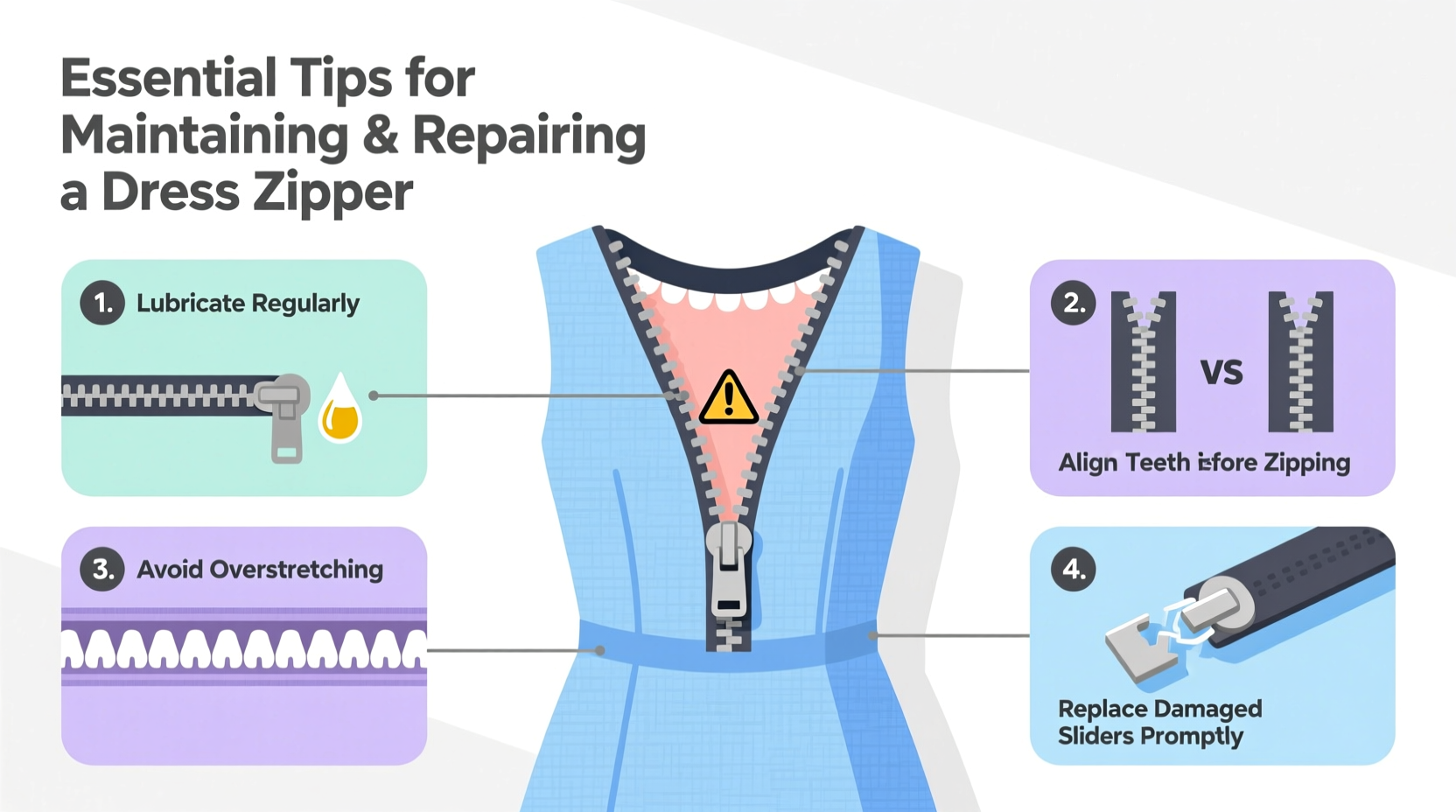
Zippers are under constant mechanical stress every time they're opened or closed. On delicate dresses made from silk, satin, or lightweight synthetics, even minor misalignment or resistance can cause fabric tearing or damage to the zipper teeth. Over time, dirt, body oils, and dryness accumulate along the slider and track, increasing friction and wear. Preventative maintenance reduces the risk of sudden failure during important events and preserves the structural integrity of your clothing.
According to textile conservator Dr. Lena Moreau, “The zipper is often the weakest point in an otherwise well-constructed garment. But with routine care, it doesn’t have to be the shortest-lived.”
“Proper zipper care isn’t just about function—it’s about preserving the design intent of the garment.” — Dr. Lena Moreau, Textile Conservation Specialist
Daily Care Habits That Extend Zipper Life
Prevention starts long before problems arise. Incorporating simple habits into your clothing routine can dramatically increase zipper longevity.
- Align before zipping: Misaligned fabric puts uneven pressure on the teeth, leading to skipped links or broken sliders.
- Keep zippers closed when not in use: This prevents snagging on other clothes and reduces stress on the pull tab.
- Avoid over-pulling: Yanking the zipper increases the chance of dislodging teeth or warping the coil.
- Store dresses properly: Hang garments with zippers fully closed to prevent tension on the seam.
Step-by-Step Guide to Lubricating a Stiff Zipper
One of the most common zipper issues is stiffness. Before assuming replacement is necessary, try lubrication—a fast, non-invasive fix.
- Inspect the zipper: Check for visible debris, bent teeth, or a damaged slider. If teeth are missing or severely bent, skip to repair options.
- Clean the track: Use a soft toothbrush to gently remove lint, dust, or residue from between the teeth.
- Choose a lubricant: Use one of the following:
- Graphite powder (ideal for metal zippers)
- Beeswax (safe for all materials, especially vintage fabrics)
- Specialized zipper lubricant (available at sewing supply stores)
- Apply sparingly: Rub the lubricant along the teeth using a cotton swab or the edge of a spoon. Avoid getting it on surrounding fabric.
- Test gently: Slowly open and close the zipper several times to distribute the lubricant.
- Wipe excess: Use a dry cloth to remove any residue that could attract dirt.
Common Zipper Problems and How to Fix Them
Even with care, zippers can develop issues. Addressing them early prevents further damage.
| Problem | Likely Cause | Solution |
|---|---|---|
| Zipper won’t close completely | Misaligned tape, worn slider | Realign fabric; tighten slider with pliers if loose |
| Slider jams mid-way | Dirt buildup or bent tooth | Clean track; gently realign teeth with tweezers |
| Pull tab detaches | Weak rivet or excessive force | Reattach with needle and thread or replace slider |
| Teeth separating after zipping | Worn slider or stretched fabric | Replace slider or reinforce seam stitching |
Mini Case Study: Reviving a Vintage Evening Gown
Sophia inherited a 1950s silk evening gown with a stubborn metal zipper that refused to budge past the midpoint. Afraid of tearing the fragile lining, she avoided wearing it for two years. After consulting a tailor, she learned the issue wasn't irreparable. The zipper had accumulated cosmetic powder and perfume residue over decades. Using a soft brush and a tiny amount of beeswax applied with a toothpick, she cleaned and lubricated the teeth. Within minutes, the zipper moved smoothly. A single stitch reinforced the weakened seam above the top stop, and the gown was restored to wearable condition—without costly alterations.
When to Repair vs. Replace a Zipper
Not every zipper can be saved, but knowing when to attempt a repair versus opting for replacement helps preserve garment value.
- Repair if:
- The teeth are intact, the slider is functional, and only minor alignment or lubrication is needed.
- Replace if:
- Teeth are missing, the slider is cracked, or the fabric tape is torn beyond reinforcement.
For high-end or vintage dresses, consider professional alteration. A skilled tailor can often replace a zipper invisibly, matching the original color and length precisely.
Checklist: Monthly Zipper Maintenance Routine
- ☐ Inspect all dress zippers for resistance or wobbling sliders
- ☐ Clean zipper tracks with a dry toothbrush
- ☐ Apply a safe lubricant to stiff zippers
- ☐ Check seam integrity near the top and bottom stops
- ☐ Test zippers on stored garments before wearing
- ☐ Store dresses with zippers closed and hung properly
Frequently Asked Questions
Can I fix a broken plastic zipper at home?
Minor issues like a stuck slider or misaligned teeth can often be resolved with cleaning and gentle realignment. However, if the plastic teeth are cracked or the slider is split, replacement is usually more effective than repair.
How do I prevent my zipper from splitting down after I zip it?
This usually indicates a worn slider or stretched fabric. Try tightening the slider gently with smooth-jawed pliers to restore grip. If that doesn’t work, replace the slider or reinforce the seam behind the zipper tape with hand stitching.
Is it worth repairing a zipper on a cheap dress?
Yes—if the fabric and fit are still good. Replacing a $2 zipper can extend the life of a dress indefinitely. The effort often takes less than 15 minutes and avoids unnecessary waste.
Conclusion: Small Efforts, Lasting Results
Zipper maintenance is one of the simplest yet most overlooked aspects of garment care. By taking a few moments to inspect, clean, and lubricate your dress zippers regularly, you protect both the function and elegance of your wardrobe. These small acts of attention preserve not just clothing, but memories, investments, and personal style. Whether it’s a wedding dress, a little black dress, or a vintage find, every zipper deserves a second chance—with the right care.




 浙公网安备
33010002000092号
浙公网安备
33010002000092号 浙B2-20120091-4
Comments
No comments yet. Why don't you start the discussion?