
An automatic mechanical watch is more than a timekeeping device—it’s a precision instrument, a work of engineering art, and often a cherished heirloom. Unlike quartz watches, automatics rely on intricate moving parts powered by the motion of your wrist. Without proper care, even the finest mechanisms can degrade, lose accuracy, or fail prematurely. Maintaining one requires consistency, awareness, and a touch of ritual. Whether you own a vintage Rolex, a modern Omega, or an entry-level Seiko, these essential practices will preserve its performance and value for decades.
Understand How Your Watch Works
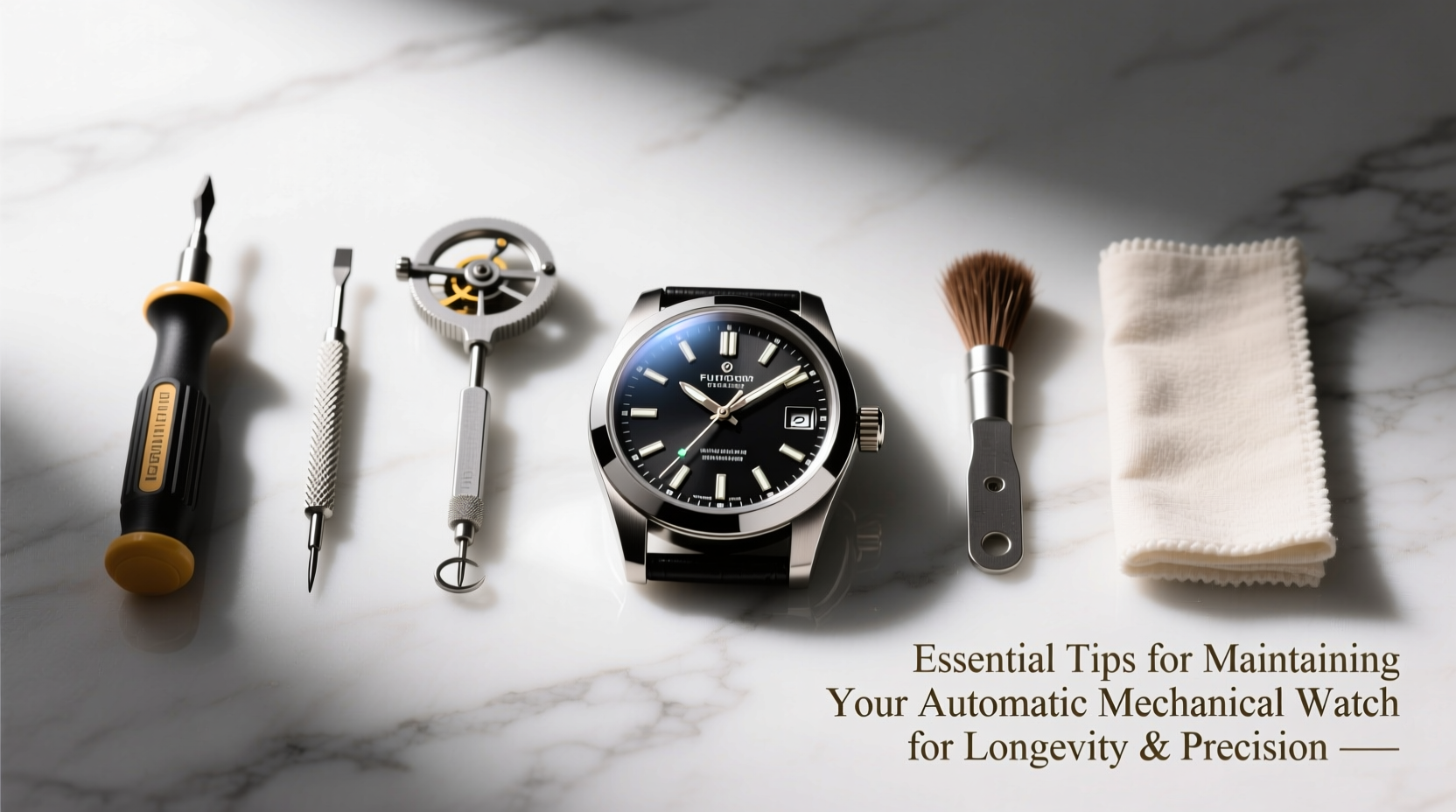
Before diving into maintenance, it helps to understand what makes an automatic watch unique. These timepieces are powered by a mainspring that winds automatically through the movement of your arm. A rotor inside spins with motion, transferring energy to the spring. When worn regularly, the watch stays wound and accurate. However, if left idle, it stops—typically after 38 to 72 hours, depending on the power reserve.
The internal components—gears, springs, escapements—are lubricated with microscopic amounts of specialized oils. Over time, these oils dry out or thicken, increasing friction and reducing accuracy. Dust, moisture, and shocks can further compromise performance. That’s why proactive care isn’t optional; it’s fundamental to preserving function and longevity.
“An automatic watch is like a living thing—it thrives on movement, regular attention, and protection from extremes.” — Daniel Morel, Master Watchmaker, Geneva Institute of Horology
Wear It Regularly or Use a Watch Winder
Automatic watches are designed to be worn. Daily use keeps the lubricants distributed evenly and prevents the oils from settling or congealing in one place. If you rotate between multiple watches, consider investing in a quality watch winder.
Winders keep your watch wound and ready to wear, but they aren’t a substitute for servicing. They also help maintain the accuracy of complications like date changes or moon phases that activate at specific times. However, avoid using winders continuously for decades without service—mechanical fatigue can still occur.
Protect Against Environmental Hazards
Mechanical watches are sensitive to environmental factors. Even water-resistant models have limits. Here’s how to minimize risk:
- Water exposure: Never operate the crown or pushers underwater. Even a 100m-rated dive watch should be checked for gasket integrity every 2 years if frequently exposed to water.
- Temperature extremes: Avoid saunas, hot showers, or leaving your watch on a car dashboard. Sudden shifts cause metal parts to expand or contract, disrupting calibration.
- Magnetism: Modern watches are antimagnetic to some degree, but strong fields from laptops, speakers, or MRI machines can magnetize the hairspring, causing erratic timekeeping.
- Shocks: While robust, hard impacts (like hammering nails or dropping on tile) can misalign delicate components such as the balance wheel.
| Hazard | Risk Level | Prevention Strategy |
|---|---|---|
| Moisture ingress | High | Check seals biannually; avoid crown manipulation when wet |
| Magnetism | Medium | Keep away from electronics; demagnetize annually if exposed |
| Extreme heat/cold | Medium | Store at room temperature; avoid direct sunlight |
| Physical shock | Low to Medium | Remove during high-impact activities |
Service Your Watch Every 5–7 Years
This is the cornerstone of long-term watch health. A full service involves disassembly, cleaning, re-lubrication, reassembly, timing calibration, and pressure testing. Skipping this leads to cumulative wear, oil degradation, and eventual breakdown.
Some owners delay servicing due to cost—typically $200–$800 depending on brand and complexity—but neglecting it costs more in the long run. Worn gears or corroded springs may require part replacements that inflate repair bills.
Step-by-Step: What Happens During a Professional Service
- Diagnosis: The watchmaker evaluates timekeeping accuracy, power reserve, and external damage.
- Disassembly: Movement is removed and taken apart into over 100 components.
- Cleaning: Parts are ultrasonically cleaned to remove old lubricants and debris.
- Inspection: Each component is examined under magnification for wear or damage.
- Lubrication & Reassembly: Fresh oils are applied precisely; the movement is rebuilt.
- Timing Adjustment: The watch is regulated in multiple positions to ensure accuracy within COSC or manufacturer standards.
- Rehousing & Testing: Case and bracelet are cleaned; water resistance is verified; final run test lasts 24–72 hours.
Handle Cleaning and Storage with Care
Daily maintenance starts with simple habits. After wearing your watch, especially after sweating or light moisture exposure, wipe it gently with a soft, lint-free cloth. For metal bracelets, occasional cleaning with warm water, mild soap, and a soft toothbrush removes grime and preserves luster.
When not in use, store your watch in a dedicated box or pouch, away from direct light and humidity. Wooden boxes with felt lining offer ideal conditions. Avoid stacking watches—they can scratch each other’s crystals or cases.
“Improper storage is the silent killer of fine watches. A damp drawer or sunlit shelf can do more damage than a decade of gentle wear.” — Clara Nguyen, Curator, Horological Heritage Society
Mini Case Study: The Neglected Heirloom
James inherited a 1968 Omega Seamaster from his grandfather. Though sentimental, he rarely wore it, storing it in a drawer wrapped in tissue. After 15 years, he tried to start it—no response. He brought it to a specialist who found dried oil gumming the gear train and a cracked mainspring. Restoration cost $1,200. With just one service every seven years and regular winding, James could have preserved its function at a fraction of the price. Now, he wears it monthly and logs each service meticulously.
Essential Maintenance Checklist
Use this checklist to stay on track:
- ✅ Wear your watch weekly or use a winder
- ✅ Clean case and bracelet monthly with a soft cloth
- ✅ Check water resistance every 2 years (or annually if used in water)
- ✅ Demagnetize if timekeeping suddenly becomes erratic
- ✅ Avoid extreme temperatures and strong magnetic fields
- ✅ Service every 5–7 years, regardless of performance
- ✅ Store in a cool, dry place with minimal light exposure
- ✅ Maintain a written service history
Frequently Asked Questions
How do I know if my watch needs servicing?
If your watch loses more than 10–15 seconds per day, stops unexpectedly, or has inconsistent power reserve, it may need attention. Visible condensation under the crystal is an urgent sign of seal failure.
Can I service my watch myself?
No. Automatic movements require specialized tools, training, and cleanroom conditions. DIY attempts often cause irreversible damage. Always use a certified watchmaker or authorized service center.
Is it bad to let my automatic watch stop?
No. Stopping doesn’t harm the mechanism. Simply wind it manually (20–30 turns of the crown) and reset the time. However, prolonged inactivity increases the risk of oil sedimentation, so restarting after months may require observation for accuracy.
Final Thoughts: Treat It Like a Legacy
A well-maintained automatic mechanical watch can outlive its owner, becoming a family treasure passed down through generations. Precision, beauty, and craftsmanship mean little without stewardship. By following these practices—regular wear, environmental awareness, scheduled servicing, and thoughtful storage—you honor the legacy of horology and protect your investment.




 浙公网安备
33010002000092号
浙公网安备
33010002000092号 浙B2-20120091-4
Comments
No comments yet. Why don't you start the discussion?