
Bringing home a small puppy is an exciting milestone, but it also comes with important responsibilities—one of the most immediate being how you’ll safely manage walks and outdoor time. The right leash isn’t just about control; it’s about ensuring your puppy feels secure, supported, and stress-free during their early explorations. For small breeds like Chihuahuas, Pomeranians, or Yorkshire Terriers, standard leashes designed for larger dogs can pose risks due to improper fit, excessive weight, or poor pressure distribution. Choosing wisely means balancing safety, comfort, durability, and ease of use. This guide covers what to look for—and what to avoid—when selecting a leash that supports your tiny companion’s physical well-being and emotional confidence.
Understand Your Puppy’s Unique Needs
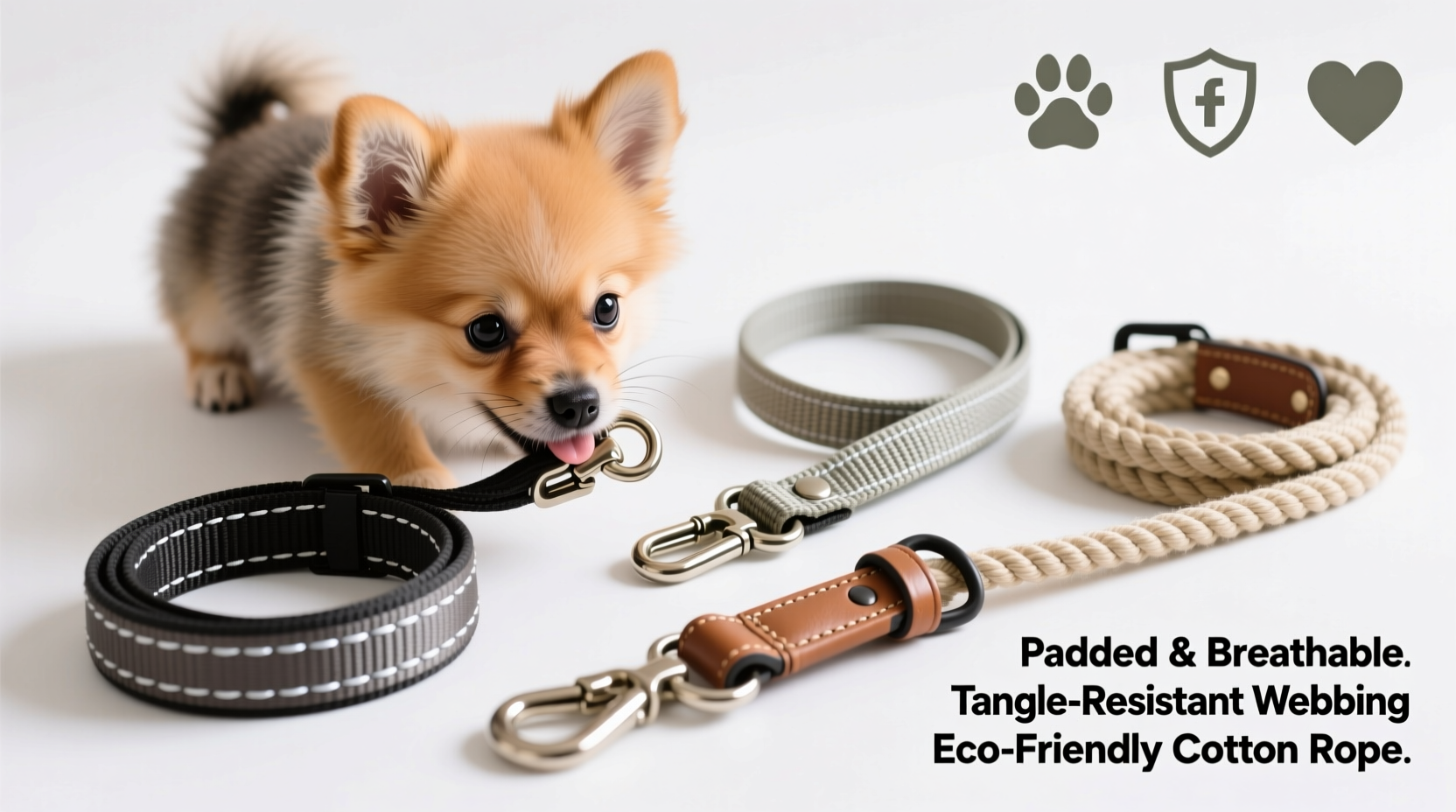
Small puppies are not just miniature versions of adult dogs—they have delicate necks, underdeveloped musculature, and a higher risk of injury from sudden pulls or jerks. A poorly chosen leash can lead to tracheal damage, spinal strain, or long-term behavioral issues related to discomfort. Unlike larger breeds, small dogs often benefit more from harness-compatible systems rather than traditional neck leashes alone. However, if using a collar-based leash, extreme care must be taken in material, width, and attachment point.
Their size also means lightweight materials are essential. A bulky or stiff leash can weigh them down, making walks exhausting instead of enjoyable. Prioritize gear that matches their scale—not yours.
Key Features of a Safe and Comfortable Leash
When evaluating leashes, focus on these five critical components:
- Material: Nylon and biothane are top choices. Nylon is soft and lightweight; biothane is water-resistant, easy to clean, and holds up well over time. Avoid thick leather for very small puppies—it’s often too rigid and heavy.
- Width: For neck leashes, choose at least ½ inch wide to distribute pressure evenly. Narrow leashes concentrate force and increase injury risk.
- Length: A 4- to 6-foot leash offers optimal control without restricting movement. Retractable leashes are generally unsafe for small puppies due to lack of control and potential for tangling.
- Clasp Type: Look for a secure, spring-loaded snap hook made of solid metal (not plastic). It should attach smoothly to a collar or harness and resist accidental opening.
- Ergonomic Handle: Padded or contoured handles reduce hand strain, especially important when managing quick movements typical of excitable small breeds.
Do’s and Don’ts When Choosing Materials and Design
| Do’s | Don’ts |
|---|---|
| Choose soft, flexible materials like flat nylon webbing | Avoid rope leashes—they can fray and injure delicate skin |
| Opt for reflective stitching for low-light visibility | Never use chains or metal-link leashes—they’re too harsh and heavy |
| Select a breakaway-style clasp only for ID tags, not walking | Don’t rely on decorative collars for walking—they lack structural support |
| Use a leash with a loop handle and optional wrist strap | Avoid overly long leashes (over 6 feet) until basic obedience is established |
Harness vs. Collar: Making the Right Connection
For small puppies, a front-clip harness is often the safest option. It redirects pulling by gently guiding the dog back toward you, reducing strain on their fragile trachea. When paired with a standard leash, this setup provides superior control and comfort.
If using a collar, ensure it’s specifically designed for small breeds with padded edges and a secure D-ring centered at the back. Never allow a small puppy to pull hard on a neck collar—this can cause coughing, breathing difficulties, or even fainting in extreme cases.
“Small breed puppies are prone to tracheal collapse, which can be exacerbated by pressure from ill-fitting collars or rough handling. A well-fitted harness significantly reduces this risk.” — Dr. Lena Torres, DVM, Canine Pediatric Specialist
Mini Case Study: Bella the Yorkie’s Walk Troubles
Bella, a 10-week-old Yorkshire Terrier, began coughing after short walks. Her owner used a thin, glittery collar and a retractable leash, thinking it looked cute and gave her freedom. After a vet visit, she was diagnosed with mild tracheal irritation. Switching to a padded Y-shaped harness and a 4-foot biothane leash eliminated the symptoms within days. Bella now walks calmly, enjoys her outings, and no longer resists leaving the house.
Step-by-Step Guide to Fitting and Testing the Leash
Follow this timeline to ensure proper selection and introduction:
- Week 1 – Measure and Research: Measure your puppy’s neck (for collar) or girth (behind front legs, for harness). Note breed-specific sensitivities.
- Week 2 – Select Gear: Choose a lightweight leash (under 4 oz) and compatible collar or harness. Read reviews focused on small breeds.
- Day 1 at Home – Fit Check: Put on the collar or harness. Two fingers should fit snugly underneath. Adjust straps as needed.
- Day 2–3 – Indoor Trial: Attach the leash and let your puppy drag it (supervised) to get used to the sensation. Reward calm behavior.
- Day 4–5 – Controlled Practice: Hold the leash while playing indoors. Practice gentle direction changes and pauses.
- Day 6 – First Outdoor Walk: Go to a quiet area. Keep walks under 10 minutes. Watch for signs of distress: panting, reluctance, paw lifting.
- Ongoing – Monitor and Maintain: Clean the leash weekly, inspect hardware monthly, and replace any worn parts immediately.
Frequently Asked Questions
Can I use a retractable leash for my small puppy?
No. Retractable leashes give puppies too much freedom too soon, increasing the risk of running into danger or getting tangled. They also encourage pulling and offer poor responsiveness. Stick to fixed-length leashes (4–6 feet) during training and early development.
How tight should the collar be when using a leash?
The collar should be snug enough that it doesn’t slip over the puppy’s head but loose enough to fit two fingers between the collar and neck. Too tight causes chafing; too loose risks escape. Always double-check fit after growth spurts.
Is a harness better than a collar for leash walking?
For most small puppies, yes. Harnesses distribute force across the chest and shoulders, protecting the neck and spine. They also provide better control, which is crucial during potty training and socialization walks.
Final Checklist Before Purchase
- ✅ Leash length is between 4 and 6 feet
- ✅ Material is lightweight and durable (nylon or biothane)
- ✅ Snap hook is metal, rust-resistant, and securely latches
- ✅ Compatible with a properly fitted collar or harness
- ✅ Handle is comfortable and includes a wrist loop (optional but helpful)
- ✅ Reflective elements are present for evening visibility
- ✅ No dangling decorations that could be chewed or caught
Conclusion: Start Strong with the Right Foundation
Your puppy’s first experiences with walking on a leash shape their confidence, behavior, and physical health for life. Taking the time to select a leash that prioritizes safety, comfort, and proper fit isn’t just responsible—it’s an investment in years of joyful, stress-free adventures together. Small details like material weight, clasp quality, and compatibility with a supportive harness make all the difference when every ounce matters. Don’t compromise on quality for aesthetics. Your puppy depends on you to make informed choices today so they can walk, explore, and thrive tomorrow.




 浙公网安备
33010002000092号
浙公网安备
33010002000092号 浙B2-20120091-4
Comments
No comments yet. Why don't you start the discussion?