
An automatic watch is more than a timepiece—it’s an heirloom in the making. Powered by the motion of your wrist, these mechanical marvels blend engineering elegance with personal significance. But unlike quartz watches, they demand consistent attention to maintain accuracy and longevity. Without proper care, even high-end models can suffer from moisture damage, magnetization, or worn components long before their time. Protecting your investment isn’t about perfection; it’s about smart habits. With the right practices, your automatic watch can run smoothly for decades, retaining both function and value.
Understand How Your Watch Works
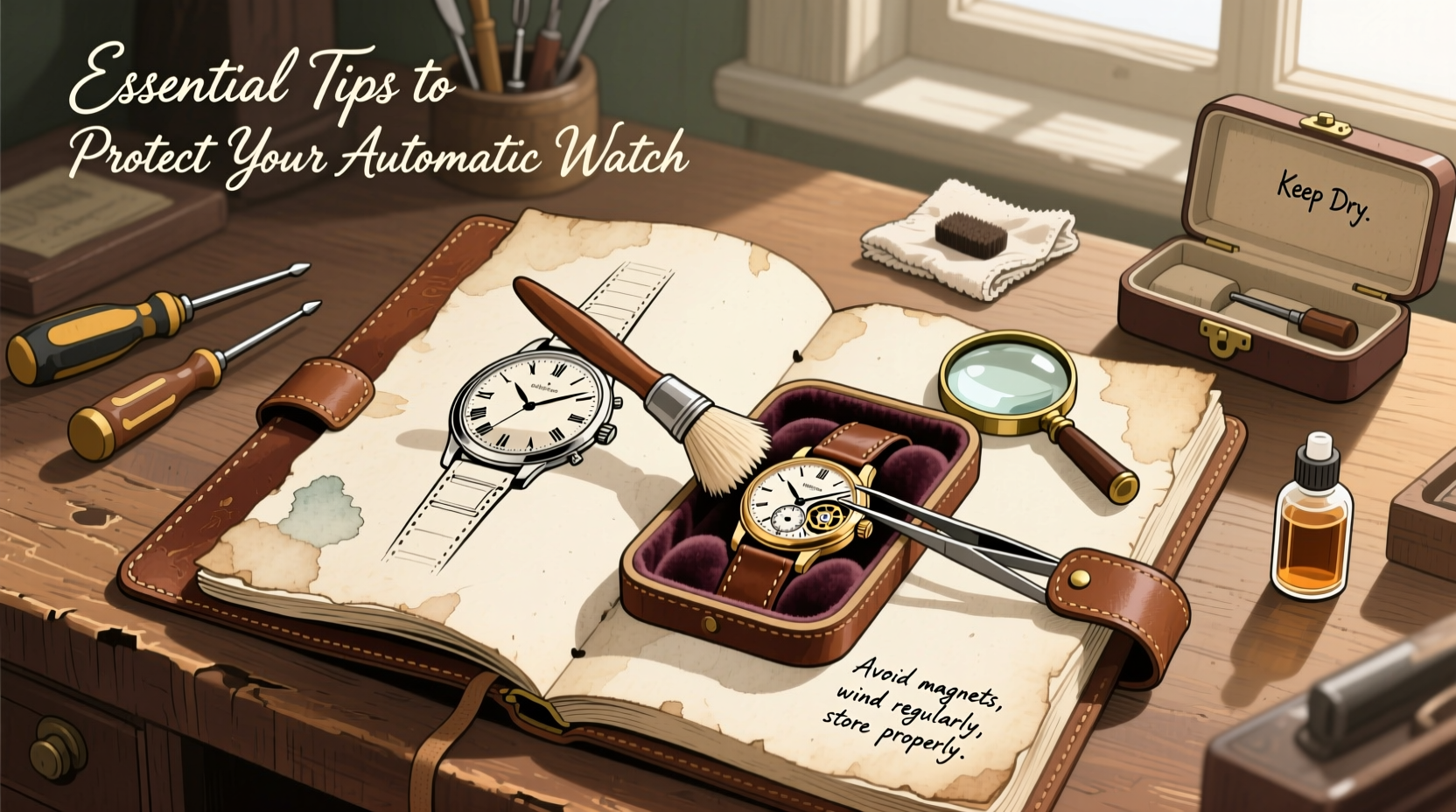
Before diving into maintenance, it helps to understand what makes an automatic watch unique. These timepieces are powered by a rotor that spins with your arm movement, winding the mainspring to store energy. When worn regularly, they self-wind and keep accurate time. However, if left idle for 24–48 hours (depending on the model), they stop. Unlike battery-powered watches, automatics have hundreds of tiny moving parts—gears, springs, and levers—all working in harmony. This complexity demands respect. Dust, shocks, and magnetic fields can disrupt their delicate balance.
Knowing your watch’s water resistance rating is also crucial. Many assume “water-resistant” means waterproof, but this is a misconception. A 50-meter rating suits splashes and rain, not swimming. For diving, look for 200 meters or higher—and even then, seals degrade over time.
Protect Against Common Environmental Threats
The biggest threats to automatic watches aren’t theft or loss—they’re everyday forces you might not notice. Three primary culprits are magnetism, shock, and moisture.
Magnetism is increasingly common in modern life. Laptops, smartphones, speakers, and even fridge doors emit magnetic fields strong enough to throw a watch’s hairspring out of sync, causing it to gain or lose minutes per day. If your watch suddenly becomes inaccurate, magnetization could be the cause.
Shock is another silent enemy. Dropping your watch, hitting it against a desk, or wearing it during intense workouts can misalign internal components. While some models are shock-resistant (like those with Incabloc systems), no automatic movement is indestructible.
Moisture creeps in through degraded gaskets or when buttons are pulled while underwater. Even small amounts of condensation inside the crystal can corrode metal parts and ruin lubricants.
“Over 60% of service cases I see involve avoidable issues—magnetization, impact damage, or water ingress. Most could have been prevented with awareness.” — Daniel Reyes, Master Watchmaker at Precision Horology Studio
Establish a Daily Wear and Storage Routine
Consistency is key. Automatic watches thrive on regular use. Wearing your watch daily keeps the lubricants evenly distributed and prevents the oils from drying out. If you rotate watches or own multiple pieces, consider a watch winder. These devices gently rotate idle watches to maintain tension in the mainspring, simulating wrist motion.
However, not all watches need a winder. Over-winding isn’t possible in modern automatics thanks to slip mechanisms, but unnecessary rotation can add wear over time. Use a winder only for watches you don’t wear weekly.
When storing manually, place your watch in a soft pouch or padded box, away from direct sunlight. UV rays can fade dials and degrade leather straps. Avoid stacking watches—they can scratch each other’s crystals or cases.
| Scenario | Recommended Action | Avoid |
|---|---|---|
| Daily non-use | Use a programmable watch winder | Leaving it face-down on hard surfaces |
| Long-term storage | Service first, then store in a dry box with silica gel | Basements or humid closets |
| Travel | Pack in a dedicated travel case | Loose in luggage or pockets |
Perform Regular Maintenance and Servicing
Just as a car needs oil changes, an automatic watch requires periodic servicing—typically every 5 to 7 years. During a service, a watchmaker disassembles the movement, cleans each component, replaces worn parts, re-lubricates gears, and checks water resistance. Skipping this can lead to increased friction, power loss, or complete failure.
You don’t need to wait for problems to arise. Signs it’s time for a service include:
- Timekeeping inaccuracy exceeding ±10 seconds per day
- Reduced power reserve (e.g., stops after 20 hours instead of 40)
- Fogging under the crystal
- Sticky crown or difficulty adjusting time
If you notice any of these, consult a certified technician. Avoid generic jewelry stores unless they specialize in mechanical watches. Brand-authorized service centers are ideal, though independent master watchmakers often offer more personalized care at lower costs.
Handle Straps and Crowns with Care
The strap and crown are two of the most frequently touched—and abused—parts of your watch. Leather straps absorb sweat and oils, leading to cracking and odor. Swap them periodically or clean with a damp cloth and leather conditioner. For daily wear, consider durable alternatives like rubber, nylon NATO straps, or stainless steel bracelets.
The crown is a critical access point. Pulling it out to set the time exposes the movement to dust and moisture. Always ensure it’s fully pushed in after adjustment. Never set the date while the crown is halfway pulled—that’s the quick-set position on many watches, and forcing it incorrectly can break the mechanism.
Cleaning the case and bracelet should be done monthly. Use a soft toothbrush, mild soap, and lukewarm water. Rinse thoroughly and dry with a lint-free cloth. Avoid ultrasonic cleaners unless approved by the manufacturer.
Step-by-Step: Monthly Watch Care Routine
- Remove the watch and inspect for visible dirt or moisture.
- Gently brush the case and bracelet with a soft-bristled brush and soapy water.
- Rinse under running water (only if water resistance is 100m+ and crown sealed).
- Dry completely with a microfiber cloth, paying attention to links and lugs.
- Check crown position—ensure it’s fully screwed down (if applicable).
- Wipe the crystal with a lens-safe cloth to remove smudges.
- Verify time and date accuracy.
Real-Life Example: The Neglected Heirloom
Mark inherited his grandfather’s vintage Rolex from the 1960s. It had sentimental value but hadn’t run in years. Instead of sending it for service, he wore it daily, thinking motion would “bring it back to life.” Within weeks, the second hand began stuttering. After three months, the watch stopped entirely. A specialist found dried lubricant, a magnetized hairspring, and a cracked jewel due to lack of servicing. Restoration cost over $800—far more than routine maintenance would have required. Had Mark sought evaluation first, the watch might have been revived gently and affordably.
This case underscores a vital rule: sentiment doesn’t replace expertise. Vintage or new, automatic watches need professional eyes periodically.
Frequently Asked Questions
Can I swim with my automatic watch?
Only if it has a water resistance rating of at least 100 meters and a screw-down crown. Even then, have the seals checked annually. Avoid hot showers—heat expands gaskets, allowing water entry.
How do I demagnetize a watch?
While DIY demagnetizers exist, improper use can worsen the issue. Take it to a watchmaker who can test and correct magnetization safely using a degausser.
Do I need to wind my automatic watch manually?
Yes, especially if it’s been idle. Give it 20–30 gentle clockwise turns via the crown to start it. This primes the movement before wearing.
Final Thoughts: Treat It Like a Living Mechanism
Your automatic watch isn’t just keeping time—it’s performing a continuous mechanical dance. Respect that motion with thoughtful care. Clean it regularly, store it wisely, avoid extreme environments, and honor its service schedule. These habits don’t just preserve function; they deepen your connection to the craftsmanship within your wrist.




 浙公网安备
33010002000092号
浙公网安备
33010002000092号 浙B2-20120091-4
Comments
No comments yet. Why don't you start the discussion?