
At first glance, a keychain might seem like a simple accessory—something functional tucked into a pocket or clipped to a bag. But look closer, and you’ll find subtle cultural distinctions in how people across Europe and the United States approach their everyday carry items. The debate over European versus American keychains often starts with stereotypes: Europeans prefer sleek, minimalist designs; Americans lean toward bold, expressive ones. But is this contrast rooted in reality, or is it merely an oversimplification of complex regional tastes?
The truth lies somewhere in between. While national preferences do influence design trends, material choices, and functionality, the differences are shaped more by lifestyle, urban infrastructure, and historical context than by clichés. By examining real-world usage, manufacturing traditions, and consumer behavior, we can move beyond assumptions and understand what truly sets these two approaches apart.
Design Philosophy: Minimalism vs. Expression
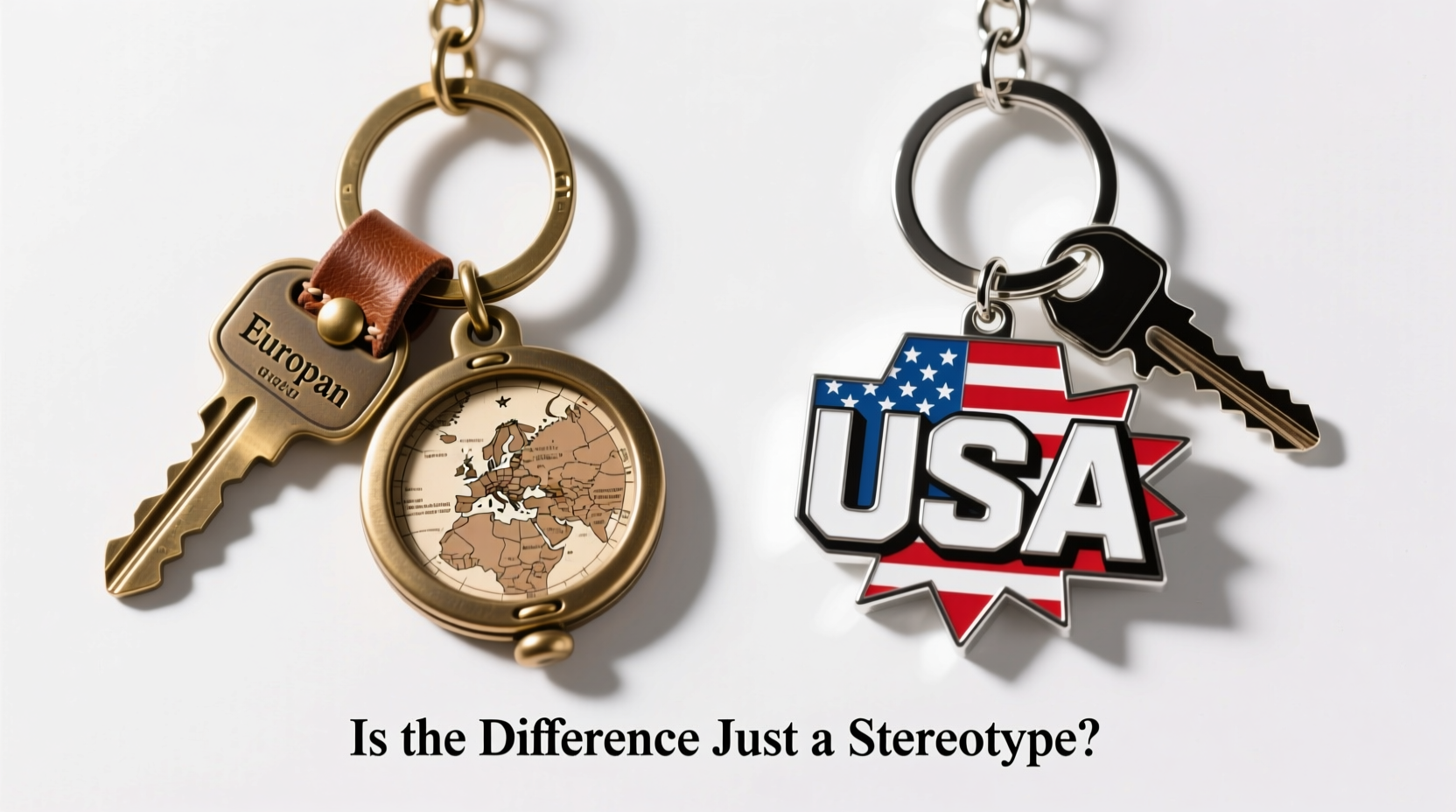
In general, European keychains tend to reflect a design-first mindset. There’s a strong emphasis on form meeting function—clean lines, compact mechanisms, and understated branding. Countries like Germany, Sweden, and Switzerland have long traditions of industrial design that prioritize precision and longevity. This philosophy extends to accessories: a German-engineered key fob might feature a machined aluminum housing with a magnetic clasp, designed to last decades without fraying or breaking.
American keychains, by contrast, often embrace individuality and personal expression. From college logos and sports team charms to novelty shapes and patriotic themes, U.S. consumers use keychains as a way to broadcast identity. Retailers like Walmart and Target stock aisles full of themed keyrings—Halloween skeletons, pet silhouettes, even miniature replicas of famous landmarks. These aren’t just tools; they’re souvenirs, conversation starters, and emotional keepsakes.
Materials and Manufacturing Traditions
The divergence in materials reflects deeper industrial legacies. Many European keychains are made from high-grade stainless steel, brass, or aircraft-grade aluminum. Brands like Carl Benz Accessories (Germany) and Millet (France) produce modular systems where keys slide onto rails or lock into place with tool-free mechanisms. These are engineered for efficiency—especially useful in cities where people rely on public transit and need quick access to multiple keys.
In the U.S., plastic remains a dominant material due to cost-effectiveness and mass production capabilities. Injection-molded PVC keychains with rubberized grips or LED lights are common promotional giveaways. However, premium American brands like Tanner Goods and Bellroy have emerged, offering hand-stitched leather organizers that rival European craftsmanship. Still, the average American keychain set is bulkier, noisier, and more disposable than its European counterpart.
“European consumers expect longevity from small goods—they treat a keychain like a tool. In the U.S., it’s often seen as a fashion item or gift.” — Luca Moretti, Product Designer at Urban Gear Labs, Milan
Functional Differences Rooted in Lifestyle
Lifestyle plays a crucial role in shaping keychain habits. In dense European cities like Paris, Berlin, or Barcelona, residents often live in older buildings with heavy wooden doors, intricate locks, and multiple security bolts. A typical apartment entry might require three separate keys: one for the street door, one for the stairwell, and another for the flat itself. This complexity has driven demand for organized, silent, and secure key management solutions—like stackable key covers or shielded pouches that prevent scratching.
In suburban America, single-family homes dominate, and garage door openers frequently replace physical keys altogether. Car ownership is higher, and vehicles often come with electronic fobs that double as house keys. As a result, American keychains frequently center around the car remote, sometimes encased in oversized silicone skins or adorned with branded accessories. Noise isn’t always a concern—many users don’t mind jingling keys in large pockets or purses.
Urban vs. Suburban Key Habits
| Factor | European Urban Use | American Suburban Use |
|---|---|---|
| Average Number of Keys | 4–6 (doors, mailbox, storage) | 2–3 (house, car, padlock) |
| Primary Material | Metal, leather, composite | Plastic, silicone, rubber |
| Noise Sensitivity | High (public transport, apartments) | Low (private spaces, cars) |
| Replacement Frequency | Every 5+ years | Every 1–2 years |
| Common Add-ons | Bottle openers, multitools | Fobs, USB drives, dog tags |
Mini Case Study: Two Commuters, Two Continents
Consider Anna, a 34-year-old architect living in Copenhagen. Her daily commute involves biking to the train station, navigating crowded platforms, and walking to her office. She carries five keys on a slim titanium organizer that clips magnetically to her belt loop. It’s silent, secure, and fits neatly in her jacket pocket. She replaced her last keyholder after seven years when a hinge loosened—a rare event she describes as “a minor tragedy.”
Now meet Jason, a 38-year-old sales manager in Phoenix. He drives to work every day, parks in a private lot, and uses his keychain primarily to trigger his SUV’s alarm and unlock the trunk. His current set includes a rubber-coated fob with his company logo, a lucky golf ball charm from his brother, and a mini flashlight. The whole bundle jingles noticeably when he walks—but since he spends most of his time alone in his vehicle, it doesn’t bother him.
Their setups reflect not just personal taste, but environmental demands. Anna’s system evolved from necessity: noise reduction, theft prevention, and ease of movement in tight spaces. Jason’s reflects convenience and identity—he rarely walks far with his keys, so bulk and sound matter less than sentiment and utility.
Checklist: Choosing the Right Keychain Style for Your Life
- Evaluate your daily routine: Do you walk, bike, or take transit? Prioritize quiet, compact designs.
- Assess key volume: More than four keys? Consider a sliding rail or stackable system.
- Think about durability: Stainless steel or titanium lasts longer than plastic under frequent use.
- Limit noise: Rubber washers or padded rings reduce jingling in shared spaces.
- Balance expression and function: Attach one meaningful charm instead of cluttering your chain.
- Match your environment: Urban dwellers benefit from low-profile gear; drivers may prioritize fob access.
Are the Stereotypes Entirely False?
Stereotypes persist because they contain grains of truth—but they rarely tell the full story. Yes, many Europeans favor minimalist, utilitarian keychains. And yes, many Americans collect decorative or branded ones. But generalizations collapse under scrutiny. Not all Europeans avoid flashy designs—Italy and Spain see vibrant, artistic keychains sold at markets and tourist spots. Likewise, minimalist American brands are gaining traction among professionals and outdoor enthusiasts who value simplicity.
The real distinction lies in cultural attitudes toward maintenance and longevity. In much of Europe, repairing or upgrading small items is standard practice. You’ll find repair kiosks in German train stations that service watches, glasses, and key mechanisms. In the U.S., replacement is often easier and cheaper than repair, reinforcing a cycle of disposability—even for something as small as a keyring.
FAQ
Do European keychains really last longer?
On average, yes. Higher use of corrosion-resistant metals, tighter manufacturing tolerances, and modular designs contribute to longer lifespans. A well-maintained European key organizer can last 10+ years, while mass-market American versions may degrade within 2–3 years.
Can I combine both styles effectively?
Absolutely. Pair a durable European-style base—like a silent split ring or key rail—with one personalized American-style charm or fob cover. This balances function and self-expression without sacrificing practicality.
Why do American keychains have so many gimmicks?
Gimmicks like bottle openers, USB drives, or LED lights stem from a culture of multifunctionality and promotional marketing. Companies distribute branded keychains freely, and consumers appreciate added utility—even if features go unused.
Conclusion
The divide between European and American keychains isn’t purely a stereotype—it’s a reflection of broader cultural values around design, durability, and personal identity. While Europeans often treat keychains as precision tools, Americans frequently view them as extensions of personality. Yet the gap is narrowing, thanks to global e-commerce, rising interest in sustainable products, and cross-cultural design inspiration.
Instead of choosing sides, the smart approach is selective adoption: borrow the best from both worlds. Invest in quality materials and thoughtful engineering, then personalize sparingly. Whether you're cycling through Amsterdam or driving through Austin, your keychain should serve you—not weigh you down.




 浙公网安备
33010002000092号
浙公网安备
33010002000092号 浙B2-20120091-4
Comments
No comments yet. Why don't you start the discussion?