
Adjusting the size of a metal watch bracelet is often necessary for comfort, but not everyone has access to a professional jeweler or the proper tools. Many assume that removing watch links requires a pin punch, hammer, or specialized link remover—but this isn’t always the case. With careful technique and common household items, it’s possible to safely remove links from certain types of bracelets even when there are no visible holes and no tools on hand. This guide walks you through safe, proven methods, backed by horology best practices and real-world experience.
Understanding Your Watch Bracelet Type
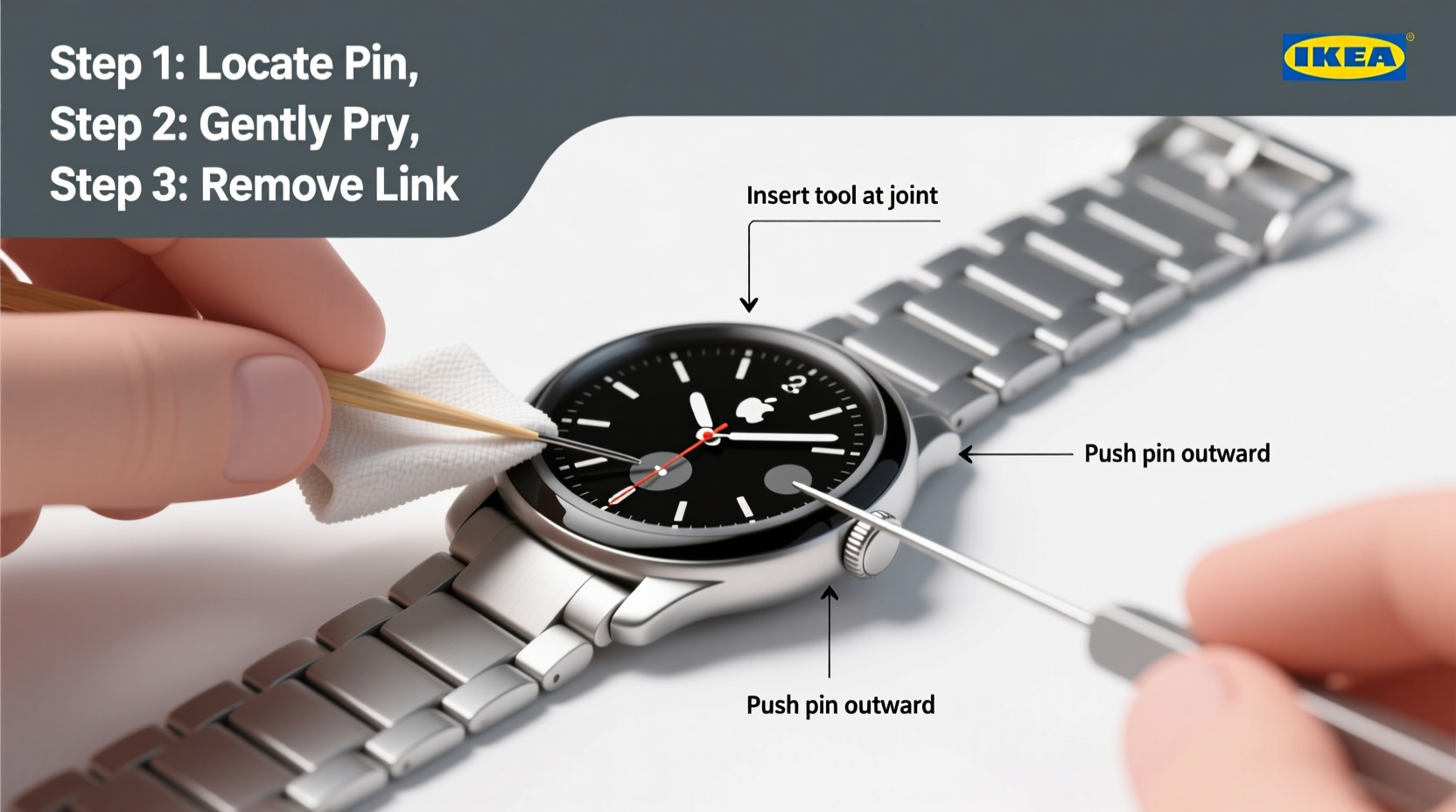
Before attempting any adjustment, it's critical to identify the type of bracelet your watch uses. Not all metal bands are designed to be user-adjustable. The three most common types include:
- Pin-and-Collar System: Links are held together by small pins with collars; these usually have tiny holes at the end where a tool can push the pin out.
- Screw-In Links: Some high-end watches use threaded rods instead of pins. These require a precision screwdriver and should never be forced.
- Folded-Pin or Hidden-Pin Design: Found in budget or fashion watches, these lack external holes. The pins are pressed in during manufacturing and may appear sealed.
The focus here is on folded-pin or holeless designs—often found in affordable stainless steel or alloy bracelets—where traditional tools won’t fit. While these aren’t meant for frequent resizing, temporary adjustments can be made carefully if done correctly.
Step-by-Step: Removing Links Without Tools or Holes
This method works best on lower-cost watches with soft metal pins and flexible joints. Proceed slowly to avoid damaging the clasp or bending pins permanently.
- Prepare Your Workspace
Lay down a soft cloth or towel on a flat surface. Work under good lighting. Keep a small container nearby to store removed pins and links. - Locate the Link to Remove
Determine how many links need to come off by wrapping the watch around your wrist. Mark the target link with a non-permanent marker or mental note. - Expose the Joint
Bend the bracelet slightly at the joint between two links. Look closely—you may notice a slight gap or seam where the pin enters the adjacent link, even without a drilled hole. - Select an Improvised Tool
Use one of the following:- A thin nail (2–3 cm long)
- Push pin or sewing needle
- Unfolded paperclip (hardened end)
- Toothpick (for initial probing only)
- Gently Probe the Pin End
Insert the tip into the seam. Apply light pressure while wiggling slightly. Do not force it. If resistance is high, stop immediately—this design may not allow removal. - Push the Pin Gradually
If movement occurs, continue applying steady, even pressure. The pin should begin to slide sideways. Push it just far enough so the link can be separated—about 2–3 mm. - Separate the Link
Once the pin is partially out, flex the bracelet gently to disengage the link. Repeat on the other side if necessary. - Reassemble and Test Fit
After removal, reconnect the remaining links by aligning them and pressing the pin back in using the same improvised tool. Ensure smooth movement and secure connection.
What to Do If the Pin Won’t Move
If no amount of gentle pressure loosens the pin, the bracelet likely uses a riveted or welded system. Forcing it will damage the band. In such cases, wear the watch as-is or consult a repair shop—even basic services often cost less than $15.
“Some manufacturers seal pins permanently to discourage tampering. Attempting removal can compromise structural integrity.” — Daniel Reeves, Watch Technician & Repair Specialist
Do’s and Don’ts: Safe vs. Risky Practices
| Do | Don’t |
|---|---|
| Work slowly and patiently over several minutes | Rush or apply sudden force |
| Use a soft surface to prevent scratches | Work on hard stone or metal counters |
| Test fit frequently during adjustment | Remove too many links at once |
| Store removed pins in a labeled container | Leave loose parts unattended |
| Stop if you hear cracking or feel binding | Continue after signs of damage occur |
Real Example: A Traveler’s Quick Fix
Mark, a digital nomad traveling through Southeast Asia, bought a stylish analog watch from a local market. The band was too large, and his usual tool kit was checked in luggage. With no access to a jeweler, he examined the underside of the links and noticed subtle seams near the joints. Using a safety pin from a hotel sewing kit and the edge of a plastic keycard to stabilize the band, he gradually worked one pin loose over ten minutes. He removed two links, reassembled the watch, and wore it comfortably for six weeks until returning home. His success came from patience—not strength.
Checklist: Preparing for Tool-Free Adjustment
- ✅ Confirm your watch has removable links (not riveted)
- ✅ Identify the correct number of links to remove
- ✅ Gather soft cloth, lighting, and a fine-point object (e.g., needle)
- ✅ Inspect for directional arrows on inner links
- ✅ Clean the bracelet to improve visibility
- ✅ Set aside time when you won’t be rushed
- ✅ Have a small magnet or tape ready to catch metal parts
Frequently Asked Questions
Can I remove watch links without leaving marks?
Possibility of minor scuffing exists, especially when using metal objects like nails or paperclips. To minimize marks, wrap the tip of your tool with thin tape or use a wooden toothpick for initial probing. However, invisible results are unlikely—some cosmetic wear is normal with DIY methods.
Will removing links affect water resistance?
No, adjusting the bracelet does not impact the watch’s internal seals or gaskets. Water resistance depends on the case, crown, and crystal integrity—not the band. That said, avoid submerging the watch immediately after handling pins, as debris could enter open joints temporarily.
Is it safe to reuse the same pin after removal?
In most cases, yes—if the pin remains straight and undamaged. Bent pins may fail under stress and cause the link to detach unexpectedly. If in doubt, replace with a compatible pin from a watch repair kit (available online for under $10).
Final Thoughts and Recommendations
While removing watch links without tools or visible holes is possible, it demands caution, precision, and realistic expectations. Success depends heavily on the build quality and design of the bracelet. High-end watches should never be subjected to improvised methods—leave those to professionals. But for affordable, mass-produced timepieces, a patient hand and a bit of ingenuity can yield functional results.
Remember: the goal is comfort and usability, not perfection. Even if the finish shows slight wear, a well-fitting watch enhances both appearance and daily experience. If you're uncertain at any point, pause and reconsider. It’s better to live with a slightly loose band than to ruin a favorite accessory.




 浙公网安备
33010002000092号
浙公网安备
33010002000092号 浙B2-20120091-4
Comments
No comments yet. Why don't you start the discussion?