
Travel demands reliability, especially when it comes to your carry-on or checked luggage. For men who frequently fly—whether for business, adventure, or extended stays—a large capacity travel bag isn’t just a convenience; it’s a necessity. The right bag balances volume, durability, organization, and comfort, transforming what could be a logistical burden into a seamless part of your journey. Yet with countless options flooding the market, from duffels to wheeled suitcases and hybrid backpacks, making the right choice requires more than just aesthetics. This guide breaks down the essential styles, critical features, and real-world considerations that separate an adequate bag from one that becomes a trusted companion on every trip.
Understanding Your Travel Needs
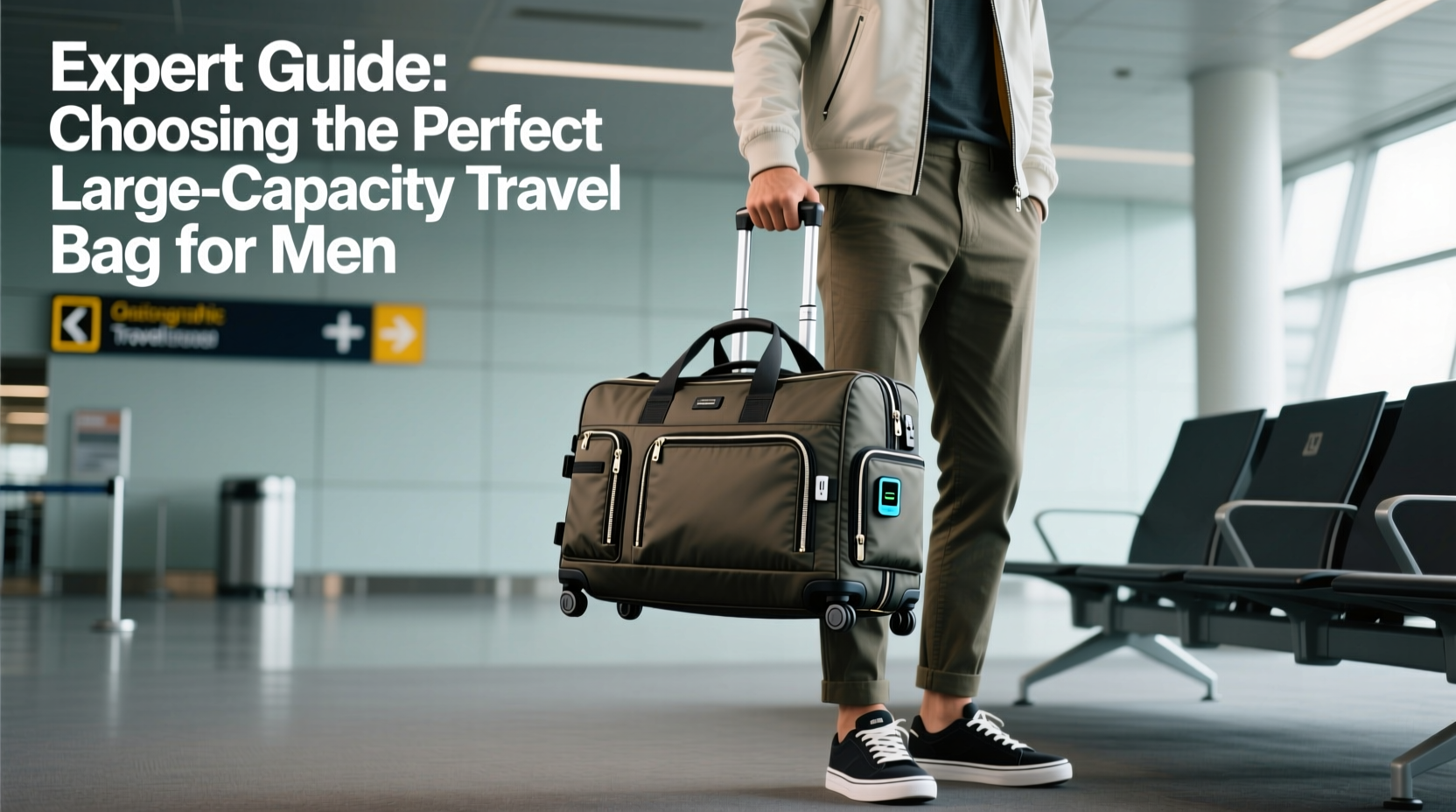
Before evaluating materials or zippers, define how you travel. A weekend commuter has different needs than a digital nomad spending months abroad. Ask yourself:
- How long are your typical trips?
- Do you check luggage or prefer carry-on only?
- Are you walking through cities, boarding planes, or navigating rough terrain?
- Do you need space for electronics, gym gear, or formal attire?
A 40–50 liter bag suits most week-long trips with efficient packing. If you're checking luggage regularly or traveling for weeks, consider 60+ liters. However, oversized bags can become unwieldy—especially in crowded airports or narrow European hostels. The goal is maximizing utility without sacrificing maneuverability.
Key Styles of Large Capacity Travel Bags for Men
Three dominant styles dominate the market, each suited to different travel philosophies:
- Duffle Bags: Classic, cylindrical, and often made from durable canvas or ballistic nylon. Ideal for short trips or as supplemental luggage. Look for models with removable shoulder straps and reinforced handles. Some include expandable compartments for last-minute additions.
- Rolling Suitcases: Best for business travelers or those prioritizing ease of movement. Modern spinner designs with 360-degree wheels glide smoothly over tile and pavement. Opt for hardside shells if security and weather resistance are priorities, or softside for flexibility and lighter weight.
- Travel Backpacks: Rising in popularity, especially among urban explorers and outdoor enthusiasts. These combine high capacity (50–75L) with ergonomic suspension systems. Top-loading access with front-panel zips offers quick retrieval of essentials. Hybrid models now include trolley sleeves for dual use with rolling luggage.
No single style wins across all scenarios. A hybrid approach—such as a carry-on suitcase paired with a foldable duffel—can offer unmatched versatility.
Must-Have Features for Performance and Longevity
Capacity alone doesn’t define a great travel bag. What matters is how well it performs under stress. Prioritize these features:
| Feature | Why It Matters | Recommended Specs |
|---|---|---|
| Durable Fabric | Resists abrasion, moisture, and tearing | Ballistic nylon, polyester with PU coating, or ripstop fabric |
| Reinforced Zippers | Prevents jamming and breakage under load | YKK zippers, double-slider on main compartments |
| Ergonomic Design | Reduces strain during extended carry | Padded shoulder straps, sternum strap, ventilated back panel |
| Organization | Saves time and reduces clutter | Separate laptop sleeve, shoe compartment, mesh pockets |
| Security Elements | Protects valuables in transit | TSA-approved locks, RFID-blocking pockets, slash-resistant materials |
Hardware quality is often overlooked. Zinc alloy zippers and aluminum buckles outlast plastic components. Similarly, stitching should be tight and double-stitched at stress points like handles and strap anchors.
“Most bag failures start at the seams or hardware junctions. Invest in construction integrity, not just brand names.” — Daniel Ruiz, Product Designer at Trailform Gear
Smart Packing Strategies and Real-World Use
Even the best bag fails if packed poorly. Efficient loading preserves shape, protects contents, and maintains balance. Follow this step-by-step method:
- Start with compression cubes: Group clothing by type (shirts, underwear, etc.) and compress to save space and reduce wrinkles.
- Place heavy items low and centered: In backpacks, keep weight near your back and close to your hips. In rollers, center weight over the wheels.
- Use internal dividers: Separate dirty laundry, electronics, and toiletries to avoid cross-contamination.
- Keep essentials accessible: Passport, phone, and medications should go in top or side pockets.
- Balance external loads: If using external straps (e.g., for jackets or trekking poles), distribute evenly to prevent tilting.
Mini Case Study: The Business-to-Leisure Commuter
James, a consultant based in Chicago, travels weekly—three days in New York, then a weekend ski trip in Colorado. His previous roller suitcase couldn’t handle snow boots or hiking gear. He switched to a 55L convertible travel backpack with a trolley sleeve. During weekdays, he rolls it through airports; on weekends, he straps it on for mountain lodges. The dedicated laptop compartment keeps his work gear secure, while the separate wet compartment holds sweaty workout clothes. After six months, the bag shows no signs of wear. “It replaced two bags,” he says. “Now I pack once and adapt on arrival.”
Checklist: Choosing Your Ideal Large Capacity Bag
Before purchasing, verify these key points:
- ✅ Capacity matches your average trip length (40–75L)
- ✅ Constructed from abrasion-resistant, water-repellent material
- ✅ Includes comfortable carrying options (padded straps, handles, trolley pass-through)
- ✅ Offers intelligent organization (compartments, pockets, dividers)
- ✅ Features reliable hardware (YKK zippers, metal buckles)
- ✅ Meets airline carry-on size limits if needed (typically under 22” x 14” x 9”)
- ✅ Has security features (lockable zippers, hidden pockets)
- ✅ Comes with a warranty (minimum 2 years preferred)
Frequently Asked Questions
Can I use a large travel backpack as a carry-on?
Yes, but check dimensions carefully. While many 45–50L backpacks meet carry-on requirements, they may still be rejected if they appear overstuffed. Look for brands that specify “carry-on compliant” in product details.
What’s better: softside or hardside luggage?
Softside is lighter, more flexible, and often includes expansion zippers. Hardside offers superior impact protection and water resistance but is heavier and less compressible. Choose softside for frequent flyers needing agility; hardside for checked luggage in rough conditions.
How do I clean a large travel bag?
Spot-clean with a damp cloth and mild soap. For deeper cleaning, empty the bag completely and wipe interior with a disinfectant wipe. Never machine wash unless explicitly stated by the manufacturer. Let it air dry fully before storing.
Final Thoughts
The perfect large capacity travel bag for men isn’t defined by size alone—it’s defined by how well it aligns with your lifestyle. Whether you're boarding transatlantic flights or exploring remote villages, your bag should support, not hinder, your journey. Prioritize thoughtful design over flashy branding, and invest in materials and craftsmanship that endure. With the right combination of style, function, and durability, your travel bag becomes more than luggage—it becomes an extension of your mobility and confidence.




 浙公网安备
33010002000092号
浙公网安备
33010002000092号 浙B2-20120091-4
Comments
No comments yet. Why don't you start the discussion?