
A fine timepiece is more than a tool—it's a statement of precision, craftsmanship, and personal taste. Whether you own a vintage heirloom, a luxury mechanical masterpiece, or a modern sport chronograph, consistent maintenance ensures it performs flawlessly and retains its aesthetic appeal for decades. Unlike disposable gadgets, watches are built to last, but only if treated with the care they deserve. This guide delivers actionable strategies, expert-backed insights, and practical routines to keep your watch running smoothly and looking pristine.
The Importance of Regular Maintenance
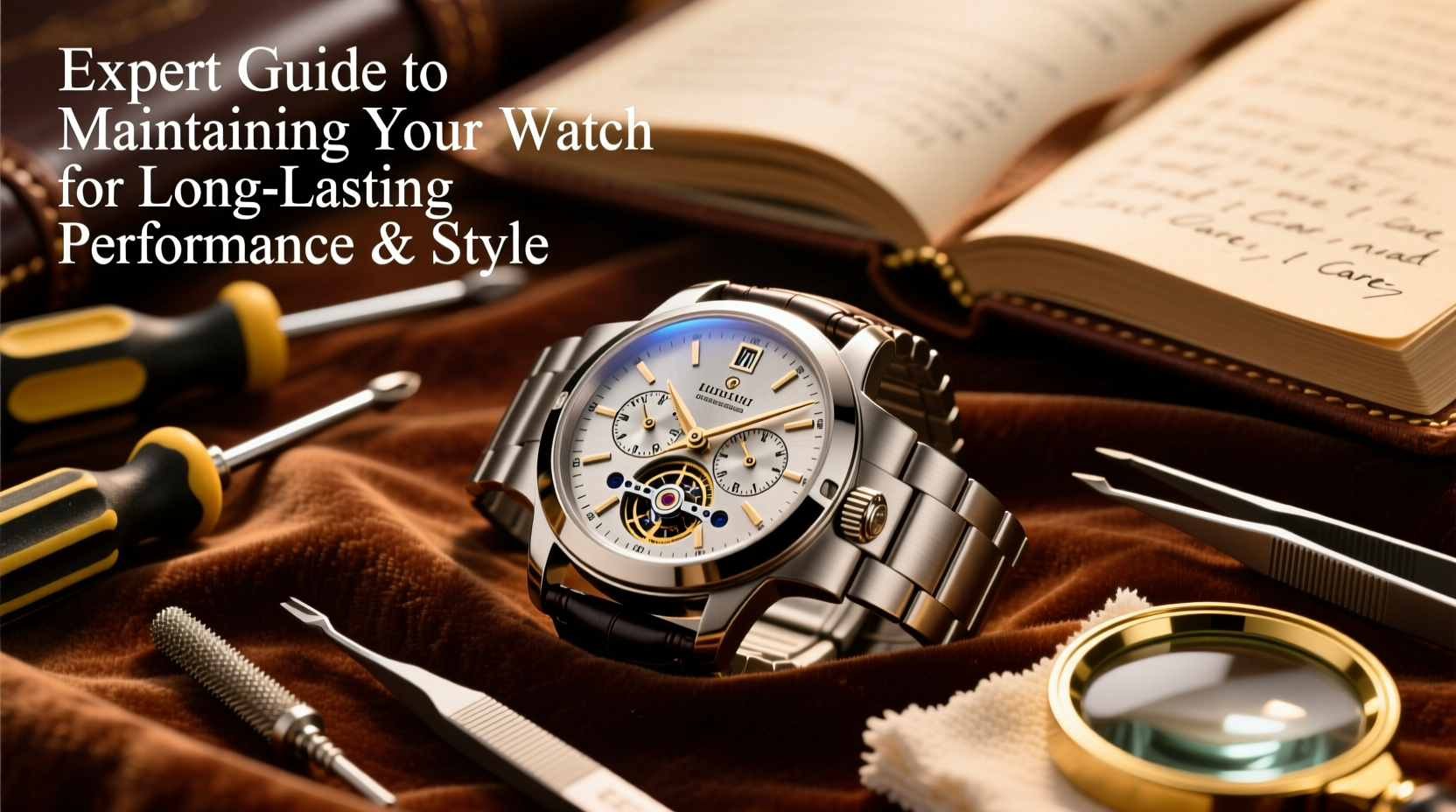
Watches, especially mechanical ones, are intricate assemblies of tiny components—gears, springs, jewels, and levers—that operate in close tolerance. Over time, dust, moisture, and friction degrade lubricants and wear parts. Even water-resistant models aren’t immune to long-term exposure. Without proper upkeep, accuracy diminishes, seals weaken, and corrosion can set in unnoticed.
Regular servicing isn't just about fixing problems—it’s preventive. Most manufacturers recommend a full service every 3 to 5 years for mechanical watches. Quartz models require less frequent attention but still benefit from battery checks, seal inspections, and occasional cleaning.
“Think of your watch like a high-performance engine. It doesn’t need constant repairs, but periodic tune-ups are essential for longevity.” — Daniel Reyes, Master Watchmaker at Geneva Time Institute
Daily Care: Protecting Your Watch from Wear and Tear
Daily habits determine how well your watch ages. Exposure to extreme conditions, improper handling, and neglect compound over time. Simple adjustments in routine can dramatically extend both function and appearance.
- Avoid magnetic fields: Keep your watch away from speakers, laptops, smartphones, and magnetic clasps. Magnetization affects accuracy, particularly in mechanical movements.
- Limited water exposure: Even water-resistant watches have limits. Avoid hot showers, saunas, and saltwater unless specifically rated for such use.
- Clean the case and bracelet weekly: Use a soft cloth dampened with soapy water (for metal bracelets) or a dry microfiber for leather straps. Dry thoroughly.
- Don’t manually adjust the date between 9 PM and 3 AM: During this window, the date mechanism is engaged. Forcing it can damage internal gears.
Storage: Preserving Condition When Not Worn
How you store your watch when not in use significantly impacts its lifespan. Poor storage leads to scratches, moisture buildup, and power loss in automatics.
| Watch Type | Recommended Storage | Avoid |
|---|---|---|
| Mechanical/Automatic | Watch winder or padded box | Leaving unwound for months |
| Quartz | Cool, dry box with battery removed if unused >6 months | Humid areas |
| Leather Strap | Flat position, away from direct light | Plastic bags (traps moisture) |
| Stainless Steel | Individual compartment in a soft-lined case | Piling with other jewelry |
If you own multiple watches, rotate them regularly. This prevents prolonged inactivity, which can cause lubricants to settle and springs to lose tension.
Step-by-Step Guide to Professional-Level Home Maintenance
You don’t need a horologist’s bench to perform basic upkeep. With minimal tools, you can maintain your watch between professional services.
- Inspect the case and crystal weekly: Look for scratches, looseness, or fogging under the crystal—signs of moisture ingress.
- Clean the bracelet: For metal bands, soak in warm soapy water for 5 minutes, scrub gently with a soft toothbrush, rinse, and dry completely. For fabric or rubber, wipe with a damp cloth.
- Check water resistance annually: Have a jeweler perform a pressure test, especially if worn near water.
- Wind manual watches consistently: Wind at the same time each day, ideally before 8 AM, to stabilize power reserve.
- Service scheduling: Mark your calendar for a full service every 4 years. Record the date and any notes from the technician.
Real Example: The Neglected Heirloom Turnaround
James inherited a 1968 Omega Seamaster from his grandfather. Stored in a drawer for 15 years, it hadn’t run in over a decade. The dial had slight tarnishing, the leather strap was cracked, and the crown felt stiff. Instead of assuming it was beyond repair, James took it to a specialist. After a full movement overhaul, ultrasonic case cleaning, and replacement of seals and hands, the watch was restored to factory-like condition. Today, it keeps time within two seconds per day—proof that even long-dormant watches can be revived with proper care.
“A neglected watch isn’t dead—it’s waiting for attention.” — Lena Moreau, Vintage Watch Restorer
Common Mistakes That Shorten Watch Life
Even experienced owners make errors that compromise their timepieces. Awareness is the first step toward prevention.
- Assuming water resistance is permanent: Gaskets degrade over time. Without replacement, water seeps in during routine exposure.
- Using alcohol or chemicals on straps: These dry out leather and degrade rubber. Stick to manufacturer-recommended cleaners.
- Skipping professional servicing: Internal wear isn’t always visible. Delayed servicing leads to costly repairs.
- Exposing watches to extreme temperatures: Heat expands metal, cold contracts it—both affect accuracy and lubrication.
Essential Watch Maintenance Checklist
Use this checklist monthly to ensure your watch remains in peak condition:
- ✅ Inspect case and crystal for cracks or looseness
- ✅ Wipe down case and bracelet with a soft cloth
- ✅ Check for fogging inside the crystal
- ✅ Verify timekeeping accuracy (compare to atomic clock)
- ✅ Ensure crown screws down properly (if applicable)
- ✅ Rotate watches if owning multiple timepieces
- ✅ Confirm upcoming service dates are scheduled
Frequently Asked Questions
How often should I clean my watch at home?
Light cleaning should be done weekly, especially after sweating or exposure to dirt. Deep cleaning of metal bracelets can be performed monthly. Leather straps require only gentle wiping—never submerge.
Can I swim with my 50m water-resistant watch?
Limited swimming in calm water is generally acceptable, but avoid diving or jumping. Water resistance ratings are based on static pressure; dynamic motion increases effective depth. Also, salt and chlorine accelerate gasket wear.
Do automatic watches need batteries?
No. Automatic watches are powered by the motion of your wrist. If not worn for several days, they stop. To restart, manually wind the crown 20–30 times and wear normally. For long-term storage, use a watch winder.
Conclusion: Honor Craftsmanship Through Consistent Care
A watch is a marriage of engineering and artistry—one that deserves respect and attention. By integrating simple daily practices, scheduling timely professional services, and storing your timepiece properly, you protect not only its function but also its legacy. Whether it’s a family heirloom or a hard-earned reward, your watch reflects your standards. Treat it with diligence, and it will serve you faithfully for generations.




 浙公网安备
33010002000092号
浙公网安备
33010002000092号 浙B2-20120091-4
Comments
No comments yet. Why don't you start the discussion?