
A diamond Hello Kitty pendant is more than just a piece of jewelry—it’s a blend of whimsy, sentiment, and craftsmanship. Whether it was a gift, a self-purchase, or a collector’s item, preserving its brilliance and structural integrity requires thoughtful care. Diamonds may be the hardest natural material on Earth, but the delicate metal settings and enamel details—especially on a design as intricate as Hello Kitty—are vulnerable to daily hazards. Without proper handling, even minor exposure to household chemicals or accidental knocks can lead to scratches, loosened stones, or discoloration.
This guide provides practical, expert-backed strategies to protect your pendant from common threats while maintaining its charm and value over time. From storage solutions to cleaning routines, each step is designed to fit seamlessly into your lifestyle without compromising convenience.
Understanding the Vulnerabilities of Your Pendant
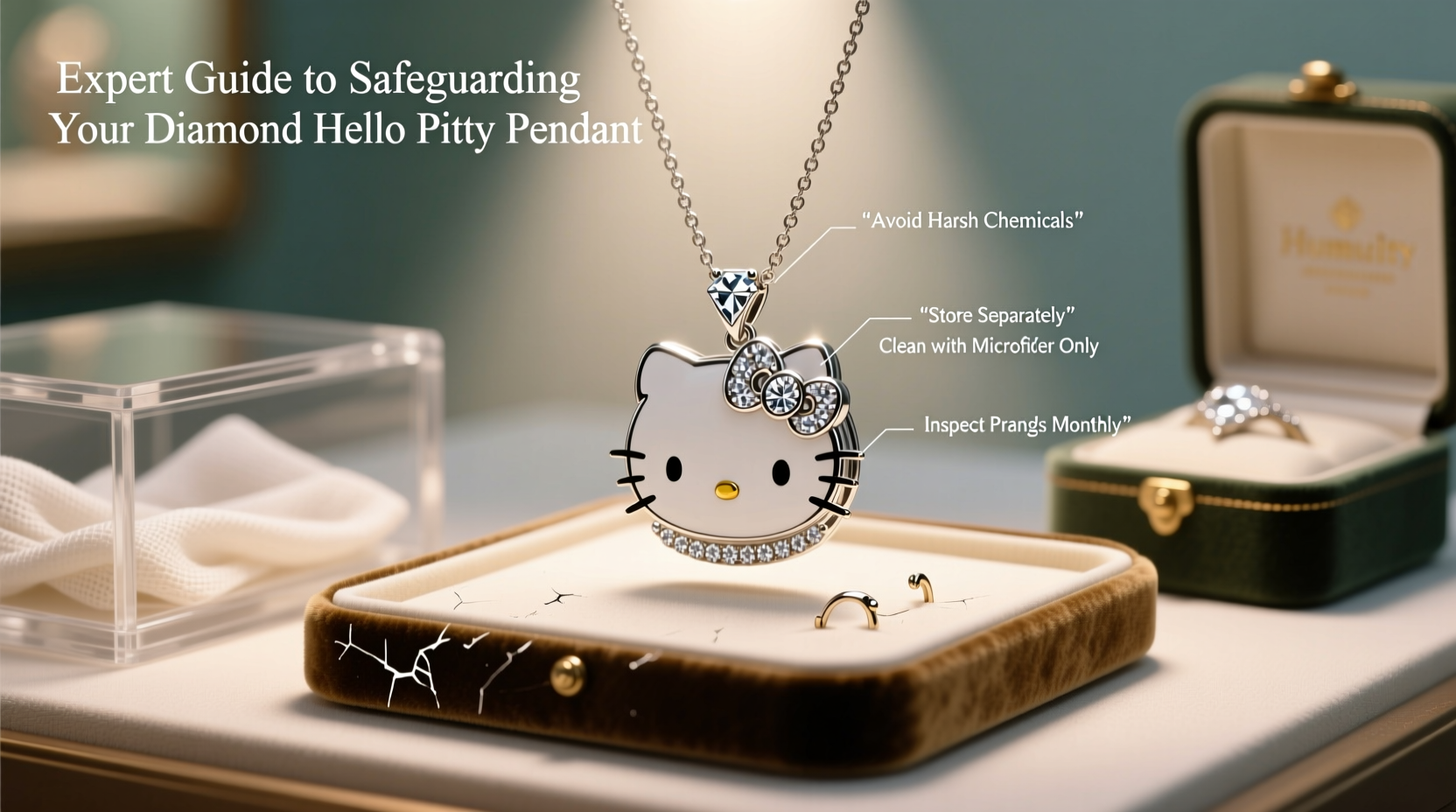
Diamond pendants, particularly those with detailed designs like Hello Kitty, combine multiple materials: precious metals (often white gold, yellow gold, or platinum), genuine diamonds, and sometimes colored enamel for facial features. Each component reacts differently to environmental stressors.
- Diamonds: Resistant to scratching but can chip if struck at an angle.
- Settings: Prongs holding diamonds may weaken over time due to impact or metal fatigue.
- Enamel Details: The red bow or black eyes on a Hello Kitty pendant are typically made with vitreous enamel, which can crack or fade when exposed to heat or harsh cleaners.
- Chain Links: Thin chains commonly used with pendants are prone to tangling, stretching, or breaking under strain.
Recognizing these vulnerabilities helps you anticipate risks before they cause irreversible damage.
Essential Daily Protection Habits
Prevention is the most effective form of preservation. Integrating simple habits into your routine significantly reduces the risk of accidental damage.
- Remove during physical activity: Whether you're working out, gardening, or doing household chores, take off the pendant. Sweat and friction accelerate tarnishing and increase the chance of snagging.
- Put it on last: After dressing, applying makeup, and styling hair. This minimizes contact with abrasive fabrics and chemical sprays.
- Avoid water exposure: Don’t wear it in the shower, pool, or hot tub. Chlorine and saltwater corrode metal, and soaps leave a film that clouds diamond sparkle.
- Check clasp security: Gently tug the clasp daily to ensure it’s not loose. A weak closure is the leading cause of lost pendants.
These small actions create a protective buffer between your jewelry and the elements that degrade it.
Safe Storage: Preventing Scratches and Tangles
How you store your pendant when not in use is just as important as how you wear it. Jewelry tossed into drawers or left dangling on a hook can suffer unseen damage.
| Storage Method | Benefits | Risks to Avoid |
|---|---|---|
| Jewelry box with individual compartments | Prevents scratching and tangling | Avoid overcrowding or soft linings that trap moisture |
| Fabric-lined pouch (velvet or microfiber) | Portable and protects surface finish | Don’t use synthetic fabrics that may abrade metal |
| Hanging necklace organizer | Keeps chain straight and tangle-free | Ensure hooks are smooth; rough edges can wear links |
| Airtight container with silica gel | Reduces tarnish from humidity | Never store damp jewelry—moisture causes corrosion |
“A well-maintained pendant stored properly can retain its luster for decades. The biggest threat isn’t time—it’s neglect.” — Lena Torres, Certified Jewelry Appraiser & GIA Graduate
Step-by-Step Cleaning Routine for Lasting Brilliance
Diamonds attract oils and dust, which diminish their fire and scintillation. Regular cleaning restores sparkle without risking damage—provided it’s done correctly.
- Gather supplies: Mild dish soap (phosphate-free), lukewarm water, soft-bristled toothbrush (preferably new), lint-free cloth.
- Soak gently: Submerge the pendant for 15–20 minutes in a small bowl of soapy water. Do not use ultrasonic cleaners unless approved by the manufacturer—some enamel finishes cannot withstand vibration.
- Brush carefully: Use light strokes around the diamond setting and behind the bail (the loop that attaches to the chain). Avoid pressing hard on enamel areas.
- Rinse thoroughly: Hold under warm running water using a fine mesh strainer to prevent loss.
- Dry completely: Pat with a lint-free cloth, then air-dry for 5–10 minutes before storing.
Clean your pendant every two to three weeks with this method. For deeper maintenance, schedule a professional inspection annually.
Real Example: How One Owner Saved Her Heirloom Pendant
Sophia, a collector from San Diego, inherited a limited-edition diamond Hello Kitty pendant from her aunt. She wore it weekly but noticed the white gold was dulling and one eye detail had begun to flake. After consulting a jeweler, she learned that daily exposure to sunscreen and ocean air had degraded the enamel and caused microscopic corrosion in the prongs.
She implemented a strict regimen: removing the pendant before beach outings, storing it in a sealed case with desiccant, and cleaning it biweekly using only pH-neutral soap. Within months, the pendant regained its shine, and a professional tightening of the prongs prevented potential stone loss. Today, it remains in pristine condition—a testament to proactive care.
Do’s and Don’ts Checklist
- Inspect prongs monthly for looseness
- Store separately from other jewelry
- Clean gently with mild soap and water
- Have it professionally serviced once a year
- Use a magnifier to check for hidden grime
- Wear it while swimming or exercising
- Expose it to perfumes or cleaning agents
- Use abrasive cloths or pastes
- Leave it on bathroom counters where it can be knocked over
- Assume “diamond” means indestructible
Frequently Asked Questions
Can I wear my diamond Hello Kitty pendant every day?
Yes, but with caution. Daily wear increases exposure to damage. Limit continuous use to special occasions, and always follow protective practices like removing it during risky activities.
How do I know if the diamonds are loose?
Gently tap the pendant against your palm—if you hear a faint rattle, a stone may be loose. Alternatively, use a 10x loupe to examine whether any prong appears bent or lifted. When in doubt, see a jeweler immediately.
Is it safe to travel with my pendant?
Travel poses higher risks due to security checks, pressure changes, and unfamiliar environments. Pack it in a padded case inside your carry-on, and consider leaving it at home if engaging in outdoor adventures. Insurance coverage for valuables while traveling is also recommended.
Protect What You Love
Your diamond Hello Kitty pendant represents more than aesthetic appeal—it carries emotion, memory, and personal significance. Its longevity depends not on luck, but on consistent, informed care. By understanding its weaknesses, adopting smart habits, and respecting its craftsmanship, you ensure it remains radiant for years to come.
Start today: inspect your pendant, clean it properly, and store it safely. Small efforts compound into lasting protection. Share your own care journey or ask questions in the comments—let’s build a community that values beauty and preservation equally.




 浙公网安备
33010002000092号
浙公网安备
33010002000092号 浙B2-20120091-4
Comments
No comments yet. Why don't you start the discussion?