
Braided rope pendants have evolved from simple nautical accessories into refined personal adornments, blending rugged functionality with modern elegance. Whether worn as a symbol of heritage, spirituality, or minimalist fashion, a well-crafted rope pendant speaks volumes about attention to detail and craftsmanship. But not all ropes are created equal, nor is every braid suitable for long-term wear. Selecting the right materials and mastering the construction process ensures your pendant remains both durable and stylish for years.
Understanding Rope Materials: What Works Best for Pendants
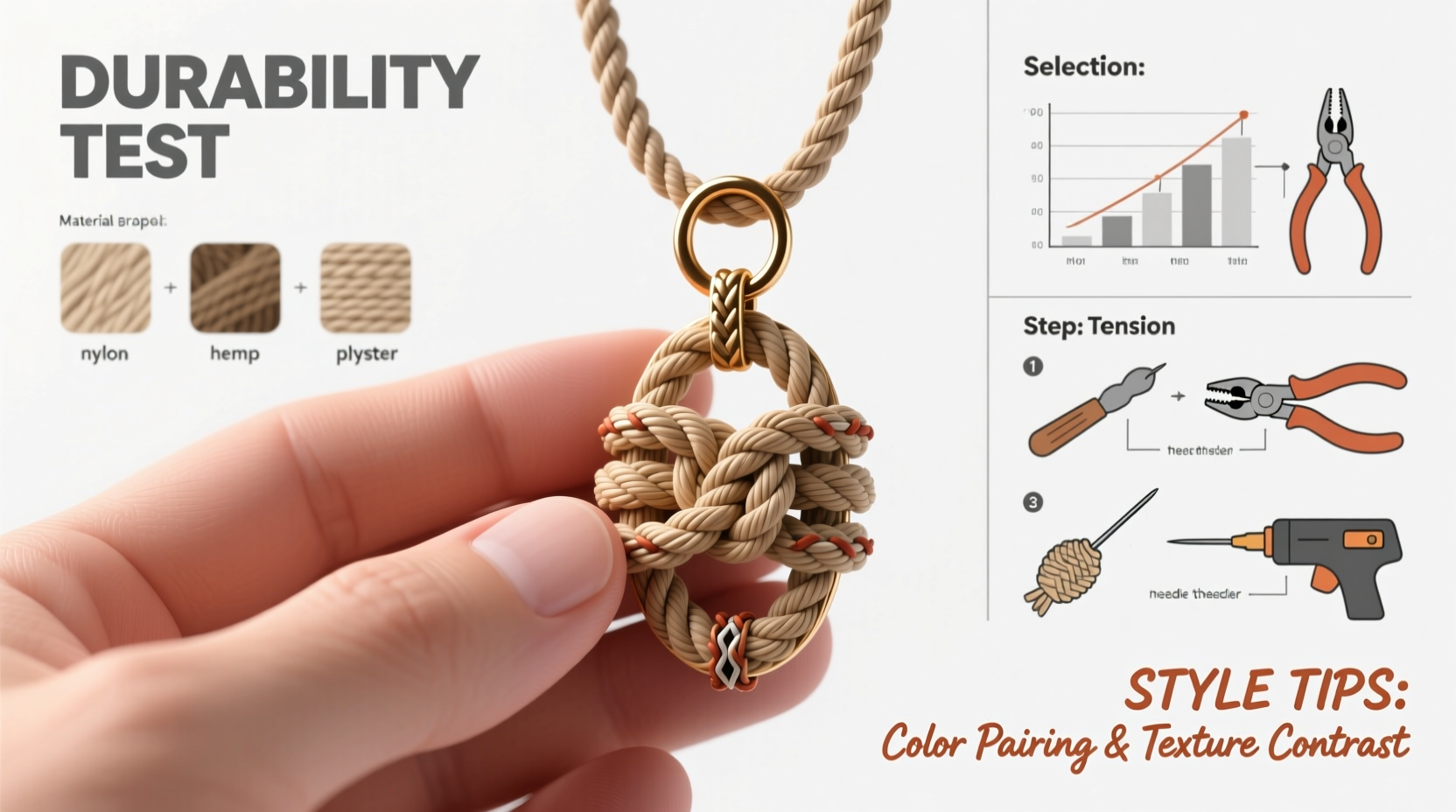
The foundation of any high-quality braided rope pendant lies in its material. The wrong choice can lead to fraying, discoloration, or breakage—especially under daily wear conditions. While natural fibers like cotton or hemp offer a rustic look, they absorb moisture and degrade faster when exposed to sweat or sunlight. For lasting performance, synthetic or hybrid fibers are preferred.
- Paracord (Nylon): Originally designed for parachute suspension lines, paracord offers exceptional strength-to-weight ratio, UV resistance, and minimal stretch. Its 7-strand inner core can be removed for a sleeker profile, making it ideal for jewelry-grade pendants.
- Polypropylene: Lightweight and water-resistant, but prone to UV degradation over time. Best suited for indoor or occasional wear.
- Dyneema® or Spectra®: Ultra-high-molecular-weight polyethylene (UHMWPE) fibers that are stronger than steel by weight, highly abrasion-resistant, and nearly impervious to moisture. These premium materials are used in marine and tactical gear and translate beautifully into luxury pendants.
- Cotton Blends with Wax Coating: Offers a vintage aesthetic with improved water resistance. However, wax may transfer to skin or clothing and requires periodic reapplication.
Choosing the Right Braid Pattern for Strength and Aesthetics
The braid pattern affects not only appearance but also structural integrity. A tight, interlocking weave resists unraveling and distributes stress evenly across strands. Below are three top-performing patterns for pendants:
- 3-Strand Round Braid: Simple and classic, often used in bohemian designs. While easy to learn, it’s less dense and more prone to twisting over time unless tightly tensioned.
- 4-Strand Diamond Braid: Creates a symmetrical, textured surface with excellent flexibility and durability. Ideal for medium-thickness cords (3–5mm).
- 8-Strand Square Braid: Delivers maximum density and a flat, polished finish. Resists kinking and maintains shape better than round braids, especially under constant movement.
For pendants incorporating beads or metal accents, an 8-strand braid provides secure anchoring points without compromising flow. Avoid hollow braids like cobra stitch unless reinforced internally—they tend to collapse and wear unevenly.
Step-by-Step Guide to Crafting a Professional-Quality Pendant
Creating a high-grade pendant involves precision, patience, and proper tooling. Follow this timeline to produce a refined piece:
- Measure and Cut: Determine desired length (typically 16–24 inches for necklaces), then add 6 extra inches for tying and finishing. Use sharp scissors or a hot knife to prevent fraying on synthetic fibers.
- Secure the Starting End: Clamp one end in a vise or wrap it around a fixed dowel. This allows consistent tension during braiding.
- Braid with Even Tension: Maintain uniform pull on each strand. Periodically pause to smooth out twists and check alignment.
- Incorporate Accent Elements: Slide in wooden beads, metal spacers, or leather tags at planned intervals. Secure them between layers of braid for permanence.
- Finish with a Locked Knot: Use a diamond knot or Matthew Walker knot at the end to prevent slippage. Trim excess and melt the tip slightly with a lighter (for synthetics only) to seal.
- Add Clasp or Loop: Attach a stainless steel or titanium toggle clasp using a strong loop knot or crimp bead for reliability.
“Tension is everything. A perfectly chosen fiber will still fail if the braid is loose or inconsistent.” — Rafael Mendez, Master Cordage Artisan
Finishing and Maintenance: Ensuring Longevity and Luster
A beautiful pendant should remain beautiful. Surface treatments and care habits make a significant difference in longevity. After completion, consider these finishing options:
| Treatment | Benefits | Drawbacks |
|---|---|---|
| Heat Setting | Sets braid shape permanently; prevents loosening | Can discolor sensitive fibers if overheated |
| Beeswax Polish | Enhances sheen and water resistance | May attract dust; not suitable for oily skin contact |
| Clear Marine Varnish (thin coat) | Protects against UV and abrasion | Risk of stiffness if over-applied |
| None (natural finish) | Maintains tactile feel and breathability | Requires more frequent inspection |
For maintenance, wipe the pendant monthly with a dry microfiber cloth. Remove before swimming, showering, or applying lotions. Store flat or loosely coiled in a fabric-lined box away from direct light.
Real-World Example: The Alaskan Fisherman’s Pendant
In Sitka, Alaska, artisan Lena Park crafts pendants for commercial fishermen who value both meaning and resilience. Her signature design uses 4mm black paracord with an 8-strand square braid, finished with a hand-forged copper anchor charm. Each pendant survives months of saltwater exposure, engine grease, and extreme weather. Clients report no degradation after 18+ months of continuous use—proof that thoughtful material selection and tight braiding create heirloom-worthy pieces even in harsh environments.
Checklist: Building a High-Grade Braided Rope Pendant
- ☐ Choose UV-stable, abrasion-resistant fiber (e.g., nylon, Dyneema)
- ☐ Pre-shrink cord before starting
- ☐ Use consistent tension throughout braiding
- ☐ Reinforce accent elements within the braid structure
- ☐ Finish with a non-slip knot and sealed ends
- ☐ Attach hardware securely with tested knots or crimps
- ☐ Apply protective treatment if needed (avoid over-coating)
- ☐ Inspect monthly for wear, especially at stress points
Frequently Asked Questions
Can I wash my braided rope pendant?
Yes, but gently. Use lukewarm water and mild soap. Soak for no more than 10 minutes, then air dry completely before storing. Never machine-wash or tumble dry, as agitation weakens fibers.
How do I replace a broken clasp without redoing the entire pendant?
Carefully undo the last inch of braid to expose the core strands. Thread new hardware onto the end, then re-braid and lock with a fresh knot. Seal with a touch of clear nail polish or heat (synthetics only).
Are natural fiber pendants suitable for everyday wear?
Only with caution. Cotton or hemp looks elegant but absorbs moisture and oils, leading to odor and weakening. If used, apply natural wax coating regularly and limit wear to dry, indoor settings.
Craft with Confidence
Selecting and crafting a high-grade braided rope pendant isn’t merely about aesthetics—it’s an exercise in material science, structural integrity, and personal expression. By choosing resilient fibers, mastering tight braiding techniques, and applying smart finishing touches, you create more than an accessory: you forge a wearable legacy. Whether made for yourself or gifted to someone special, a well-built pendant withstands time, tide, and trend alike. Start with quality, work with care, and let every knot reflect your commitment to excellence.




 浙公网安备
33010002000092号
浙公网安备
33010002000092号 浙B2-20120091-4
Comments
No comments yet. Why don't you start the discussion?