
Determining the authenticity of gold goes far beyond dropping a piece into water or checking for hallmarks. While basic home tests can offer preliminary clues, they often lack precision and may lead to false conclusions. For high-value transactions, estate evaluations, or investment decisions, relying on expert-level verification is essential. This guide explores scientifically sound, reliable, and advanced methods used by jewelers, metallurgists, and assay offices to authenticate gold with confidence.
Why Basic Tests Fall Short
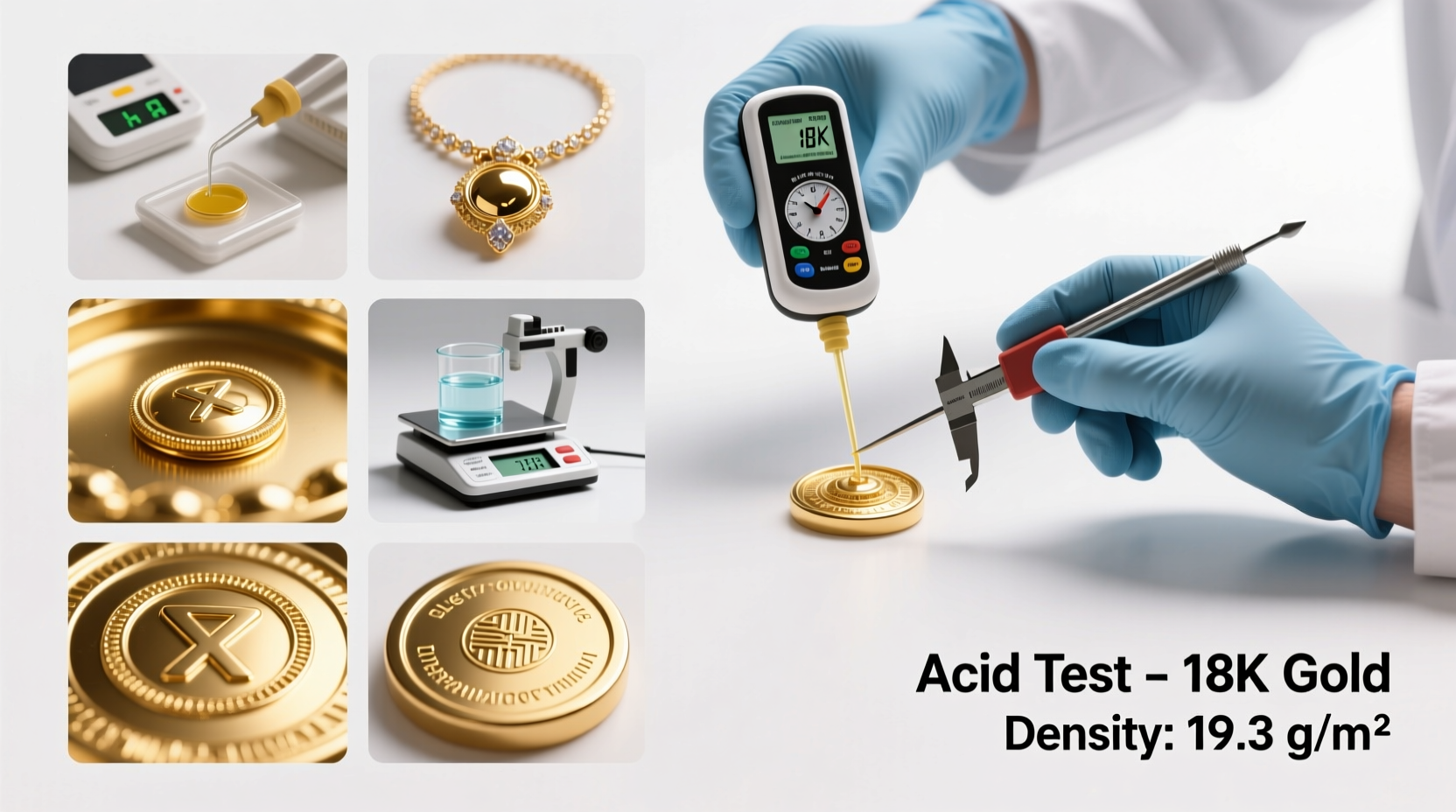
Common at-home methods like the magnet test, scratch test, or vinegar reaction are widely shared online but suffer from significant limitations. A magnet test only detects ferrous metals and won’t catch tungsten-filled gold bars, which are non-magnetic yet counterfeit. The scratch test damages the item and relies on subjective color matching. Vinegar tests are ineffective on thick plating and can corrode lower-karat alloys.
These methods may provide rough indications but fail when precision matters. Counterfeiters have become increasingly sophisticated—some fake gold bars use tungsten cores plated with real gold, passing density and weight checks while deceiving even experienced buyers.
“Relying solely on home tests is like diagnosing illness with a thermometer alone—you might detect fever, but not the cause.” — Dr. Alan Reeves, Metallurgical Analyst, London Assay Office
Advanced Non-Destructive Testing Methods
Professional gold authentication prioritizes accuracy without damaging the specimen. These techniques are standard in refineries, banks, and certified jewelry labs.
X-Ray Fluorescence (XRF) Spectrometry
XRF is one of the most trusted non-destructive methods for analyzing gold purity. It works by exposing the sample to X-rays, causing atoms in the material to emit secondary (fluorescent) X-rays unique to each element. A detector reads these emissions to determine the exact composition of the alloy.
XRF can identify:
- Precise karat value (e.g., 22.1K vs. 24K)
- Presence of base metals like nickel, copper, or iron
- Surface plating thickness
- Tungsten core beneath gold plating
Ultrasonic Thickness Testing
This method measures the thickness of gold plating over a base metal. By sending high-frequency sound waves through the surface, the device calculates how long it takes for the wave to reflect back. Thinner plating suggests electroplated fakes, especially on coins or bars.
It’s particularly useful for detecting:
- Gold-plated tungsten bars (common in forged bullion)
- Replated vintage jewelry hiding wear or damage
- Inconsistent coating that indicates amateur finishing
Laboratory-Based Destructive Analysis
When absolute certainty is required—such as during legal disputes, inheritance appraisals, or refinery intake—destructive testing remains the gold standard. These procedures are conducted under controlled conditions to minimize waste and ensure accuracy.
Fire Assay (Cupellation)
Considered the most accurate method for determining gold content, fire assay involves melting the sample with lead in a porous cupel at temperatures exceeding 1,100°C. Base metals oxidize and absorb into the cupel, leaving behind a pure bead of precious metal. The resulting bead is weighed before and after parting (removal of silver via acid), yielding an exact fineness measurement down to 0.01%.
This method is used by national mints and major refineries due to its unmatched precision, though it destroys a small portion of the sample.
Aqua Regia Dissolution Test
Aqua regia—a mixture of nitric and hydrochloric acid—dissolves gold while leaving many base metals intact. In a controlled lab setting, a known weight of gold is dissolved, filtered, and precipitated to recover pure gold for weighing. The recovery rate confirms authenticity and purity.
This test is highly effective for verifying:
- Fine gold dust or scrap
- Granules from melted-down jewelry
- Suspiciously low-density items
Expert Verification Workflow: Step-by-Step Guide
To confidently verify gold, professionals follow a tiered approach that balances speed, cost, and certainty. Here's a proven sequence used by accredited assayers:
- Visual Inspection: Check for hallmarks, casting seams, tool marks, and inconsistencies in design typical of counterfeits.
- Weight & Dimensions: Measure mass and size; calculate density. Real 24K gold has a density of ~19.3 g/cm³. Significant deviation raises red flags.
- Magnet & Electrical Conductivity Test: Gold is non-magnetic and highly conductive. Use a gauss meter and conductivity tester to rule out steel or tungsten cores.
- XRF Screening: Perform surface and subsurface scanning. Look for layered compositions indicating plating.
- Ultrasonic or Drill Test: If XRF shows anomalies, probe deeper. A micro-drill followed by spot analysis can expose internal materials.
- Fire Assay (if necessary): For high-value or disputed items, conduct a full fire assay for definitive results.
Real-World Case: The $50,000 Gold Bar Scam
In 2018, a private investor in Frankfurt purchased two 1-kilogram gold bars from a third-party dealer. The bars had correct markings, felt heavy, and passed initial XRF surface scans. However, upon delivery to a certified refinery, ultrasonic testing revealed inconsistent plating thickness. A drill test confirmed a tungsten core coated with 3mm of real gold.
The investor lost over €45,000 because the initial buyer relied only on visual inspection and a handheld XRF gun without cross-verifying with density and conductivity tests. This case underscores why layered verification is critical—even seemingly flawless gold can be engineered to deceive.
Comparison Table: Authentication Methods at a Glance
| Method | Accuracy | Destructive? | Best For | Limitations |
|---|---|---|---|---|
| Magnet Test | Low | No | Quick screening | Fails with non-magnetic fakes (tungsten) |
| Density Test | Moderate | No | Bullion, large pieces | Requires precise measurements; hard on intricate items |
| XRF Spectrometry | High | No | Jewelry, coins, bars | Surface-only unless multi-angle scanning used |
| Ultrasonic Testing | High | No | Plated fakes, bars | Requires calibration; less effective on small items |
| Fire Assay | Very High | Yes | Refining, legal cases | Destroys sample; expensive and time-consuming |
Essential Checklist for Verifying Gold
Before purchasing or accepting gold, follow this checklist to minimize risk:
- ✔️ Verify the seller’s credentials and reputation
- ✔️ Inspect hallmarks under magnification for irregularities
- ✔️ Weigh and measure dimensions to calculate density
- ✔️ Perform conductivity and magnetism tests
- ✔️ Use XRF spectrometry with subsurface analysis
- ✔️ Request a certificate from an accredited lab (e.g., LBMA, ISO-certified)
- ✔️ For bars over 100g, consider ultrasonic or drill verification
Frequently Asked Questions
Can gold plating fool an XRF machine?
Yes, if only a single surface scan is performed. However, modern XRF devices can perform multi-angle or timed exposure scans that detect underlying layers. Skilled operators look for discrepancies between surface and bulk composition.
Is there a way to test gold without damaging it?
Absolutely. XRF spectrometry, ultrasonic testing, density measurement, and electrical conductivity tests are all non-destructive and highly effective when used together. Only fire assay requires destruction, and it should be reserved for high-stakes situations.
How much does professional gold testing cost?
Prices vary: XRF screening typically costs $25–$75 per item at a jeweler or pawn shop. Full lab reports with fire assay can range from $150 to $500, depending on complexity and certification requirements.
Conclusion: Trust, But Verify with Expert Methods
Genuine gold verification demands more than folklore tricks or superficial checks. As counterfeit techniques evolve, so must our tools and knowledge. Relying on a combination of scientific testing, professional expertise, and documented verification ensures you make informed decisions—whether you're investing in bullion, appraising heirlooms, or selling scrap.




 浙公网安备
33010002000092号
浙公网安备
33010002000092号 浙B2-20120091-4
Comments
No comments yet. Why don't you start the discussion?