
Silver jewelry holds both sentimental and monetary value, making authenticity a critical concern. With the rise of counterfeit items in online marketplaces and secondhand shops, knowing whether your silver ring is genuine is more important than ever. While professional appraisal remains the gold standard, several practical and scientifically grounded tests can be performed at home to help you determine authenticity with confidence. These methods combine chemistry, physics, and observation—accessible to anyone without specialized equipment.
Understanding Silver: What Makes It Unique
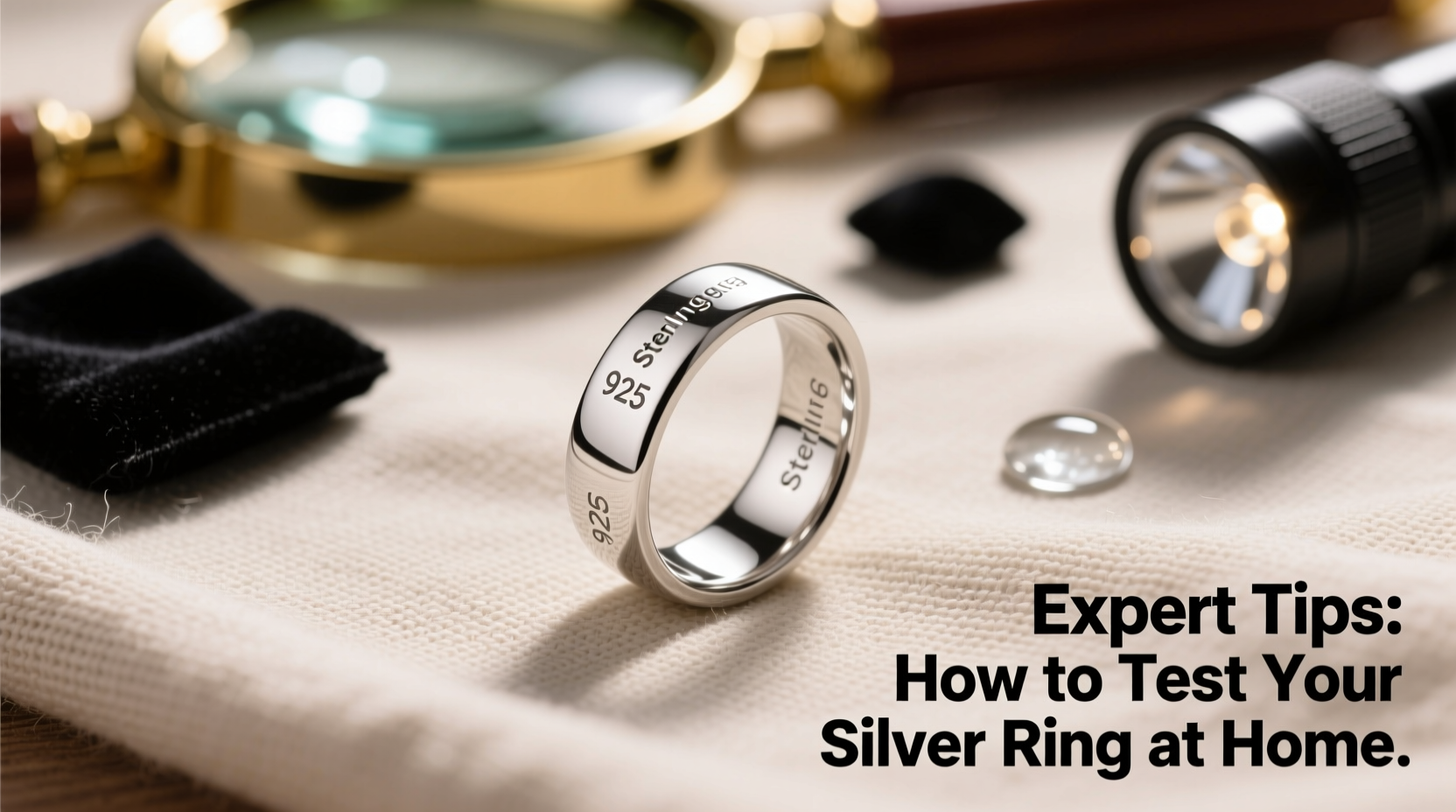
Pure silver (99.9%) is too soft for most jewelry applications, so it's typically alloyed with other metals like copper to improve durability. Sterling silver, marked as \"925,\" contains 92.5% pure silver and 7.5% alloying metal—usually copper. This composition gives sterling silver its signature luster and weight while maintaining workability. Counterfeit rings often use base metals coated with a thin layer of silver or mislabeled alloys that mimic appearance but lack intrinsic value.
The key to identifying real silver lies in recognizing physical and chemical properties unique to the metal: density, conductivity, oxidation behavior, and magnetic response. Familiarity with these traits enables accurate home testing.
“Silver has distinct tactile and reactive qualities—once you’ve handled genuine pieces, fakes become easier to spot.” — Daniel Reeves, Master Jeweler & Appraiser with 30+ years in precious metals
Step-by-Step Guide to At-Home Authenticity Testing
You don’t need a lab to assess your silver ring’s legitimacy. The following sequence of tests builds from visual inspection to chemical reaction, increasing in reliability. Perform them in order for best results.
- Inspect for Hallmarks: Look closely at the inner band using a magnifying glass. Genuine sterling silver is typically stamped with “925,” “Sterling,” “.925,” or “SS.” Some countries have additional assay marks indicating origin and purity verification.
- Magnet Test: Hold a strong neodymium magnet near the ring. Real silver is non-magnetic. If the ring is attracted, it likely contains iron, nickel, or steel—a clear sign of falsification.
- Ice Test: Place an ice cube directly on the ring. Silver has the highest thermal conductivity of any common metal. If the ice melts significantly faster than on other surfaces (within seconds), this strongly suggests real silver.
- Cloth Rub Test: Use a soft, non-abrasive white cloth to rub the surface firmly. Genuine silver may leave a dark gray residue due to natural tarnish, but fake silver-plated items often show no residue—or worse, greenish streaks indicating base metal corrosion.
- Baking Soda & Aluminum Foil Test: Line a bowl with aluminum foil, add one tablespoon of baking soda and a pinch of salt, then pour in hot water. Submerge the ring for 3–5 minutes. Real silver will react electrochemically, removing tarnish and revealing bright metal underneath. Plated items may bubble or discolor unevenly.
Do’s and Don’ts When Testing Silver at Home
| Do’s | Don’ts |
|---|---|
| Use distilled water in chemical tests to avoid mineral interference | Soak plated silver too long—it can damage the surface coating |
| Test in a well-ventilated area when using household chemicals | Use abrasive cleaners or scrubbers that scratch the metal |
| Compare results with a known genuine silver item if available | Rely solely on appearance—many fakes look convincing |
| Record findings (e.g., reaction speed, color change) for future reference | Apply vinegar or lemon juice frequently—they accelerate tarnishing |
Real Example: Identifying a Heirloom Ring
Sarah inherited a delicate silver ring from her grandmother, inscribed with “925” inside the band. Excited but cautious, she decided to verify its authenticity before having it appraised. She started with the magnet test—no attraction. Next, she placed an ice cube on the ring; it melted in under 10 seconds, much faster than on her ceramic countertop. Encouraged, she performed the foil-and-baking-soda bath. After five minutes, the ring emerged noticeably brighter, with uniform shine and no flaking. The cloth rub left a slight gray smudge—consistent with tarnished silver. Confident in her findings, Sarah took the ring to a jeweler, who confirmed it was genuine sterling silver, estimating its value at over $180 based on weight and craftsmanship.
This case illustrates how combining multiple low-cost tests increases accuracy and empowers owners to make informed decisions about their jewelry.
Expert-Backed Checklist for Silver Verification
- 🔍 Check for official hallmarks (“925,” “Sterling”) with magnification
- 🧲 Conduct a magnet test—real silver should not attract
- 🧊 Perform the ice test to assess thermal conductivity
- 🧽 Rub with a white cloth to check for tarnish residue
- ⚡ Try the aluminum foil/baking soda bath for reactivity
- 👃 Smell the metal—silver is odorless; base metals may emit a metallic or sulfur scent
- ⚖️ Compare weight to similar-sized genuine silver items (silver feels dense)
- 📞 Consult a local jeweler for acid test confirmation if uncertain
Frequently Asked Questions
Can a silver ring be real even if it tarnishes?
Yes. In fact, tarnishing is a strong indicator of authenticity. Real silver reacts with sulfur in the air to form silver sulfide, which appears as a dark layer. Most counterfeit rings made from stainless steel or aluminum do not tarnish in the same way.
What does it mean if my ring passes the magnet test but fails the ice test?
This could indicate a high-quality fake made from another conductive non-magnetic metal like platinum or certain grades of titanium. However, these are rare and expensive. More likely, the ice wasn’t cold enough or contact was insufficient. Repeat the test with freshly frozen ice and ensure full surface contact.
Is the nitric acid test safe to do at home?
While effective, nitric acid is hazardous and not recommended for untrained individuals. It can cause burns, release toxic fumes, and permanently damage plated or real silver if misapplied. For safety and accuracy, leave acid testing to professionals.
Conclusion: Trust, But Verify
Knowing whether your silver ring is authentic protects both your investment and emotional connection to the piece. The methods outlined here—hallmark inspection, magnet resistance, thermal conductivity, and electrochemical reactivity—are grounded in science and accessible to all. No single test is foolproof, but using a combination dramatically improves accuracy. While home assessments provide strong preliminary evidence, final confirmation should come from a certified jeweler or assayer, especially for valuable or heirloom items.




 浙公网安备
33010002000092号
浙公网安备
33010002000092号 浙B2-20120091-4
Comments
No comments yet. Why don't you start the discussion?