
The V-neck dress is a timeless wardrobe essential—sleek, flattering, and effortlessly stylish. Whether you're dressing for a summer wedding, a work event, or a dinner out, the right V-neck can accentuate your best features while offering comfort and movement. But not all V-necks are created equal. The cut, fabric, length, and fit play crucial roles in how well the dress harmonizes with your body shape and personal aesthetic. Choosing one that feels both elegant and natural requires more than just liking how it looks on the hanger. It’s about understanding proportion, material behavior, and long-term wearability.
Understand How Neckline Depth Affects Proportion
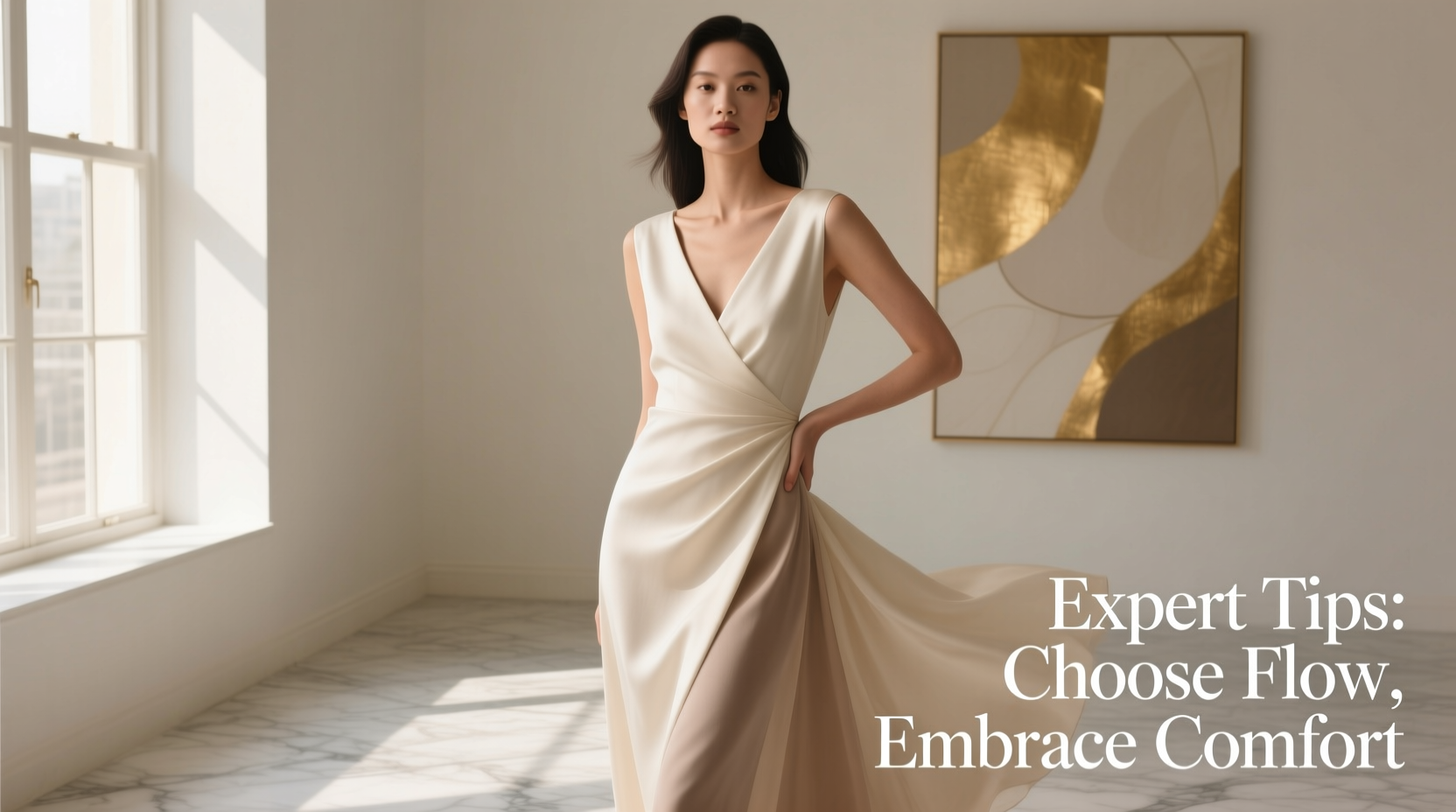
The depth of the V-neck determines how much skin is exposed and how the eye travels across your silhouette. A shallow V offers subtle elegance, ideal for conservative settings or those who prefer modesty. Deeper Vs elongate the torso and draw attention to the collarbone and décolletage—perfect for adding drama or balancing wider hips.
However, too deep a neckline can overwhelm smaller frames or feel impractical for certain activities. Consider your comfort level and context when selecting depth. For example, a mid-depth V (ending around the sternum) often strikes the best balance between allure and appropriateness.
Select Fabrics That Drape and Move With You
Comfort in a dress isn’t just about stretch—it’s about drape. Lightweight fabrics like viscose, silk blends, Tencel, and rayon flow naturally with your body, creating soft folds that enhance elegance. These materials breathe well, making them ideal for warm weather or extended wear.
Stiffer fabrics such as structured cotton poplin or polyester blends may hold shape but lack fluidity. They can create unwanted bulk or restrict movement, especially in sleeveless or form-fitting styles.
For year-round versatility, consider medium-weight knits like ponte or jersey. They offer gentle compression, resist wrinkling, and maintain their shape through multiple wears.
“Draping is where fashion meets motion. A well-chosen fabric doesn’t just cover the body—it moves with it.” — Lila Montgomery, Fashion Designer & Textile Consultant
Match the Dress Cut to Your Body Shape
A V-neck can flatter nearly every body type—but only when paired with the right silhouette. Here’s how different cuts work with various shapes:
| Body Shape | Recommended Silhouette | Why It Works |
|---|---|---|
| Pear (hips wider than shoulders) | A-line or fit-and-flare with defined waist | Balances lower half by drawing eyes upward via V-neckline |
| Apple (fuller midsection) | Empire waist or wrap-style V-neck | Lifts focus to chest and arms; draping hides tummy area |
| Hourglass (balanced bust and hips) | Sheath or bodycon with moderate V | Highlights curves without clinging too tightly |
| Rectangle (minimal waist definition) | Dress with belt or ruching at waist | Adds dimension; V-neck creates illusion of length |
| Inverted Triangle (broad shoulders) | Shift or trapeze with soft V | Softens shoulder line; avoids over-emphasizing top half |
Real Example: Choosing the Right Dress for a Summer Wedding
Sophie, a 34-year-old teacher with an apple-shaped figure, needed a dress for her sister’s outdoor wedding. She initially tried a tight sheath with a plunging V, which emphasized her midsection and felt restrictive. After consulting a stylist, she chose a knee-length, empire-waist V-neck in soft crepe fabric. The higher waist lifted her torso, the modest V drew attention upward, and the breathable material kept her cool during the ceremony. Guests complimented her elegance—and more importantly, Sophie felt confident and comfortable all day.
Build a Checklist Before You Buy
Before purchasing a V-neck dress, go through this practical checklist to ensure it aligns with both style and function:
- Fabric Feel Test: Run your fingers over the material. Does it drape smoothly or feel stiff?
- Mobility Check: Raise your arms, sit down, and walk across the room. Is there pulling or binding?
- V-Neck Alignment: Does the point end at a flattering spot (between clavicle and sternum), or does it dip too low?
- Seam Placement: Are side seams straight? Misaligned seams distort the fit.
- Layering Potential: Can you wear a camisole underneath if needed, without ruining the line?
- Wrinkle Resistance: Will it survive travel or a full day without steaming?
- Color Harmony: Does the shade complement your skin tone in natural light?
Follow This 4-Step Fitting Process
Even the most beautiful dress fails if it doesn’t fit well. Use this step-by-step approach when trying on a V-neck dress:
- Assess Shoulder Seams: They should rest exactly at the edge of your shoulders, not droop or dig in.
- Check Bust Support: Ensure the bodice supports without gapping or pinching. The V should frame, not spill.
- Evaluate Waist Definition: If the dress has shaping, verify it nips in at your natural waist—not above or below.
- Test Movement: Sit, cross your legs, reach forward. Fabric should move with you, not ride up or tighten uncomfortably.
If any step reveals issues, consider tailoring options. Simple adjustments—like taking in the sides or shortening straps—can transform an almost-right dress into a perfect one.
FAQ
Can a V-neck dress be modest and still stylish?
Absolutely. Opt for a higher V (stopping above the bust) and pair it with a lace inset, keyhole detail, or lightweight shell underneath. Long sleeves or a cropped jacket can also elevate modesty without sacrificing sophistication.
How do I prevent gaping at the V-neck?
Gaping often occurs when the bodice is too large or lacks structure. Look for dresses with internal boning, seam princess seams, or a center front stay. Alternatively, use fashion tape or a small snap sewn discreetly at the top of the V to keep it closed.
Are V-neck dresses suitable for petite women?
Yes—especially if the V is vertical and centered. Avoid overly wide Vs that cut across the chest, as they can shorten the torso. Pair shorter hemlines (knee or tea-length) with nude heels to maintain leg-lengthening lines.
Final Thoughts: Let Style Serve Confidence
An elegant V-neck dress shouldn’t demand compromise. It should feel like an extension of who you are—refined yet relaxed, intentional but never strained. When chosen with care, it becomes more than an outfit; it becomes a signature piece you return to again and again. The key lies in respecting your body’s proportions, prioritizing fabric integrity, and staying true to your lifestyle needs.
Don’t settle for a dress that looks good in the store but feels awkward by sunset. Invest time in finding one that moves with you, breathes with the moment, and reflects your unique presence.




 浙公网安备
33010002000092号
浙公网安备
33010002000092号 浙B2-20120091-4
Comments
No comments yet. Why don't you start the discussion?