
The entryway is more than just a transitional space—it’s the first impression of your home and a critical zone for managing daily clutter. From shoes and keys to mail and outerwear, this area accumulates items fast. A well-chosen storage box can transform chaos into order, but only if its size aligns with your space and lifestyle. Selecting the right dimensions isn’t about guesswork; it’s about precision, planning, and practicality.
Assess Your Entryway Dimensions First
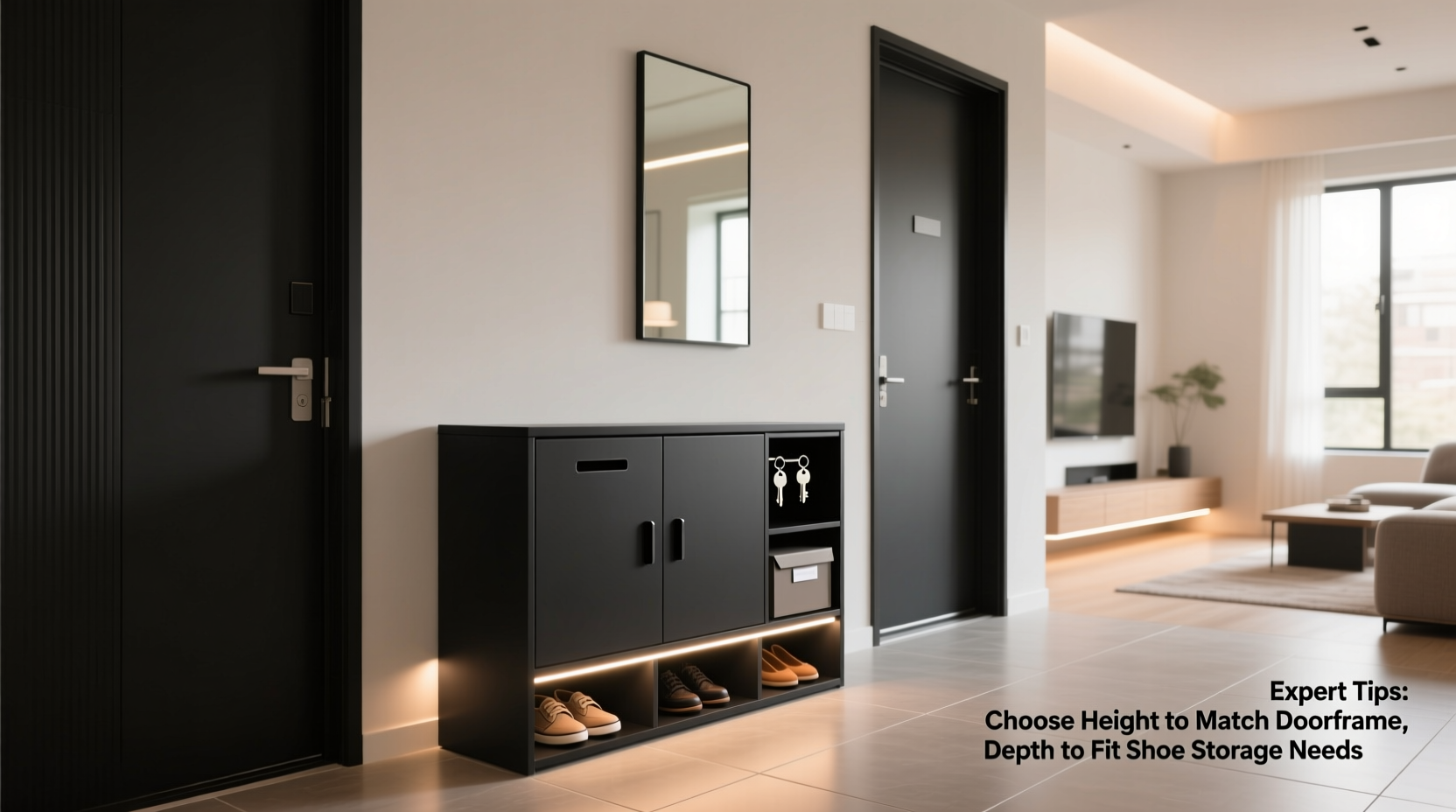
Before considering style or material, measure your available floor and wall space. Many homeowners choose storage boxes based on aesthetics alone, only to find they obstruct foot traffic or block cabinet doors. Use a tape measure to record the width, depth, and height of your entry zone. Pay special attention to clearance around doors, light switches, and baseboards.
Leave at least 18–24 inches of walking space in front of the box. If your entry is narrow—under 36 inches wide—a slim vertical unit (12–16 inches deep) is optimal. For larger foyers (over 4 feet wide), you can consider wider models up to 30 inches across.
Determine Your Storage Needs by Household Type
Your ideal box size depends heavily on who uses the entryway. A single professional may only need space for shoes and a wallet, while a family of five requires room for backpacks, sports gear, and seasonal accessories.
| Household Type | Common Items Stored | Recommended Box Size (W × D × H) |
|---|---|---|
| Single Occupant | Shoes, keys, jacket, umbrella | 18\" × 14\" × 16\" |
| Couple | Two pairs of shoes per person, bags, scarves | 24\" × 16\" × 18\" |
| Family (3–5 people) | Backpacks, boots, hats, pet leashes, stroller accessories | 36\" × 18\" × 20\" or modular units |
| Apartment / Small Space | Minimal footwear, mail organizer, compact bag storage | 12\" × 12\" × 15\" (stackable or bench-style) |
A larger household doesn’t always mean one oversized box. Sometimes, multiple smaller, coordinated units offer better flexibility and visual balance.
Match Functionality with Design Features
Size isn’t just about external dimensions—it’s also about internal organization. A shallow but wide box might hold more pairs of flats, while a tall, narrow one suits boots. Consider these functional features when evaluating size:
- Bench vs. non-bench: Seating adds 16–18 inches in height and requires deeper units (at least 14\"–16\") for comfort and stability.
- Compartments: Dividers reduce usable volume but increase usability. Allow 6–8 inches per shoe pair in width and 5–7 inches in height.
- Lid clearance: Ensure there’s enough overhead space (minimum 12 inches above the lid) for easy opening, especially in tight hallways.
- Open vs. closed storage: Open cubbies save space but expose clutter. Closed boxes add depth but may require additional clearance for door swing.
“Function follows form only when form respects function. The best storage solutions disappear into daily life because their size matches both the space and the user’s habits.” — Lena Patel, Interior Organizer & Author of *Calm Corridors*
Step-by-Step Guide to Sizing Your Entryway Storage Box
Follow this sequence to ensure your choice maximizes both space and utility:
- Clear the area: Remove existing furniture and take photos from multiple angles.
- Measure twice: Record length, depth, and ceiling height. Note any obstructions like radiators or outlets.
- List stored items: Inventory what needs a home—e.g., 6 pairs of shoes, 2 umbrellas, 3 bags.
- Calculate volume needs: Estimate 1 cubic foot per average shoe pair; add 0.5 cu ft for each accessory (hat, glove set).
- Select orientation: Choose vertical (narrow footprint) for small spaces or horizontal (wider, lower) for seating needs.
- Test with tape: Use painter’s tape to outline the proposed box on the floor. Walk through the space to assess flow.
- Compare models: Filter online options by your max dimensions and check interior specs, not just exterior size.
Real-Life Example: The Urban Condo Entry Fix
Sarah, a graphic designer living in a 600-square-foot downtown condo, struggled with a cluttered entry. Her previous ottoman-style box was too wide (30 inches) and blocked access to her coat closet. After measuring, she realized she had only 20 inches of usable depth and needed to store shoes, dog leashes, and work bags.
She switched to a vertical three-tier rack (18\" W × 12\" D × 30\" H) with open shelves. This freed up floor space, allowed easy access, and accommodated six pairs of shoes plus hanging hooks for leashes. By prioritizing vertical space over width, she gained both storage and breathing room.
Common Sizing Mistakes to Avoid
- Choosing oversized for “future needs”: Overestimating leads to cramped pathways and awkward proportions.
- Ignoring interior layout: A large box with poor internal design wastes space. Look for adjustable shelves or modular inserts.
- Forgetting about traffic flow: Ensure doors can open fully and people can pass without stepping around obstacles.
- Matching decor over function: A beautiful box that doesn’t fit your items or space becomes a permanent eyesore.
Frequently Asked Questions
How do I know if a storage box is too big for my entryway?
If the box occupies more than one-third of the entry’s width or forces you to walk sideways to get past it, it’s likely too large. Also, if it blocks cabinet doors, light switches, or HVAC vents, reconsider the size or placement.
Can I use multiple small boxes instead of one large one?
Yes—and often, this is smarter. Smaller units allow zoning (e.g., one for shoes, one for bags), easier moving, and adaptability as needs change. Just ensure they’re visually cohesive through matching materials or colors.
What’s the ideal height for an entryway storage bench?
An ergonomic seating height is 18–19 inches. This allows comfortable sitting while putting on shoes and typically provides ample under-seat storage. Taller units (over 20 inches) may look bulky unless paired with high ceilings.
Final Checklist Before Buying
- ✅ Measured entry space including door swing and clearance
- ✅ Listed all items to be stored with approximate quantities
- ✅ Calculated minimum required volume (width × depth × height)
- ✅ Confirmed traffic flow won’t be obstructed
- ✅ Verified interior organization matches item types (e.g., boot slots, hooks)
- ✅ Compared at least three models within size constraints
- ✅ Checked return policy in case sizing doesn’t work in real life
Conclusion: Make Every Inch Count
The ideal entryway storage box isn’t the biggest or most stylish—it’s the one that fits seamlessly into your space and simplifies your routine. By measuring accurately, understanding your household’s needs, and prioritizing functionality, you can select a size that enhances both order and ease. Don’t settle for clutter disguised as decor. Invest time in getting the dimensions right, and your entryway will become a model of efficient, everyday elegance.




 浙公网安备
33010002000092号
浙公网安备
33010002000092号 浙B2-20120091-4
Comments
No comments yet. Why don't you start the discussion?