
A well-placed ponytail is a timeless hairstyle that combines practicality with elegance. But no matter how perfectly you style it, a weak or ill-suited hair clip can undo all your effort. The right clip doesn’t just keep your hair in place—it enhances your look, feels comfortable, and reflects your personal style. With so many options on the market, from basic bobby pins to decorative claw clips, selecting the ideal one requires more than just aesthetics. It demands an understanding of hair type, clip mechanics, and long-term wearability.
Understand Your Hair Type and Texture
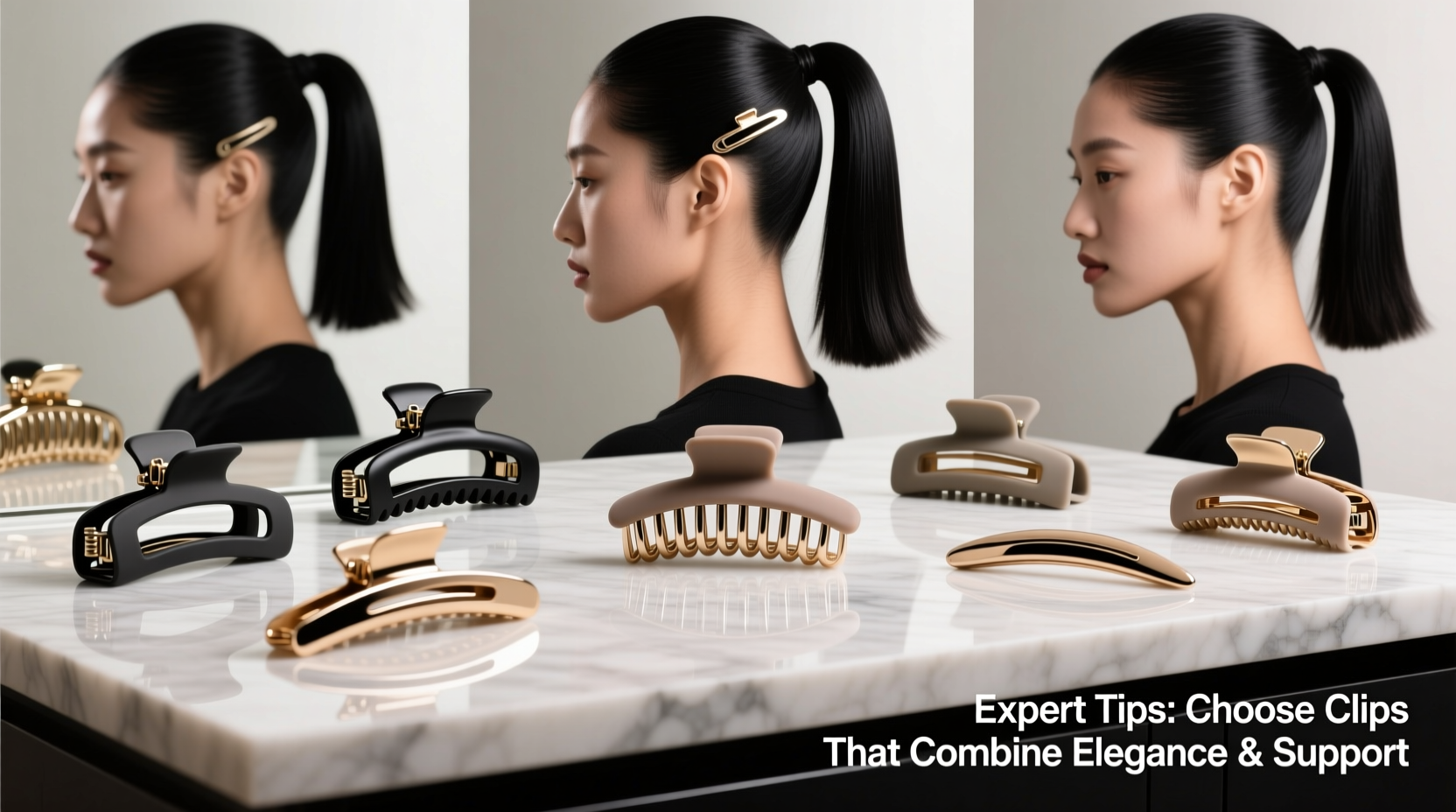
Your hair’s thickness, texture, and weight play a crucial role in determining which clip will work best. A clip that holds fine, straight hair securely may struggle with thick, curly locks, and vice versa. Understanding your hair profile helps narrow down choices and prevents daily frustration.
- Fine or thin hair: Opt for smaller clips with non-slip grips like silicone-lined barrettes or U-pins. These provide subtle hold without pulling or slipping.
- Thick or coarse hair: Choose wider, sturdier clips such as oversized claw clips or double-pronged snap clips. These distribute tension evenly and prevent breakage.
- Curly or voluminous hair: Look for deep-grip clips with strong springs. Materials like acetate or reinforced metal offer better durability under pressure.
- Slippery or silky hair: Textured or rubber-coated clips increase friction, reducing slippage throughout the day.
Key Features of High-Performance Hair Clips
Not all hair clips are created equal. Beyond appearance, several functional elements determine whether a clip will stay put and feel comfortable. Prioritize these features when shopping:
- Grip strength: A clip should close firmly but not pinch the scalp. Test the spring mechanism by opening and closing it several times.
- Size-to-hold ratio: Larger clips aren’t always better. Match the clip size to the section of hair you’re securing—oversized clips on fine hair can look bulky and slip easily.
- Weight: Lightweight materials like plastic or resin are ideal for everyday wear, while metallic clips add flair but may cause strain if worn for hours.
- Edge smoothness: Rough or sharp edges can snag hair or irritate the scalp. Run your finger along the inner surface to check for smooth finishes.
- Closure mechanism: Snap clips, jaw clips, and banana clips each offer different levels of control. Jaw (claw) clips are best for high-volume styles; snap clips excel at precision placement.
Material Comparison Table
| Material | Pros | Cons | Best For |
|---|---|---|---|
| Acetate | Durable, glossy finish, color variety | Can be heavy, less flexible | Thick or curly hair |
| Stainless Steel | Strong grip, corrosion-resistant | Potentially cold to touch, heavier | Secure updos, professional settings |
| Resin/Plastic | Lightweight, affordable, colorful | May crack over time, weaker grip | Daily wear, fine hair |
| Rubber-Coated | Non-slip, gentle on hair | Limited designs, can degrade | Slippery or oily hair types |
Style Meets Functionality: Choosing Aesthetic Elements
While performance is essential, style shouldn’t be overlooked. The right clip can elevate a simple ponytail into a fashion statement. However, avoid sacrificing function for form. Balance both by considering:
- Color coordination: Neutral tones (black, brown, nude) blend seamlessly with most hair colors. Bold hues or metallics make great accents for casual or evening wear.
- Design scale: Delicate embellishments suit finer hair, while chunky or geometric shapes complement thicker textures.
- Occasion alignment: Minimalist clips work well in professional environments; ornate or jeweled pieces shine at events.
Real-World Example: Office to Evening Transition
Sophia, a marketing executive with shoulder-length wavy hair, struggled with her midday ponytail falling flat by 3 PM. She switched from a flimsy metal snap clip to a wide-toothed acetate claw clip in a chestnut brown shade matching her highlights. Not only did it hold her hair securely through back-to-back meetings, but she also added a slim velvet scrunchie at the base for extra grip. At the end of the day, she flipped her hair, twisted it slightly, and re-clipped it into a low chignon for a networking dinner—all with the same accessory. Her choice saved time, reduced frizz, and maintained polish from desk to dinner.
“Hair accessories should support your lifestyle, not complicate it. The ideal clip blends invisibility during the day with versatility for transformation later.” — Lena Torres, Celebrity Stylist & Founder of Mane Theory Salon
Step-by-Step Guide: How to Choose & Use the Perfect Clip
- Assess your hair type: Determine thickness, texture, and typical behavior (e.g., slips easily, tangles often).
- Identify your primary use case: Daily wear? Workouts? Special occasions?
- Select material and size accordingly: Use the table above as a reference.
- Test before buying: If possible, open and close the clip to evaluate spring tension and edge smoothness.
- Style with prep: Lightly tease the root area or use a texturizing spray for added grip before clipping.
- Position strategically: Place the clip slightly off-center or angled upward for a flattering lift.
- Maintain regularly: Clean clips monthly with mild soap and water to remove oil buildup that reduces grip.
Common Mistakes to Avoid
- Using overly tight clips that cause headaches or traction alopecia over time.
- Choosing purely decorative clips without structural integrity.
- Ignoring clip maintenance—dirty clips lose their effectiveness.
- Forcing a clip shut, which can damage the hinge or snap mechanism.
- Wearing metal clips near sensitive skin without checking for nickel content.
FAQ
Can hair clips cause hair breakage?
Yes, especially if they have rough edges, excessive tension, or are used repeatedly in the same spot. To minimize damage, rotate clip positions and choose models with smooth, padded interiors.
How do I stop my clip from sliding out?
Ensure your clip matches your hair density and consider using a light-hold texturizing spray before styling. Clips with internal ridges or rubber lining offer superior grip.
Are claw clips better than bobby pins for ponytails?
Claw clips generally offer faster application and stronger hold for medium to thick hair. Bobby pins are better for securing flyaways or small sections but require more time and precision for full ponytail support.
Final Checklist Before You Buy
- ✅ Matches my hair thickness and texture
- ✅ Has a secure yet comfortable closure
- ✅ Made from durable, non-damaging material
- ✅ Smooth interior edges to prevent snagging
- ✅ Complements my usual outfits or hairstyles
- ✅ Easy to clean and maintain
Conclusion: Elevate Your Everyday Style with Confidence
The perfect hair clip isn’t just about holding your ponytail—it’s about doing so with grace, ease, and a touch of personality. By aligning functionality with aesthetic preference, you transform a simple tool into a signature element of your look. Whether you're rushing to a meeting, heading to the gym, or dressing up for a night out, the right clip ensures your hair stays flawless without compromise. Take the time to assess your needs, test options mindfully, and invest in quality. Your hair—and your confidence—will thank you.




 浙公网安备
33010002000092号
浙公网安备
33010002000092号 浙B2-20120091-4
Comments
No comments yet. Why don't you start the discussion?