
Selecting a ring is more than just choosing a metal or a gemstone—it’s about finding a piece that harmonizes with your hand. Every hand is different, and what looks stunning on one person may not have the same effect on another. The key to a truly flattering ring lies in understanding how design elements interact with your finger length, width, knuckle size, and overall hand proportions. With thoughtful selection, even a simple band can elevate your look, elongate your fingers, and feel like it was made just for you.
Understanding Your Hand Shape
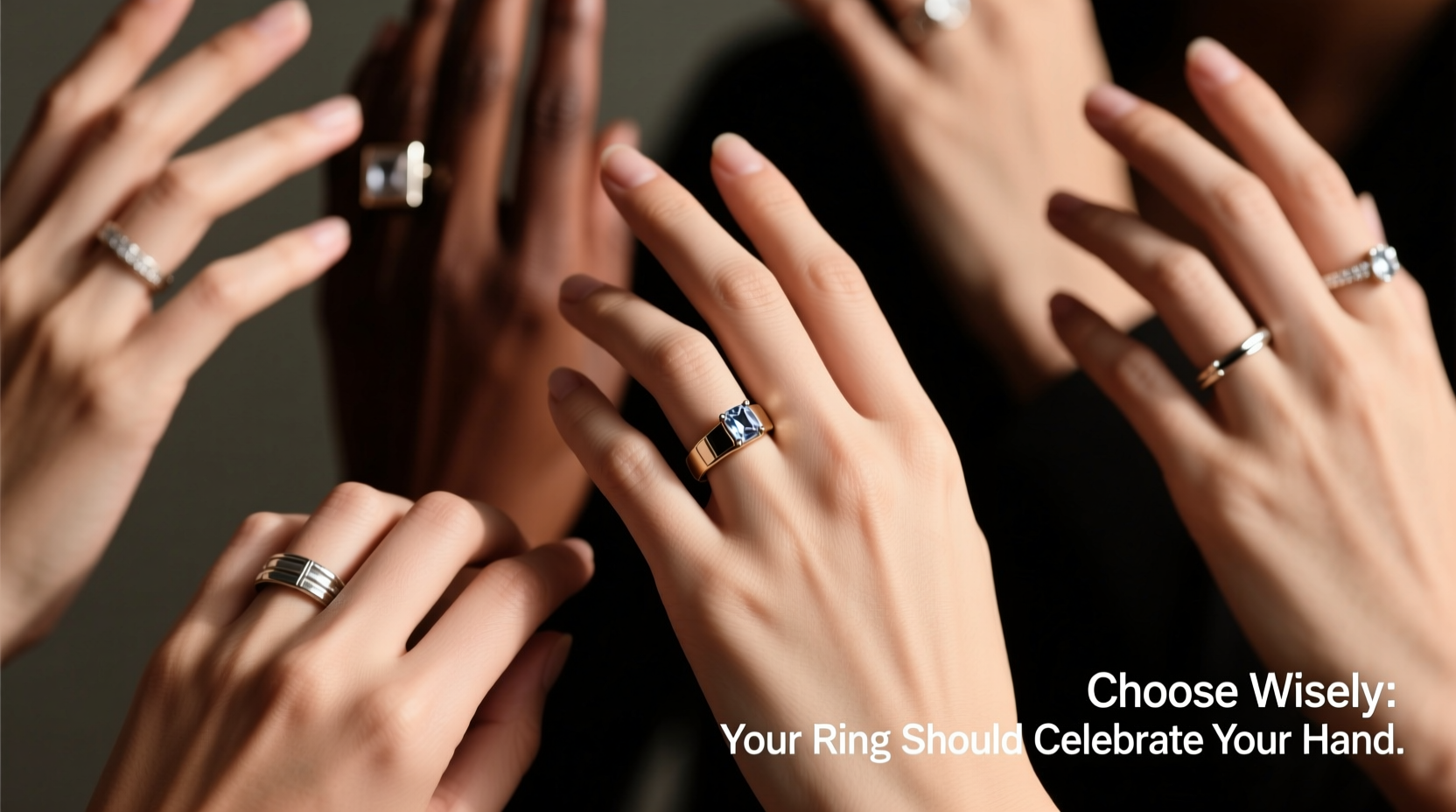
Before diving into ring styles, it’s essential to identify your hand shape. There are four primary categories: slender, short, wide, and tapered. Each has distinct characteristics that influence which rings will appear most balanced and elegant.
- Slender hands: Long fingers with narrow bones and slim knuckles. These hands suit bold, intricate designs as well as delicate bands.
- Short fingers: Fingers that appear compact relative to the palm. Elongating styles work best to create visual extension.
- Wide-set hands: Broad palms and fingers with prominent knuckles. Wider bands and structured settings often complement this shape.
- Tapered fingers: Fingers that narrow significantly from base to tip. Rings with larger center stones or east-west settings balance the taper.
Observe your hand in natural light and note where your fingers fall within these categories. Keep in mind that many people have a combination—for example, long fingers with wide knuckles. Precision in assessment leads to better choices.
Ring Styles That Flatter Different Hand Shapes
Once you’ve identified your hand type, you can begin matching it with ring designs that enhance its strengths and minimize perceived flaws.
For Slender Hands
Naturally graceful and long, slender fingers can carry both dainty and dramatic pieces. Consider:
- Three-stone rings that emphasize symmetry and flow.
- East-west settings where the stone lies horizontally across the finger, adding subtle width.
- Nail rings or midi rings for layered elegance.
For Short Fingers
The goal here is optical elongation. Vertical design elements draw the eye upward, creating the illusion of length.
- Prong settings that lift the center stone, drawing attention skyward.
- Marquise, oval, or pear-shaped stones—these elongated cuts naturally extend the finger line.
- Avoid wide, boxy settings that cut the finger visually.
For Wide-Set Hands
Bolder bands and structured silhouettes provide balance and avoid getting lost on broader fingers.
- Wider bands (4mm and above) in comfort-fit styles ensure proportionality.
- Halo settings add presence without requiring a massive center stone.
- Symmetrical patterns like eternity bands distribute visual weight evenly.
For Tapered Fingers
When fingers narrow sharply, a large center stone can look top-heavy. Balance is key.
- Shoulder-set accent stones that mirror the taper for harmony.
- Bezel settings offer security and a sleek transition from band to stone.
- Consider low-profile rings if the taper makes taller settings unstable.
Material and Setting Considerations
Beyond shape, the choice of metal and setting plays a crucial role in how a ring interacts with your skin tone and hand structure.
| Metal | Best For | Design Pairings |
|---|---|---|
| White Gold | Cool skin tones, slender or short fingers | Diamonds, geometric shapes |
| Yellow Gold | Warm undertones, wider hands | Vintage styles, engraved bands |
| Pink Gold | All skin tones, especially tapered fingers | Romantic settings, floral motifs |
| Platinum | Durability seekers, any hand shape | Solitaires, minimalist designs |
Settings also affect appearance. A high setting lifts the stone, adding drama but potentially catching on fabric. A flush or tension setting lies flat, offering modern minimalism ideal for active lifestyles. For wider knuckles, consider a slight curve in the band or a flexible hinge design to ease over the joint without slipping.
“Fit is everything. A ring should feel like an extension of the hand, not something perched on top of it.” — Lila Nguyen, Master Jeweler & Designer at Atelier Lumière
Step-by-Step Guide to Choosing Your Perfect Ring
Follow this process to ensure every decision is intentional and personalized.
- Assess your hand shape in natural light. Take notes or photos for reference.
- Determine your lifestyle needs: Will the ring be worn daily? Is durability a priority?
- Choose a stone shape that complements your fingers—elongated cuts for shorter fingers, round for balance.
- Select a metal based on skin tone and maintenance preference.
- Try before you commit: Visit a jeweler to test different widths, profiles, and settings on your actual finger.
- Consider stacking potential: If you wear multiple rings, ensure they align comfortably side by side.
Real-Life Example: Transforming Proportions with Design
Sophie, a graphic designer with short, wide fingers, initially felt limited in her ring choices. She assumed only thin bands would work, but they disappeared on her hand. After consulting a jewelry stylist, she chose a 6mm rose gold band with a central oval diamond flanked by two smaller trapezoid stones. The vertical alignment of the stones created a sense of length, while the warm metal softened her hand’s angularity. “It didn’t just fit my finger,” she said. “It finally made me feel elegant when I looked down at my hands.”
Frequently Asked Questions
Can I wear a large center stone if I have small hands?
Yes—proportion is key. A large stone can work beautifully if balanced with a thinner band and set low to prevent imbalance. Avoid overly wide halos that may overwhelm the finger.
What ring styles should I avoid with wide knuckles?
Steer clear of rigid, narrow bands that pinch or gap. Instead, opt for flexible designs, slightly contoured bands, or adjustable rings. High shoulders or cathedral settings can also help bridge the knuckle smoothly.
Is there a universal ring style that suits all hand shapes?
While no single style fits everyone perfectly, a classic solitaire with a round or oval center stone on a medium-width band (4–5mm) tends to be the most universally flattering due to its clean lines and balanced proportions.
Checklist: Ring Selection at a Glance
- Identified my hand shape (slender, short, wide, tapered)
- Chosen a stone cut that enhances finger appearance
- Picked a metal that complements my skin tone
- Tested ring comfort over the knuckle and on the finger base
- Ensured the profile (height) suits my lifestyle
- Verified compatibility with other rings I wear
- Confirmed sizing accuracy—especially important for wide knuckles
Final Thoughts
A ring should feel personal, purposeful, and perfectly fitted—not just in size, but in harmony with your entire hand. By honoring your unique anatomy and combining expert insights with intentional design choices, you transform a piece of jewelry into a true extension of self-expression. Whether it’s an engagement band, a statement cocktail ring, or a daily wearable, the right choice doesn’t just sit on your finger; it belongs there.




 浙公网安备
33010002000092号
浙公网安备
33010002000092号 浙B2-20120091-4
Comments
No comments yet. Why don't you start the discussion?