
In today’s mobile-first world, convenience and personal expression go hand in hand. The rise of handheld phone cases with detachable chains has transformed how we carry our devices—from functional accessories to fashion statements. While long crossbody straps dominate the market, short chains offer a sleek, minimalist alternative that keeps your phone within easy reach without sacrificing style. However, not all chains are created equal. Choosing the right one involves more than just aesthetics; it requires attention to material, length, clasp security, weight distribution, and daily wearability. Whether you're upgrading your everyday carry or selecting a gift, understanding what makes a short chain ideal can elevate both utility and confidence.
Understand the Role of Chain Length and Drop Height
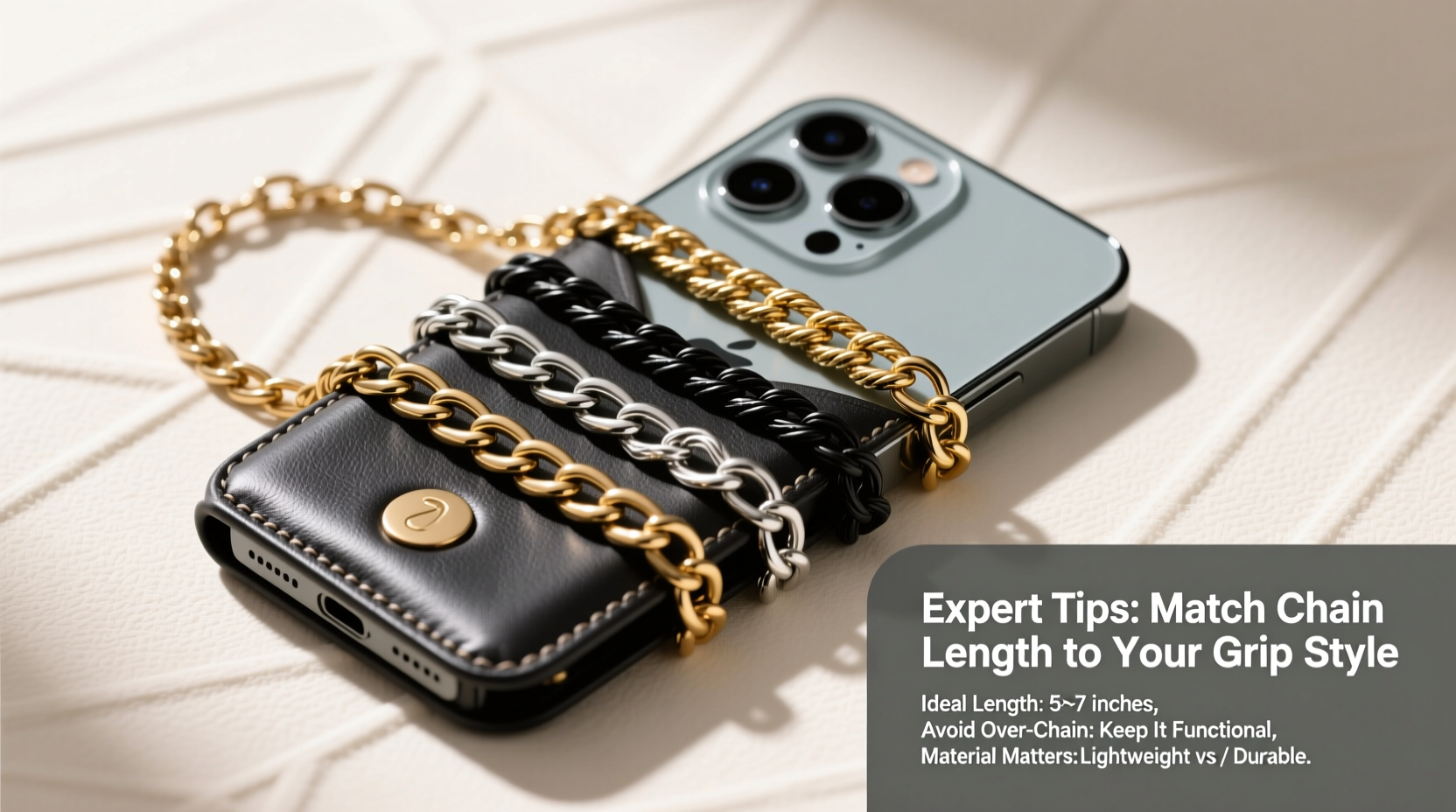
The term “short chain” typically refers to a strap between 8 and 14 inches in length when doubled (or 16–28 inches total). This range allows the phone to rest comfortably at chest or upper waist level when worn around the neck. The key is determining the ideal \"drop height\"—how low the phone hangs from your neck—for your body type and usage habits.
A shorter drop (around 10–12 inches) keeps the device closer to your face, making it easier to view notifications and take photos. It also reduces swinging and snagging, which is ideal for active users. Taller individuals may benefit from slightly longer drops, while petite frames often look best with compact chains that don’t overwhelm their proportions.
Selecting the Right Material for Durability and Style
Material choice directly impacts both appearance and longevity. Common options include stainless steel, brass, aluminum alloy, and coated metal links. Each brings distinct advantages and trade-offs.
| Material | Pros | Cons |
|---|---|---|
| Stainless Steel | Hypoallergenic, rust-resistant, strong, retains shine | Heavier, can feel cold in winter |
| Brass (with plating) | Luxurious look, lightweight, affordable base | Plating wears over time, may tarnish |
| Aluminum Alloy | Very light, modern finish, corrosion-resistant | Less durable under stress, prone to bending |
| Coated Metal (e.g., PVD coating) | Variety of colors, scratch-resistant surface | Scratches reveal base metal, limited lifespan |
For daily use, experts recommend surgical-grade stainless steel due to its resilience and biocompatibility. According to jewelry designer Lena Torres, “A well-made stainless steel chain won’t stretch, snap, or irritate skin—even after months of constant wear.” If opting for plated finishes like rose gold or black ion, ensure the manufacturer uses PVD (Physical Vapor Deposition) coating, known for superior adhesion and resistance to abrasion.
“Durability starts with metallurgy. Don’t choose based on color alone—ask about tensile strength and plating thickness.” — Lena Torres, Industrial Jewelry Designer
Clasp Type and Attachment Security
No matter how beautiful the chain, a weak clasp defeats its purpose. Most handheld phone case chains use either lobster clasps, spring rings, or magnetic closures. Each varies in reliability and ease of use.
- Lobster clasps: Most secure option; commonly used in fine jewelry. They require two hands to fasten but rarely open accidentally.
- Spring ring clasps: Smaller and lighter, but prone to weakening over time. Best suited for lighter phones (under 6.5 oz).
- Magnetic clasps: Convenient for one-handed operation, but magnets can degrade or attract unintended metal objects. Use only if they’re rated for at least 5 lbs of pull force.
Equally important is the attachment point on the phone case. Look for cases with reinforced metal loops or O-rings rather than plastic anchors. A poorly secured connection becomes the weakest link—literally. Always check that the chain ends have jump rings soldered shut, not merely crimped, to prevent accidental disconnection.
Checklist: What to Verify Before Buying a Short Chain
- Chain length suits your torso and preferred drop height
- Material is corrosion-resistant and appropriate for sensitive skin
- Clasp type matches your lifestyle (security vs. convenience)
- Jump rings are fully closed and securely attached
- Attachment loop on case is metal-reinforced, not plastic
- Total weight feels balanced when phone is attached
Real-World Example: Why Sarah Switched to a Short Chain
Sarah Kim, a freelance photographer based in Portland, used a traditional wristlet strap for her phone case during outdoor shoots. She found it restrictive when switching lenses and often forgot her phone was dangling, leading to several near-drops. After researching alternatives, she switched to a 12-inch stainless steel chain with a lobster clasp, attaching it to a rugged case with titanium anchor points.
“The difference was immediate,” she said. “I could let the phone hang while using my camera, then quickly lift it to capture candid moments. The chain didn’t tangle, never broke, and looked professional enough to wear at client meetings.” Within three months, she noticed fewer back strains from hunching over her bag and even received compliments on her setup. Her experience underscores how a small change in accessory design can significantly improve workflow and comfort.
Step-by-Step Guide to Choosing Your Ideal Chain
Follow this sequence to make an informed decision tailored to your needs:
- Measure your ideal drop: Use a flexible measuring tape or string to simulate where you want the phone to rest.
- Weigh your phone + case: Total weight determines required chain strength. Phones over 7 oz need heavy-duty construction.
- Determine usage frequency: Daily commuters need sturdier materials than occasional users.
- Test clasp mechanics: Open and close the clasp 10 times to assess smoothness and retention.
- Check return policies: Buy from brands offering at least a 30-day trial period in case fit isn’t right.
- Pair with your wardrobe: Match chain finish (silver, gold, gunmetal) to your most-worn jewelry for cohesive styling.
Frequently Asked Questions
Can a short chain support larger phones like the iPhone 15 Pro Max or Samsung Galaxy S24 Ultra?
Yes—but only if the chain is made from high-tensile material like stainless steel and features a secure clasp. Always verify the manufacturer’s weight rating. Phones exceeding 8 oz should be paired with chains rated for at least 10 lbs of tensile strength.
Will a short chain damage my phone case over time?
Potential wear depends on the attachment method. Chains connected via soft silicone loops or padded connectors reduce friction. Hard metal-on-plastic contact may cause micro-cracks over time. Rotate attachment points weekly or use protective sleeves if concerned.
Are short chains suitable for workouts or running?
Generally not recommended. Even short chains create bounce during high-impact activity, increasing drop risk. For exercise, consider armbands or secure pockets instead. If you must use a chain, pair it with a shock-absorbing silicone adapter to minimize movement.
Final Thoughts: Elevate Function with Thoughtful Design
A short chain for your handheld phone case isn’t just a strap—it’s an extension of your personal rhythm. When chosen wisely, it blends practicality with elegance, keeping your device accessible without compromising comfort or style. The perfect chain balances strength, proportion, and finishing quality, transforming a simple accessory into a trusted companion throughout your day.




 浙公网安备
33010002000092号
浙公网安备
33010002000092号 浙B2-20120091-4
Comments
No comments yet. Why don't you start the discussion?