
Transparent backpacks have surged in popularity across schools nationwide, driven by both safety policies and fashion-forward trends. While their see-through design meets institutional security requirements, students and parents alike are discovering that not all clear backpacks are created equal. Choosing the right one involves more than just aesthetics—it demands a thoughtful balance of durability, comfort, organization, and long-term usability. From material quality to ergonomic design, understanding what to look for ensures your investment lasts through the academic year and beyond.
Durability First: What Makes a Transparent Backpack Last?
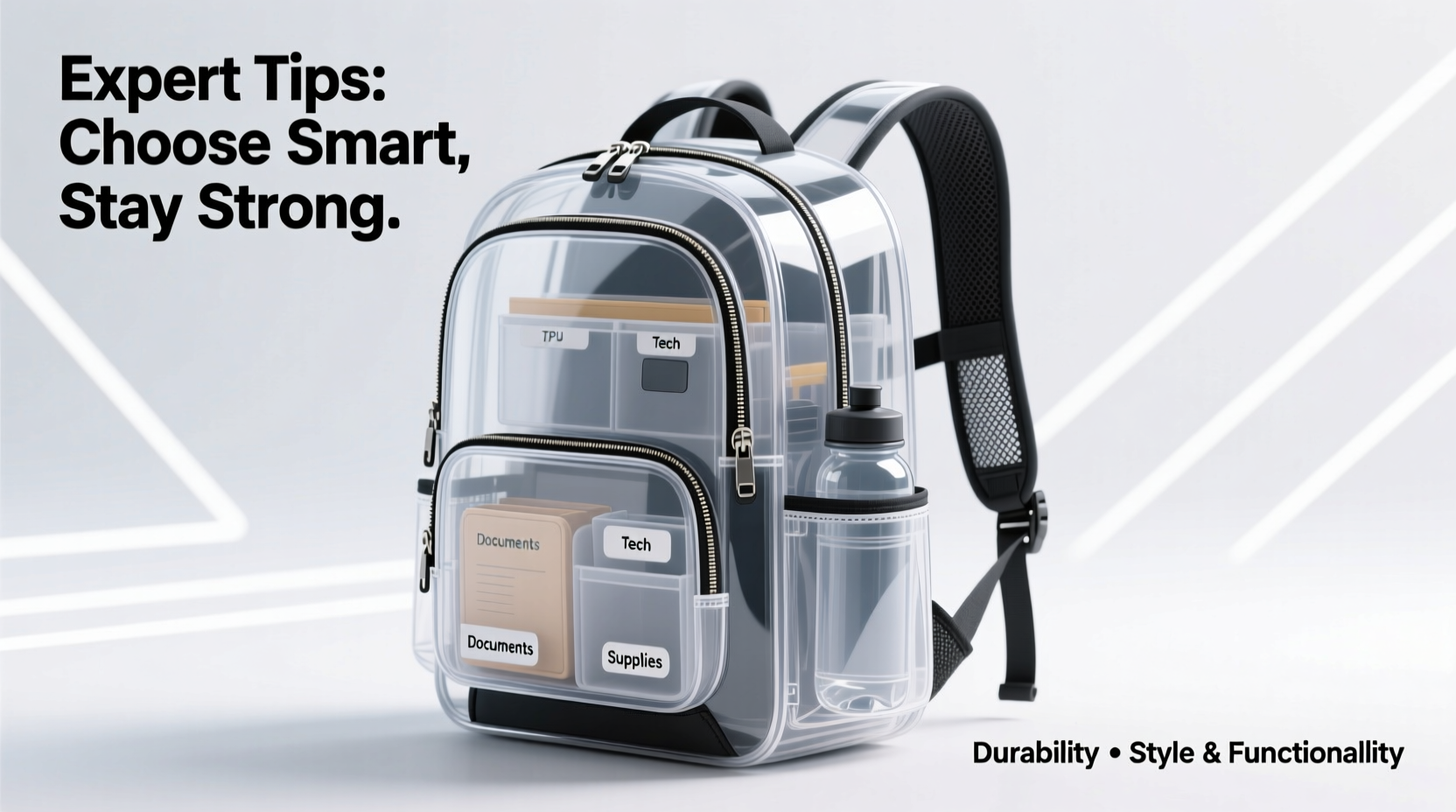
The transparency of a backpack doesn’t mean it has to sacrifice strength. In fact, the most durable options are engineered with reinforced materials designed to withstand daily wear, weather exposure, and heavy book loads. The primary materials used in transparent backpacks include PVC (polyvinyl chloride), TPU (thermoplastic polyurethane), and polycarbonate blends. Each has distinct advantages and drawbacks.
| Material | Durability | Flexibility | Environmental Impact |
|---|---|---|---|
| PVC | High (but can crack over time) | Moderate | Less eco-friendly; contains chlorine |
| TPU | Very High (resists tearing) | Excellent | Biodegradable variants available |
| Polycarbonate | Extreme (impact-resistant) | Rigid | Energy-intensive production |
For students carrying heavy textbooks or commuting via bike or bus, TPU stands out as the optimal choice—flexible yet tough, resistant to abrasion, and less prone to yellowing under UV exposure. Reinforced stitching, double-layered panels, and bar-tacked stress points (especially at strap junctions) further enhance longevity.
Style That Works: Balancing Fashion and Function
Transparency doesn’t mean invisibility. Today’s clear backpacks come with customizable interior linings, colored zippers, patterned patches, and even LED light strips for personal expression. However, style should never compromise practicality. A sleek design is only effective if it supports ease of use and organization.
Consider backpacks with removable fabric inserts or mesh sleeves in bold colors or prints. These allow students to personalize their look while keeping essentials visible during security checks. Brands like Jansport, SwissGear, and Solo offer hybrid models where the outer shell remains transparent but internal compartments feature branded textiles.
“Students today want visibility without sacrificing identity. The best transparent packs blend compliance with self-expression.” — Dr. Lena Torres, Educational Psychologist and Youth Trends Analyst
When evaluating style, also assess hardware quality. Metal zippers last longer than plastic ones, and matte finishes resist fingerprints better than glossy surfaces. Subtle branding often ages better than flashy logos, making the backpack suitable for multiple grade levels.
Functionality Matters: Organizing Your Academic Load
A backpack’s true value lies in how well it manages contents. Even with full visibility, poor layout leads to clutter, lost items, and inefficient packing. Prioritize models with dedicated compartments: a padded laptop sleeve (at least 15 inches), front zip pockets for small electronics, side mesh holders for water bottles, and an internal organizer panel for pens, chargers, and notebooks.
Ergonomics play a crucial role in functionality. Padded shoulder straps with S-curve designs distribute weight more naturally across the shoulders. A breathable back panel prevents sweat buildup during long walks between classes. For taller students or those with heavier loads, consider backpacks with adjustable sternum straps and load-lifter clips to stabilize weight close to the body.
- Look for a main compartment deep enough to fit standard three-ring binders vertically.
- Ensure zippers open wide enough for easy access—not just narrow slits.
- Check if the bag includes a built-in USB port with an internal cable routing channel (ideal for charging on the go).
Step-by-Step Guide to Testing Functionality Before Purchase
- Simulate a school day load: Pack textbooks, a laptop, lunchbox, and jacket to test capacity.
- Wear it for 15 minutes: Walk around to assess comfort and pressure points.
- Open and close all zippers repeatedly: Check for smooth operation and resistance.
- Inspect interior pockets: Verify they hold devices securely without bulging.
- Wipe down the surface: Test cleanability with a damp cloth to ensure smudges won’t linger.
Real-World Example: How One Student Upgraded Her Commute
Sophia, a high school junior in Austin, Texas, initially dismissed transparent backpacks as “unstylish” and “flimsy.” After her previous canvas bag failed mid-semester due to broken zippers and stained fabric, she researched alternatives compliant with her district’s clear-bag policy. She selected a TPU-based model with a navy-blue interior liner, magnetic chest strap, and ventilated back padding.
Within weeks, she noticed fewer backaches and faster screening at school entrances. The labeled interior pouches helped her locate assignments quickly, reducing morning stress. When a sudden downpour hit during dismissal, the waterproof exterior kept her papers dry. Now, she recommends the same model to peers, emphasizing that “a good clear backpack doesn’t just meet rules—it makes life easier.”
Essential Buying Checklist
Before purchasing, verify these key features:
- Material Quality
- Opt for TPU or multi-layer PVC; avoid ultra-thin plastics.
- Weight Capacity
- Should support at least 20 lbs without deforming.
- Comfort Features
- Padded straps, breathable back panel, optional waist/sternum straps.
- Security Compliance
- Fully transparent main compartment meeting school guidelines.
- Organization
- At least three internal sections and external bottle holder.
- Cleanability
- Surface should wipe clean easily; resists fogging and static.
Frequently Asked Questions
Are transparent backpacks allowed in all schools?
No—policies vary by district and institution. Some require 100% transparency, others allow hybrid designs with mesh or partially opaque panels. Always confirm with your school administration before buying.
How do I keep my transparent backpack looking new?
Wipe it weekly with a microfiber cloth and mild soapy water. Avoid alcohol-based cleaners, which can cloud plastic surfaces. Store it upright in a dust-free area away from direct sunlight to prevent yellowing.
Can I use a transparent backpack for travel or sports?
Yes—many models double as gym bags or weekend carriers. Look for water-resistant variants and quick-access openings. Just ensure valuables aren't left visible when unattended.
Final Thoughts: Make the Smart Choice for School Success
Selecting the perfect transparent backpack isn’t about following trends—it’s about making a strategic decision that supports academic performance, physical comfort, and personal responsibility. With the right combination of durable materials, smart organization, and thoughtful design, a clear backpack can be both compliant and capable. It reduces daily friction, speeds up transitions, and even encourages better habits through visual accountability.
Don’t settle for the cheapest option at the back-to-school sale. Invest time in evaluating construction, trying on fits, and reading verified reviews. Your backpack carries more than books—it carries your routine, your focus, and your confidence.




 浙公网安备
33010002000092号
浙公网安备
33010002000092号 浙B2-20120091-4
Comments
No comments yet. Why don't you start the discussion?