
Designer snake rings are more than just jewelry—they’re wearable art. Whether crafted in 18-karat gold, platinum, or adorned with gemstones, these intricate pieces demand thoughtful maintenance. Their coiled designs and textured surfaces trap dirt, oils, and residue, making regular care essential to preserve their luster and structural integrity. Improper cleaning can scratch delicate finishes or loosen prongs holding stones. With the right approach, you can keep your snake ring looking showroom-fresh for decades.
Understand Your Ring’s Materials and Craftsmanship
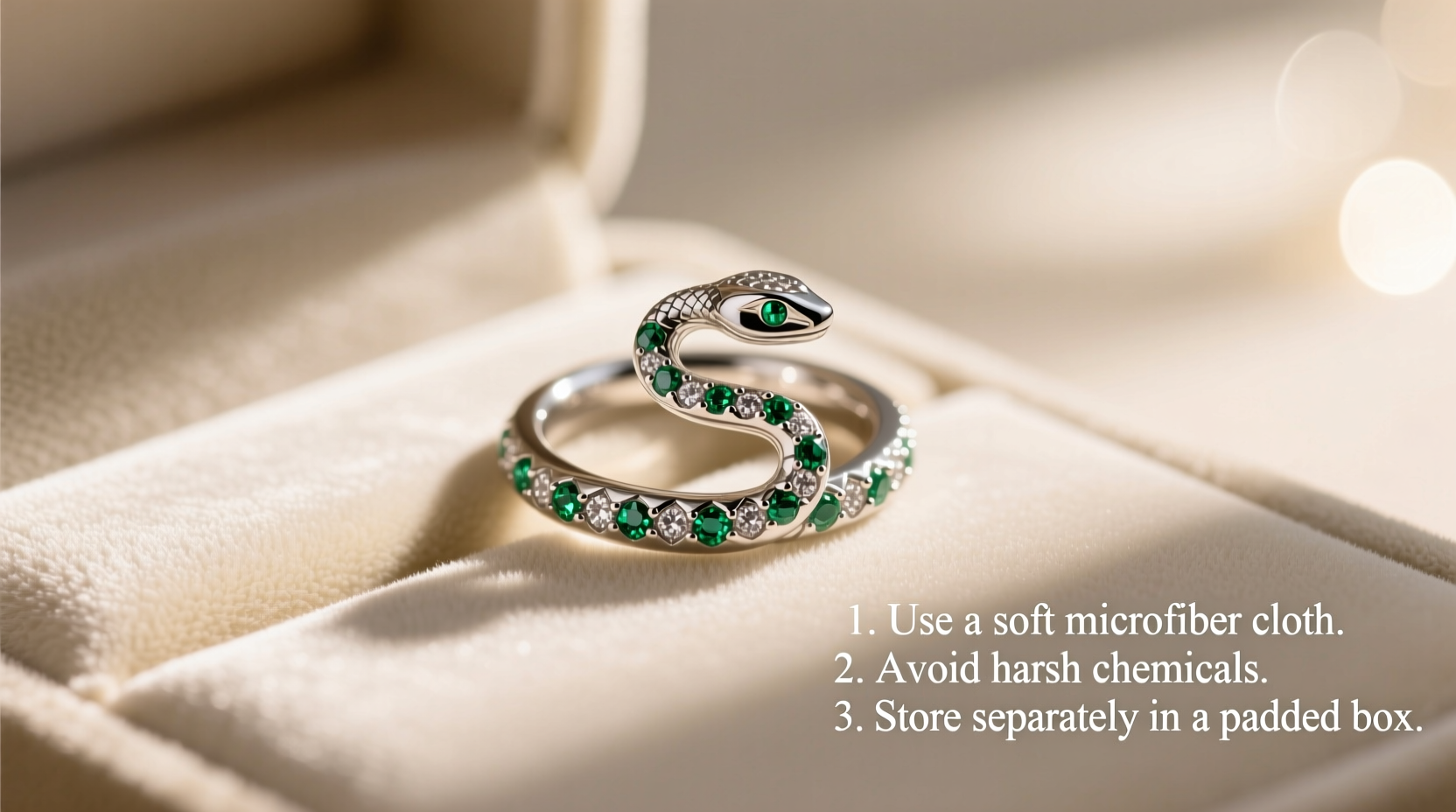
Before any cleaning begins, identify what your ring is made of. Most designer snake rings fall into one of three categories: solid gold (yellow, white, or rose), platinum, or sterling silver with possible gemstone accents. Each material reacts differently to chemicals and abrasives. For example, softer metals like 18k gold are more prone to scratches than harder alloys. If your ring features diamonds, emeralds, or other precious stones, check whether they’re fracture-filled or treated—these require extra caution.
The craftsmanship also matters. Snake rings often have fine details in the scales, eyes, and fangs. These recessed areas collect grime over time. Rings from luxury houses like Cartier, David Webb, or Boodles may use proprietary polishing techniques that shouldn’t be compromised by aggressive scrubbing.
“Many clients damage their vintage snake rings by using off-the-shelf cleaners. A gentle, informed method preserves both metal and sentiment.” — Lena Moreau, Senior Jewelry Conservator at Atelier Heritage Restoration
Step-by-Step Guide to Safe Home Cleaning
Cleaning a designer snake ring at home is possible—if done correctly. Follow this six-step process to avoid harm while restoring brilliance:
- Remove the ring before exposure to chemicals: Always take it off before applying lotion, swimming, or cleaning. Daily exposure accelerates tarnish and dullness.
- Prepare a mild cleaning solution: Mix a few drops of phosphate-free dish soap (like Dawn) with warm distilled water in a small bowl. Avoid tap water if it’s hard, as mineral deposits can leave spots.
- Soak for 10–15 minutes: Place the ring gently in the solution. This loosens oils and debris lodged in crevices without requiring forceful scrubbing.
- Use a soft-bristled brush: A clean toothbrush with ultra-soft bristles works well. Gently work around the snake’s head, eyes, and under coils. Never press hard—let the bristles do the work.
- Rinse thoroughly: Hold the ring under lukewarm running water, ensuring no soap residue remains. Plug the sink or use a strainer to prevent accidental loss.
- Dry with a lint-free cloth: Use a microfiber or jeweler’s cloth. Do not air-dry, as water spots may form on polished surfaces.
Do’s and Don’ts: What to Avoid with Designer Rings
Mistakes in jewelry care are common but costly. The following table outlines key practices to adopt—and those to eliminate immediately.
| Do’s | Don’ts |
|---|---|
| Store in a padded jewelry box or soft pouch | Leave it exposed on bathroom counters |
| Clean every 2–3 weeks with mild soap | Use bleach, ammonia, or chlorine |
| Have it professionally inspected annually | Wear during workouts or gardening |
| Use a jewelry polishing cloth for shine | Scrub with paper towels or rough fabrics |
| Remove before applying perfumes or hairspray | Soak for hours or overnight |
Ultrasonic cleaners, while effective for some jewelry, should be avoided unless approved by the manufacturer. Many vintage or hand-engraved snake rings can suffer microfractures or dislodged stones under high-frequency vibrations.
Real Example: A Restored Heirloom Snake Ring
Sophia R., a collector in Geneva, inherited a 1970s yellow gold snake ring from her grandmother. Initially, the ring appeared dull, with blackened crevices and a hazy surface. She attempted cleaning it with vinegar and baking soda—a popular DIY remedy—which only caused minor etching on the gold finish.
She consulted a certified gemologist who recommended a pH-neutral cleaner and gentle brushing. Over three weekly sessions, the ring regained its warmth and definition. The expert also tightened two loose claws securing a small ruby eye. Today, Sophia wears it regularly, maintaining it with biweekly wipe-downs and annual professional servicing. Her experience underscores the importance of tailored care over generic hacks.
Professional Maintenance Checklist
Even with diligent home care, professional attention is non-negotiable for long-term preservation. Use this checklist to stay proactive:
- ✅ Schedule a jeweler inspection once per year
- ✅ Verify stone settings are secure
- ✅ Request steam cleaning (only if safe for materials)
- ✅ Ask for a professional polish if surface scratches appear
- ✅ Confirm hallmark integrity and weight consistency
- ✅ Update insurance appraisal every 3–5 years
During inspections, jewelers use magnification to detect stress fractures, especially in the ring’s shank or hinge points (if articulated). Early detection prevents catastrophic breakage.
Frequently Asked Questions
Can I wear my snake ring every day?
Yes, but with precautions. Designer rings are built for wear, but daily exposure to sweat, lotions, and friction will accelerate wear. Rotate it with other jewelry and remove it during physical activity.
Is it safe to use a jewelry polishing cloth?
Only if it’s specifically designed for your metal type. Silver cloths contain abrasives unsuitable for gold. Always check the label. For best results, use a dry microfiber cloth for routine wiping.
What if my ring has a darkened patina I like?
Some collectors prefer aged finishes, especially on antique pieces. In such cases, avoid full cleanings. Instead, lightly rinse and blot dry to maintain character while preventing buildup.
Conclusion: Care Is an Investment in Beauty and Legacy
A designer snake ring is not merely an accessory—it’s a statement of taste, history, and sometimes, inheritance. Treating it with respect ensures it remains radiant and structurally sound for generations. From understanding materials to avoiding common pitfalls, each step in your care routine contributes to its longevity. Combine gentle home maintenance with expert oversight, and your ring will continue to captivate with every flicker of light across its sinuous form.




 浙公网安备
33010002000092号
浙公网安备
33010002000092号 浙B2-20120091-4
Comments
No comments yet. Why don't you start the discussion?