
Cleaning floor mats often feels like a routine chore—until the mat in question isn’t rectangular or standard-sized. Irregular round floor mats, especially those with scalloped edges, cutouts, or non-uniform shapes, pose unique challenges. Their design makes them prone to warping, fraying, and uneven drying if cleaned improperly. Whether placed by an entryway, under a dining table, or as a decorative accent, these mats combine style with function—but only if maintained correctly.
Unlike their square counterparts, irregular round mats often feature delicate materials like wool, jute, coir, or hand-tufted synthetics that react poorly to aggressive scrubbing or soaking. The key lies not in how often you clean them, but in how thoughtfully you do it. With the right approach, you can preserve both appearance and structural integrity for years.
Understanding Your Mat’s Material and Construction
Before any cleaning begins, identify the material composition of your mat. This step is critical because different fibers respond differently to moisture, agitation, and cleaning agents. For example:
- Wool: Naturally stain-resistant but sensitive to heat and harsh detergents; prone to shrinking.
- Jute and Sisal: Highly absorbent plant fibers that degrade when overwet; best cleaned dry or with minimal moisture.
- Synthetic (polypropylene, nylon): More durable and water-resistant, suitable for deeper cleaning but still vulnerable to fraying at edges.
- Rubber-backed mats: Often have non-slip bases that delaminate if soaked or machine-washed.
Check manufacturer tags or product documentation. If unavailable, perform a discreet spot test in an inconspicuous area before applying any solution.
“Never assume all round mats are washable. Their irregular shape often means custom craftsmanship, which demands gentle handling.” — Lena Patel, Textile Conservation Specialist
Step-by-Step Guide: Safe Cleaning Process for Irregular Round Mats
Follow this structured method to deep-clean your mat while minimizing risk of distortion or fiber damage.
- Dry Debris Removal: Take the mat outdoors and shake vigorously. Use a soft-bristle brush or vacuum with a brush attachment to remove embedded dust and dirt from crevices and edges.
- Spot-Treat Stains: Mix a solution of one part white vinegar and two parts cool water. Dab onto stains using a microfiber cloth—never rub, as this spreads the stain and damages fibers.
- Prepare a Mild Cleaning Bath (for machine-safe synthetics only): Fill a bathtub or large tarp-lined space with cool water and a small amount of pH-neutral detergent. Submerge only if label permits. Avoid twisting or wringing.
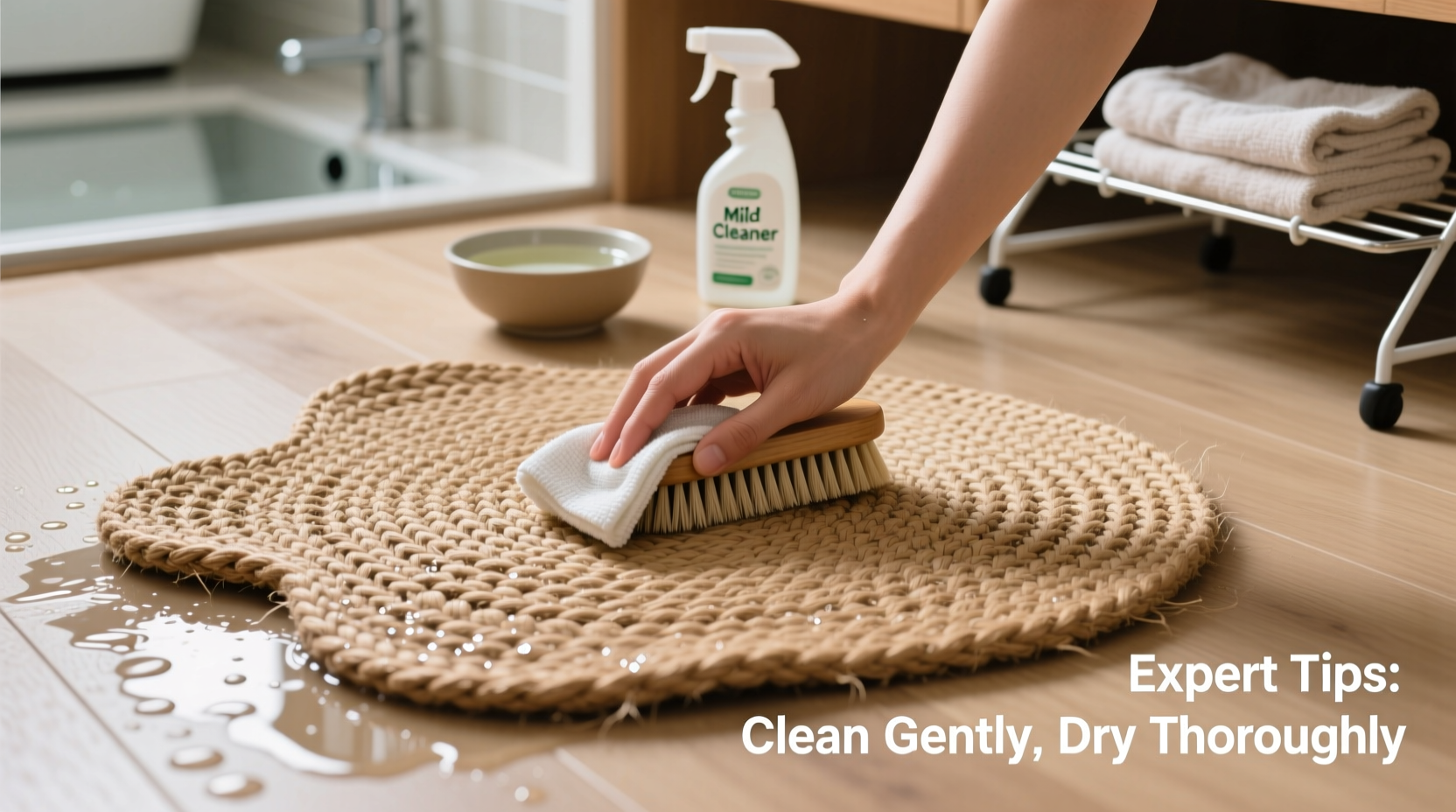
- Surface Rinse (Non-Submersible Mats): Lay the mat flat on a clean surface. Use a damp sponge with diluted soap to gently wipe the surface, working from center outward to maintain symmetry.
- Rinse Thoroughly: Wipe with a clean, damp cloth to remove soapy residue. Residue attracts more dirt over time.
- Drying: Hang over two parallel clotheslines or lay flat on a breathable rack. Never lay directly on concrete or tile, which traps moisture underneath. Rotate every few hours for even drying.
- Final Fluffing: Once fully dry, use fingers or a wide-tooth comb to gently lift flattened fibers, restoring texture.
Do’s and Don’ts: Maintaining Shape and Texture
| Do | Don’t |
|---|---|
| Use cool or lukewarm water only | Use hot water—it can melt backing or shrink natural fibers |
| Clean in shaded outdoor areas | Leave wet mats in direct sunlight—UV rays cause fading and brittleness |
| Roll for storage, never fold | Fold or crease, which creates permanent breaks in structure |
| Vacuum monthly with low suction | Use beater bars—they pull loose fibers and distort edges |
| Rotate every 3 months for even wear | Leave in high-moisture zones like bathrooms unless designed for it |
Real Example: Restoring a Vintage Moroccan Wool Mat
A homeowner in Portland inherited a handwoven circular wool rug with petal-like extensions from her grandmother. After years near a sunlit door, it had dulled and developed mild odor from tracked-in moisture. She avoided washing it, fearing shrinkage.
Following expert advice, she began with dry brushing, then spot-treated stained lobes with a vinegar-water mix. She laid the mat on a mesh drying rack in her garage, misting soiled areas lightly and blotting immediately. Over three days, she rotated and aired it out. No immersion, no machine drying. The result? A revived mat with intact dyes and no warping. It now sits in a low-traffic living room, rotated bi-monthly, and vacuumed gently with a handheld tool.
This case underscores that patience and precision matter more than intensity when preserving irregular forms.
Essential Cleaning Checklist
Keep this checklist handy before each cleaning session:
- ✅ Confirm material type and care instructions
- ✅ Shake or vacuum to remove loose debris
- ✅ Perform a spot test with cleaning solution
- ✅ Address stains before general cleaning
- ✅ Use only cool water and mild detergent
- ✅ Dry flat or hung evenly—never folded
- ✅ Allow 24–48 hours for complete drying
- ✅ Fluff fibers post-dry to restore loft
Frequently Asked Questions
Can I machine-wash an irregular round mat?
Only if explicitly labeled as machine-washable and made of synthetic fibers. Even then, use a front-loading washer on gentle cycle with cold water. Never use top-loaders with agitators—they can twist and tear the mat’s shape. When in doubt, hand-clean.
Why does my round mat keep curling at the edges after cleaning?
Edge curling usually results from uneven drying. One side dries faster than the other, causing tension. To prevent this, elevate the mat on a mesh rack so air circulates underneath, or flip it halfway through drying. Weighting the edges with clean cans (wrapped in cloth) can also help maintain flatness.
How often should I deep-clean an irregular floor mat?
Every 3 to 6 months for high-traffic areas; once a year for decorative placements. Frequent vacuuming reduces the need for deep cleaning. Over-cleaning accelerates wear, especially in natural fiber mats.
Preserve Beauty and Function with Mindful Care
Irratic shapes in floor mats aren't just aesthetic choices—they're statements of design intention. But their uniqueness demands respect in maintenance. Aggressive cleaning may seem efficient, but it compromises longevity. Gentle, informed methods protect not just fibers and backing, but the very silhouette that makes the piece special.
By understanding your mat’s material, following a careful cleaning sequence, and avoiding common pitfalls, you ensure it remains both hygienic and structurally sound. These pieces often anchor a room’s visual balance; treating them with care maintains that harmony for years.




 浙公网安备
33010002000092号
浙公网安备
33010002000092号 浙B2-20120091-4
Comments
No comments yet. Why don't you start the discussion?