
Finding a wall stud is essential when hanging heavy items like shelves, mirrors, TVs, or cabinets. While stud finders are convenient, not everyone owns one—and even the best models can fail on uneven walls or over insulation. The good news? You don’t need advanced tools to locate studs accurately. With a few household items and some observational skills, you can pinpoint studs with confidence. These time-tested techniques are used by contractors, DIYers, and handymen who rely on practicality over gadgets.
Why Stud Location Matters
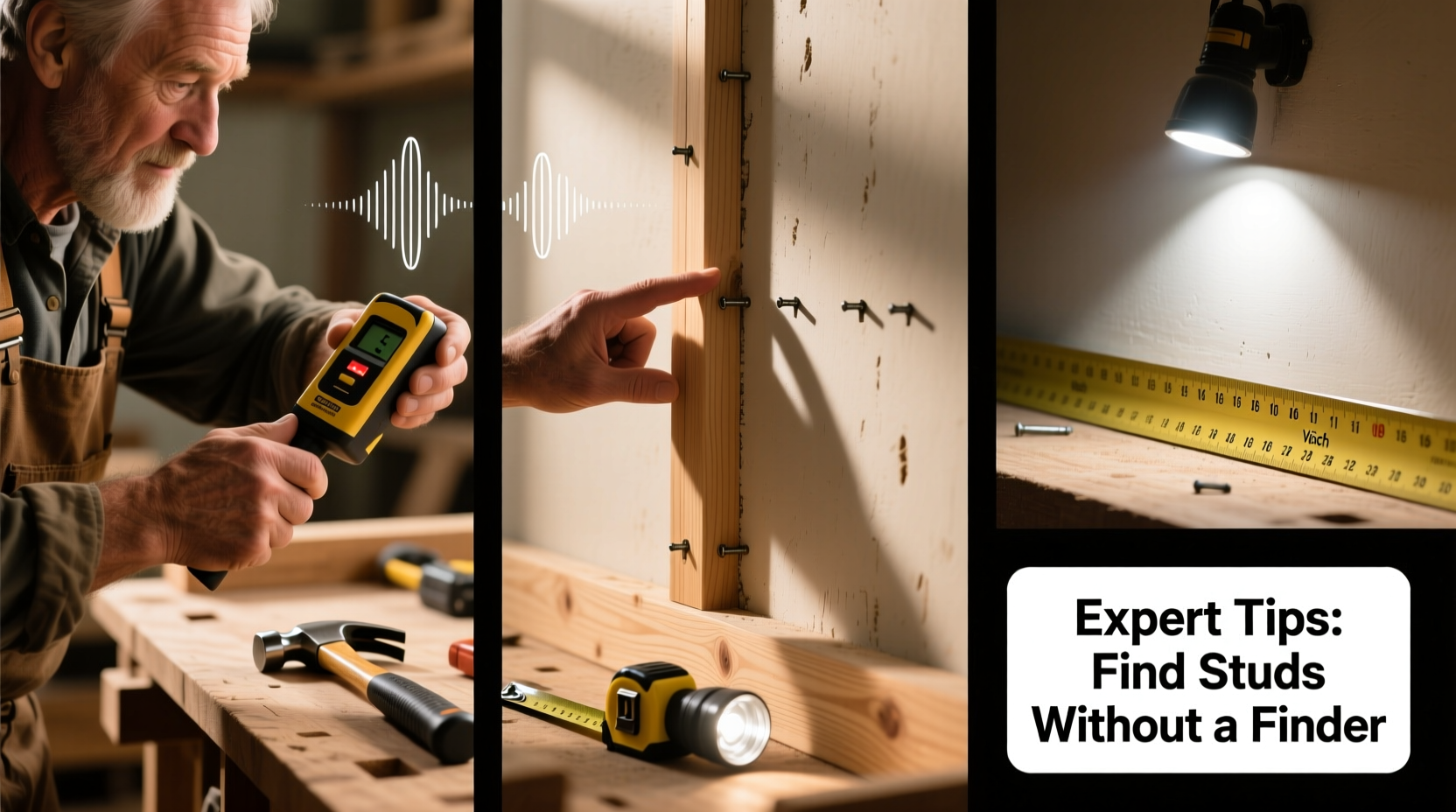
Studs are vertical wooden or metal frames behind drywall that provide structural support. Anchoring into them ensures your fixtures stay secure. Screwing into drywall alone risks pull-out, damage, and potential injury. Most residential walls have studs spaced 16 inches apart, measured from center to center, though 24-inch spacing also occurs in non-load-bearing partitions. Knowing where they are—without a stud finder—is a valuable skill that saves time, money, and frustration.
“Even experienced renovators double-check stud positions manually when precision matters. Trusting only electronic devices can lead to costly mistakes.” — Marcus Reed, Master Carpenter & Renovation Contractor
Visual Inspection: Clues Already on Your Walls
Before grabbing tools, inspect the wall carefully. Builders often place fasteners (nails or screws) every few feet along stud lines, especially near baseboards, crown molding, or electrical outlets. Look closely at trim edges—you may spot subtle dimples or paint bubbles indicating nail locations. These marks align directly with studs.
Electrical outlets and switch boxes are also telling. They’re typically mounted to the side of a stud rather than between two. By removing the cover plate (after turning off power), you can peek inside with a flashlight. If the box’s left edge is flush with wood, the stud is likely on the left; if the right side meets wood, the stud is on the right.
The Knock Test: Sound Differences Reveal Structure
This method relies on acoustics. A hollow sound means empty space between studs; a solid, dull thud indicates a stud.
To perform the knock test:
- Use your knuckles, a hammer handle, or a screwdriver to tap the wall firmly.
- Start near a known anchor point—like an outlet or corner—and move horizontally.
- Listen carefully for shifts in tone. Move in 1–2 inch increments.
- Mark areas where the sound becomes denser.
- Confirm width: studs are usually 3.5 inches wide, so the solid zone should span roughly that distance.
This method works best on standard drywall. Thicker materials or textured surfaces may muffle differences, requiring extra attention.
Measuring from Corners and Fixtures
Standard framing practices make measurement a surprisingly accurate technique. In most homes, studs begin 16 inches from an exterior corner, then repeat at 16-inch intervals. Interior corners may vary slightly but often follow the same pattern.
Here’s how to use this system:
- Measure 16 inches from the corner along the baseboard or ceiling line.
- Make a light pencil mark.
- Repeat at 32, 48, and 64 inches—common stud intervals.
- Cross-reference with the knock test or outlet position.
Framing around windows, doors, or corners may include extra studs (called “king” or “jack” studs), which can throw off spacing. Always verify with another method before drilling.
| Method | Accuracy | Tools Needed | Best For |
|---|---|---|---|
| Knock Test | Moderate to High | Hand or small tool | Quick checks, temporary installations |
| Outlet Inspection | High | Flashlight, screwdriver | Precise starting point near switches |
| Measurement from Corner | Moderate | Tape measure, pencil | New construction, open walls |
| Magnet Test | High | Strong magnet | Finding nails/screws in studs |
| Drill Test (last resort) | Very High | Small drill bit | Final confirmation before mounting |
The Magnet Method: Detecting Hidden Fasteners
A strong neodymium magnet can detect metal nails or screws embedded in studs through drywall. This method is highly effective and underused.
Steps:
- Hold a powerful magnet flat against the wall.
- Move it slowly in horizontal sweeps, about 1 foot above floor level or near ceiling.
- Pause when you feel resistance or a slight pull.
- Mark the spot—this likely indicates a stud-mounted fastener.
- Check vertically: multiple aligned points confirm a stud line.
Nails are typically driven every 8–16 inches along a stud. Finding two or more in a straight line gives high confidence. Refrigerator magnets aren’t strong enough—use a rare-earth magnet from a hardware store or old hard drive.
Real-World Example: Mounting a Floating Shelf Without Tools
Julie wanted to install a floating shelf in her rental apartment but didn’t own a stud finder. She started by removing the outlet cover near the desired height. Using a flashlight, she saw the electrical box was attached to the left-side stud. She measured 3/4 inch right of the box (accounting for box width) and marked that as the stud’s edge. Adding 1.5 inches (standard stud depth), she estimated the stud center at approximately 2.25 inches from the box’s outer edge.
To confirm, she tapped the wall and noticed a tonal shift around that area. She then used a small fridge magnet taped to a string, sweeping it across the wall. It snagged twice in the same vertical line. Confident, she drilled a pilot hole and hit solid wood. Her shelf now holds books securely, all done without a single electronic device.
Step-by-Step Guide: How to Find a Stud Without a Stud Finder
Follow this sequence for maximum accuracy:
- Inspect visually: Check baseboards, outlets, and seams for nail heads or dimples.
- Examine outlets: Turn off power and remove cover; look for wood contact on either side.
- Measure from corner: Use 16-inch intervals from an external wall corner.
- Perform the knock test: Tap and listen for solid vs. hollow sounds.
- Use a magnet: Sweep to detect metal fasteners hidden in studs.
- Verify with a test hole (if needed): Drill a tiny, inconspicuous hole and insert a bent wire to feel stud depth.
Combining at least two methods increases reliability significantly.
Common Mistakes to Avoid
- Assuming all walls are framed the same: Older homes may have irregular spacing.
- Trusting drywall anchors for heavy loads: They’re backup solutions, not replacements for studs.
- Using excessive force when testing: Aggressive drilling or probing can cause unnecessary damage.
- Ignoring safety: Always shut off electricity before inspecting outlets.
FAQ
Can I use my smartphone to find studs?
Some apps claim to detect studs using magnetic sensors, but their accuracy is limited. They may pick up nails but won’t reliably map stud width or location. A physical magnet is far more dependable.
What if I can’t find any studs where I need them?
If no stud aligns with your mounting point, use toggle bolts or heavy-duty drywall anchors rated for your load. Alternatively, install a horizontal backing board between two studs to create a secure mounting surface.
Are studs always 16 inches apart?
In modern construction, yes—most exterior and interior walls use 16-inch centers. However, 24-inch spacing is common in non-load-bearing walls, attics, or utility areas. Always verify with a secondary method.
Final Tips Checklist
- ✅ Start with visual clues near baseboards and outlets
- ✅ Use a flashlight to inspect electrical boxes safely
- ✅ Perform the knock test with attention to sound changes
- ✅ Employ a strong magnet to detect hidden nails
- ✅ Measure from corners using 16-inch increments
- ✅ Confirm findings with multiple methods before drilling
- ✅ Patch test holes with spackle if needed—small marks are easy to fix
Conclusion
Finding wall studs without a stud finder isn’t guesswork—it’s a blend of observation, logic, and simple physics. Whether you’re mounting a picture or installing a heavy entertainment unit, these proven techniques give you the confidence to work safely and effectively. You don’t need expensive gear to get professional results. With a magnet, a tape measure, and a little patience, you can locate studs like a seasoned pro.




 浙公网安备
33010002000092号
浙公网安备
33010002000092号 浙B2-20120091-4
Comments
No comments yet. Why don't you start the discussion?