
Disney-themed building block sets have surged in popularity, blending beloved characters with creative construction play. However, as demand grows, so does the market for counterfeit versions—cheap imitations that mimic authentic designs but fall short in quality, safety, and durability. These fakes not only disappoint children but can also pose health risks due to substandard materials. Knowing how to distinguish a genuine Disney building block set from a counterfeit is essential for collectors, parents, and gift-givers alike.
Understand the Key Players in the Market
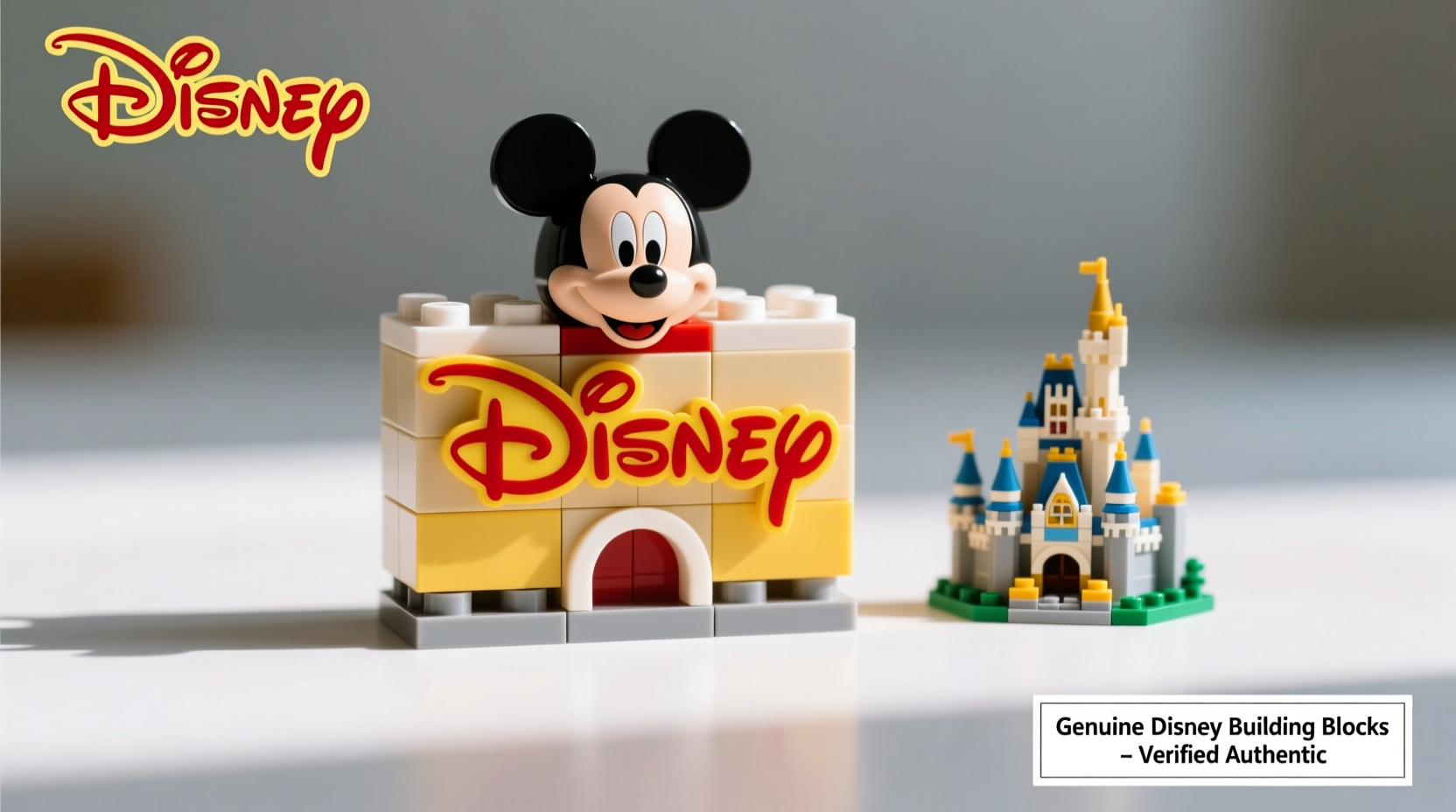
The official Disney building block partner is LEGO, which produces licensed sets under the LEGO Disney Princess, LEGO Mickey & Friends, and other co-branded collections. These sets are manufactured under strict quality control, use non-toxic ABS plastic, and feature precise molding and vibrant prints. Outside of this partnership, no other company is authorized to produce Disney-character building blocks using the official branding.
Despite this, countless third-party brands sell “compatible” or “inspired by” sets featuring Mickey Mouse, Elsa, or Buzz Lightyear. While some may be legal in design, many cross into counterfeit territory by replicating copyrighted elements like logos, facial features, or packaging aesthetics. The absence of licensing doesn’t just affect legality—it impacts safety standards, build quality, and long-term enjoyment.
“Counterfeit building blocks often skip critical safety testing. Parents should treat unlicensed Disney sets with the same caution as knockoff electronics.” — Dr. Lena Torres, Consumer Product Safety Analyst
Inspect Packaging and Branding Details
Packaging is one of the most reliable indicators of authenticity. Genuine LEGO Disney sets follow a consistent, high-standard design:
- Crisp, professionally printed boxes with accurate Disney and LEGO logos.
- Clear product images showing exact minifigure designs and set numbers.
- Barcode, country of origin (typically Denmark, Hungary, or Mexico), and CE/FCC safety markings.
- Official website references: LEGO.com and Disney.com.
Counterfeit packaging often appears pixelated, uses incorrect fonts, or includes misleading phrases like “compatible with major brands” without naming LEGO explicitly. Some even copy the box layout exactly but miss subtle details—like a misaligned logo or blurry character image.
Compare Build Quality and Piece Precision
The tactile experience of handling the bricks reveals much about their origin. Authentic LEGO pieces snap together with firm resistance and remain stable during play. They’re made from high-grade acrylonitrile butadiene styrene (ABS) plastic, giving them a smooth finish, consistent color, and slight sheen.
In contrast, counterfeit bricks often feel brittle, grainy, or overly soft. They may crack when assembled or fail to hold connection, leading to collapsing structures. Printing on minifigures—such as Mickey’s gloves or Moana’s eyes—is frequently smudged, misaligned, or missing entirely on fake sets.
| Feature | Genuine LEGO Disney Set | Counterfeit Version |
|---|---|---|
| Brick Texture | Smooth, slightly glossy | Matte, rough, or uneven |
| Connection Fit | Firm, consistent click | Loose or too tight |
| Color Consistency | Uniform across pieces | Varies within same color |
| Minifigure Detail | Crisp facial printing | Blurred or offset printing |
| Safety Markings | CE, FCC, LEGO logo inside tube | Missing or fake symbols |
Verify Set Numbers and Purchase Channels
Every genuine LEGO Disney set has a unique product number printed on the box (e.g., 43201, 41167). This number allows you to verify the set on LEGO’s official website or through reputable retailers. If a seller cannot provide the set number—or if searching it online yields no results—it’s likely a counterfeit.
Purchase location matters just as much. Stick to authorized sellers such as:
- LEGO.com
- Major retailers (Target, Walmart, Amazon *sold by LEGO*)
- Certified toy stores with verifiable inventory
Avoid third-party marketplaces where sellers offer “new in box” sets at unusually low prices. These are common hubs for counterfeit distribution. Even on Amazon, check whether the item is “Shipped and Sold by Amazon” or by a third-party vendor with limited reviews.
“Just because a listing says ‘original’ doesn’t mean it is. Always trace back to the manufacturer.” — Marcus Reed, Toy Industry Watchdog
Step-by-Step Guide to Authenticating a Disney Building Block Set
Follow this practical checklist before purchasing or gifting any Disney-themed building block toy:
- Check the brand name: Confirm it’s a LEGO Disney set. No other brand has official licensing.
- Locate the set number: Match it to LEGO’s official product catalog.
- Examine the box: Look for crisp printing, correct logos, and safety certifications.
- Feel the bricks: Test a sample if possible—authentic pieces are smooth and durable.
- Review minifigures: Facial details should be sharp and correctly colored.
- Verify the seller: Buy only from trusted retailers with return policies.
- Scan the barcode: Use a smartphone app to confirm it links to LEGO’s database.
Real-World Example: A Parent’s Close Call
Sarah M., a mother from Portland, was excited to surprise her daughter with a “Mickey’s House” building set she found online for 40% off retail. The photos looked identical to the LEGO version, and the seller had five-star ratings. But when the package arrived, she noticed red flags: the box had no set number, the bricks felt chalky, and Mickey’s face was misprinted with one eye higher than the other.
She contacted LEGO customer service with photos and received confirmation within hours—the set was counterfeit. Sarah returned the item and purchased the genuine version directly from LEGO.com. Her daughter later built the set twice without a single broken piece, proving the difference in quality.
Frequently Asked Questions
Are all non-LEGO Disney building blocks fake?
Not necessarily. Some companies produce generic building bricks with original characters inspired by Disney themes. However, if the set uses official Disney names, logos, or exact character likenesses without authorization, it is a counterfeit.
Can counterfeit building blocks be dangerous?
Yes. Many lack compliance with safety regulations like ASTM F963 (U.S.) or EN71 (Europe). They may contain harmful chemicals such as lead or phthalates, and small parts might not meet choking hazard standards.
What should I do if I’ve already bought a counterfeit set?
Stop using it immediately, especially around young children. Report the seller to the platform (e.g., Amazon, eBay) and consider filing a complaint with the U.S. Consumer Product Safety Commission (CPSC) or your local consumer protection agency.
Final Thoughts: Protect Playtime with Informed Choices
Authentic Disney building block sets offer more than just entertainment—they deliver safety, creativity, and lasting value. Counterfeits may seem like a bargain, but they compromise on every level, from structural integrity to child safety. By learning to spot the differences in packaging, brick quality, and sourcing, you empower yourself to make confident, informed decisions.




 浙公网安备
33010002000092号
浙公网安备
33010002000092号 浙B2-20120091-4
Comments
No comments yet. Why don't you start the discussion?