
When darkness falls, a reliable timepiece should still serve its primary purpose: telling time. For outdoor enthusiasts, first responders, military personnel, or anyone navigating low-light environments, a luminous watch isn’t just a convenience—it’s essential. Yet not all glowing watches perform equally. The difference between faint afterglow and bright, lasting readability can come down to material quality, application technique, and design intelligence. Understanding what makes a watch truly luminous in the dark empowers you to make a smarter, more functional purchase.
The Science Behind Lume: How Watch Illumination Works
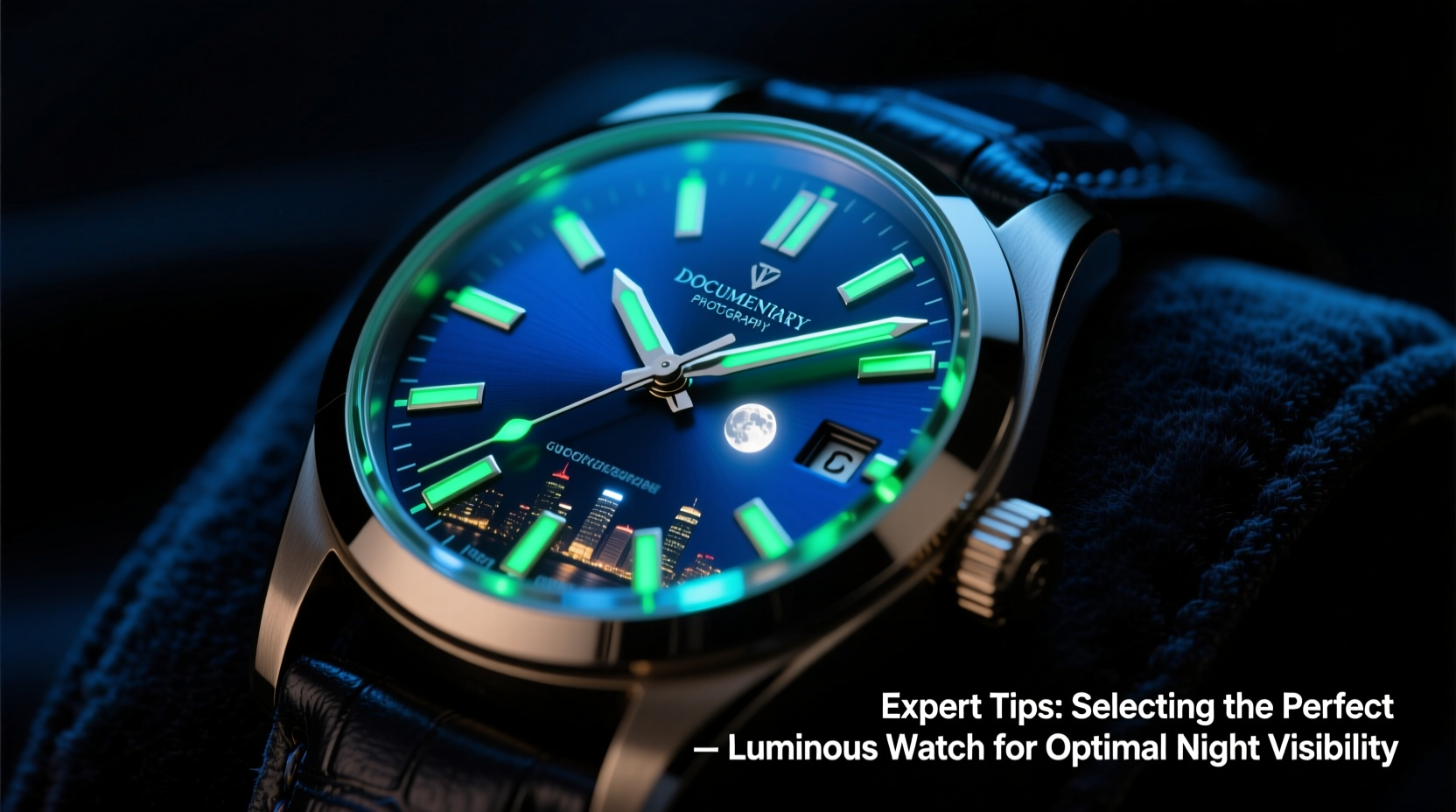
Luminosity in watches comes from photoluminescent materials that absorb light and re-emit it over time. These compounds, commonly referred to as “lume,” are applied to watch hands, hour markers, and sometimes bezels. When exposed to natural or artificial light, they charge up and glow in the dark. However, their effectiveness depends on composition, thickness, and exposure duration.
Two main types of lume dominate the market today: tritium and photoluminescent pigments like Super-LumiNova. Tritium uses tiny glass tubes filled with radioactive tritium gas that excites phosphor to emit constant light without charging. It glows steadily for 10–20 years but is regulated due to radioactivity. Photoluminescent materials require prior light exposure and gradually fade, though modern variants offer impressive longevity and brightness.
“Brightness retention after one hour in total darkness separates premium lume applications from mediocre ones.” — Dr. Alan Zhou, Materials Scientist & Horology Consultant
Key Factors in Choosing a High-Performance Luminous Watch
Selecting a watch for optimal night visibility requires attention beyond aesthetics. Consider these critical factors:
- Lume Material Type: Super-LumiNova grades (e.g., X1, C3, BGW9) vary in color and intensity. BGW9 glows blue-white and charges quickly; C3 offers green-yellow luminescence with longer persistence.
- Application Thickness: Thicker layers store more energy and emit brighter, longer-lasting light. High-end brands often apply lume by hand in multiple coats.
- Surface Coverage: Watches with fully lumed hands, wide markers, and even lumed bezel numerals maximize readability.
- Charging Efficiency: Some lumes respond better to UV or sunlight than indoor lighting. A watch that charges well under office lights is more practical for daily wear.
- Fade Rate: After initial burst, observe how much brightness remains at 30 minutes and 2 hours. Premium lume retains usable visibility past the two-hour mark.
Comparing Lume Technologies: Performance at a Glance
| Lume Type | Glow Color | Charge Required? | Duration | Best Use Case |
|---|---|---|---|---|
| Super-LumiNova C3 | Green-yellow | Yes | 30–60 min (bright), up to 8 hrs (dim) | Divers, everyday wear |
| Super-LumiNova BGW9 | Blue-white | Yes | 20–40 min (bright), fades faster than C3 | Pilots, tactical use (natural daylight match) |
| Tritium (GTLS) | Green, orange, blue | No | 10–20 years (constant output) | Military, emergency services, caving |
| Standard Zinc Sulfide | Green | Yes | 5–15 min | Low-cost fashion watches |
Step-by-Step Guide: Testing Night Visibility Before Purchase
Since lume performance isn't always evident in product photos or descriptions, follow this practical evaluation process:
- Inspect Application Quality: Under bright light, examine whether lume is evenly applied without gaps or thin patches on hands and markers.
- Check Marker Size and Shape: Larger, rectangular or block-style markers emit more light than small dots or outlines.
- Simulate Darkness: If buying in-store, charge the watch under fluorescent or LED lights for 5 minutes, then view it in a dimly lit area or closet.
- Evaluate Initial Brightness: The first 10 seconds should be intensely visible. Faint initial glow indicates poor formulation or thin coating.
- Monitor Fade Over Time: Note visibility at 30 minutes and again at 2 hours. A quality Super-LumiNova application should remain legible at 30 min.
- Compare Side-by-Side: Bring your current watch or another model to gauge relative brightness and longevity.
Real-World Example: A Search and Rescue Volunteer’s Experience
Mark T., a volunteer mountain rescuer based in Colorado, relies on his dive watch during night missions. During a recent search in dense forest terrain, cloud cover eliminated moonlight, and his headlamp battery failed mid-operation. His Seiko Prospex with full Super-LumiNova X1 treatment allowed him to read the time clearly for nearly 45 minutes after last sun exposure. “I could see the minute hand distinctly enough to coordinate team check-ins,” he said. “That watch literally kept us on schedule when GPS was unreliable.” In contrast, a teammate’s fashion watch with minimal lume was unreadable within five minutes. This experience reinforced Mark’s rule: “If it doesn’t glow like a mini flashlight in the first few seconds, it’s not mission-ready.”
Essential Checklist for Buying a Luminous Watch
Before finalizing your choice, verify the following:
- ✅ Uses high-grade lume (Super-LumiNova, Trigalight, or GTLS)
- ✅ Features thick, fully painted hands—not just outlined or tipped
- ✅ Has large, solid hour markers (not hollow or skeletonized)
- ✅ Includes lume on seconds hand for motion detection in dark
- ✅ Offers independent reviews confirming long-term lume performance
- ✅ Is water-resistant if used outdoors (minimum 100m for reliability)
- ✅ Comes from a brand known for durability and legibility (e.g., Citizen, Ball, Luminox, Sinn, Casio)
Frequently Asked Questions
Does lume wear out over time?
Photoluminescent materials like Super-LumiNova don’t degrade significantly with age, but the binder can yellow or crack if exposed to excessive UV or moisture. Proper sealing prevents deterioration. Tritium tubes lose brightness slowly over 10–20 years as the gas decays.
Can I improve weak lume on my existing watch?
No DIY method safely enhances factory-applied lume. Re-luming requires professional disassembly and reapplication using calibrated tools and materials. It’s often cost-prohibitive unless the watch has sentimental or high value.
Why do some watches glow blue while others are green?
The color depends on the phosphor blend. Green (C3) appears brightest to the human eye in low light, making it most effective. Blue-white (BGW9) mimics daylight and is preferred for aviation. Orange and red hues are less visible but used for aesthetic or stealth reasons.
Final Thoughts: Prioritize Function Over Flash
In an era of smartwatches and digital displays, the enduring appeal of a well-lumed analog timepiece lies in its simplicity and reliability. No batteries to die, no screens to black out—just consistent, silent illumination when you need it most. Whether you’re hiking remote trails, working night shifts, or simply want peace of mind in power outages, a thoughtfully chosen luminous watch delivers unmatched utility.
Don’t settle for faint glimmers or cosmetic glow. Invest in proven lume technology, robust application, and thoughtful design. Your future self, standing in the dark, will thank you.




 浙公网安备
33010002000092号
浙公网安备
33010002000092号 浙B2-20120091-4
Comments
No comments yet. Why don't you start the discussion?