
Mohair, known for its luxurious sheen, exceptional warmth, and soft drape, has long been a favorite among discerning fashion lovers. Sourced from the Angora goat, pure mohair offers a unique combination of durability and elegance that synthetic fibers or blended textiles struggle to replicate. However, as demand rises, so does the prevalence of mislabeled or counterfeit mohair products. Many scarves marketed as “mohair” are actually blends with acrylic, wool, or polyester—offering lower quality at a misleading price point.
Knowing how to identify genuine mohair isn’t just about protecting your investment—it’s about appreciating craftsmanship and making informed choices. This guide equips you with actionable techniques, expert insights, and reliable methods to determine whether your scarf is made of pure mohair or clever imitation.
Understanding What Pure Mohair Is—and Isn’t
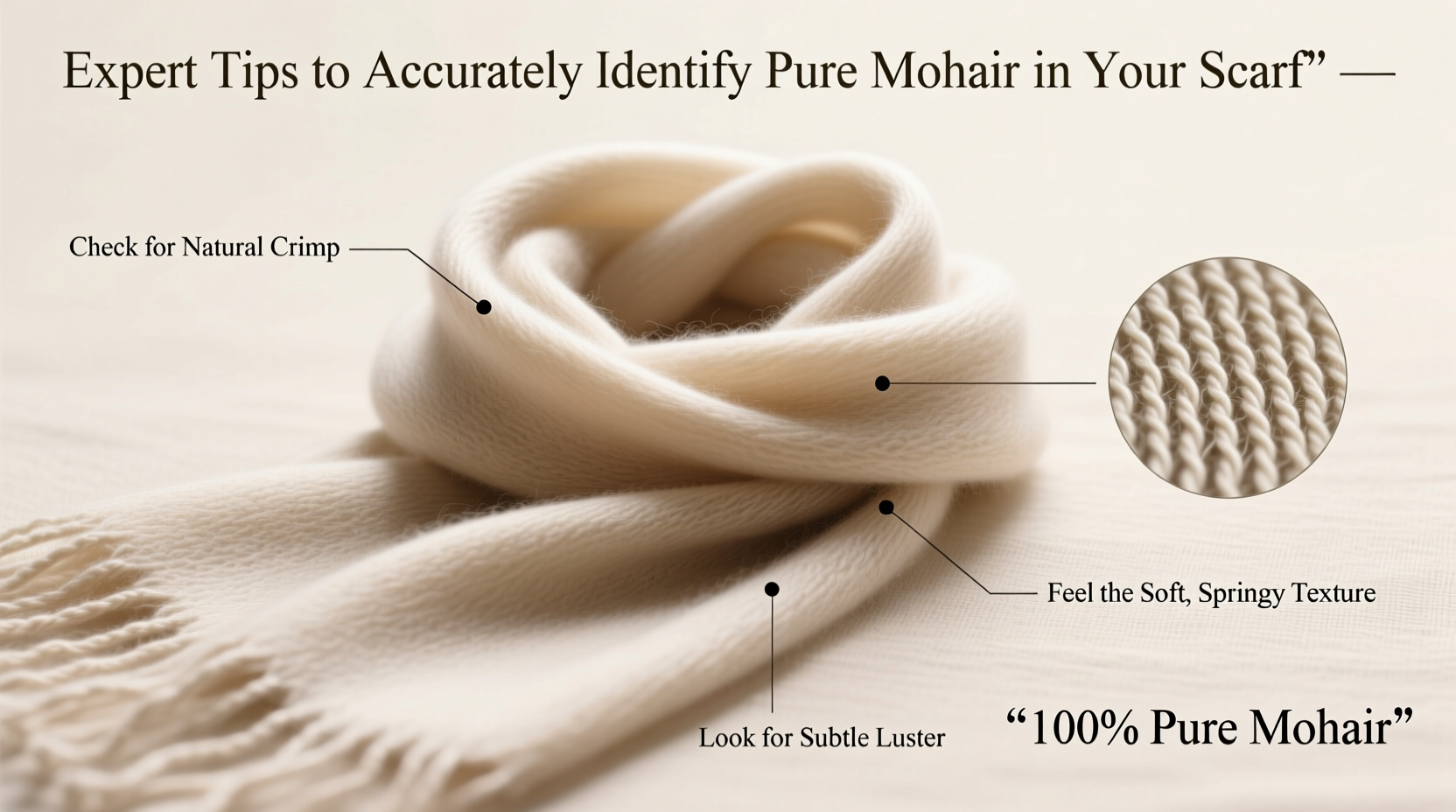
Pure mohair is 100% fiber derived from the Angora goat, not to be confused with angora wool (which comes from rabbits). It’s naturally lustrous due to its smooth cuticle layer, which reflects light beautifully. Mohair is also remarkably strong for a natural fiber, resistant to wrinkling and pilling, and possesses excellent moisture-wicking properties.
However, because authentic mohair is expensive to produce—Angora goats yield less fiber than sheep—many manufacturers dilute it with cheaper materials. A common label like “70% mohair, 30% silk” may still feel luxurious, but it’s not pure. True purity means 100% mohair, with no added synthetics or secondary fibers.
“Mohair’s value lies in its rarity and performance. When properly identified, it rewards wearers with decades of use.” — Dr. Lena Moreau, Textile Scientist, Swiss Institute of Fiber Research
How to Identify Pure Mohair: A Step-by-Step Sensory Evaluation
The most accessible way to begin assessing your scarf is through sensory observation. These non-destructive techniques can help you make an initial judgment before considering more advanced tests.
- Touch Test: Run the fabric between your fingers. Pure mohair feels soft but resilient—not overly fluffy or static-prone. Lower-grade blends often feel scratchy or too slick, indicating synthetic content.
- Visual Luster: Hold the scarf under natural light. Genuine mohair exhibits a subtle, silken glow—like fine silk—but without artificial shine. If the scarf looks unnaturally glossy, it may contain polyester.
- Drape and Weight: Mohair is lightweight yet warm. It drapes fluidly without sagging. If the scarf feels heavy or stiff, it likely contains wool or acrylic fillers.
- Smell Test: Natural fibers have a faint earthy odor when new. Synthetic blends often carry a chemical or plastic scent, especially if stored in packaging.
Decoding Labels and Manufacturer Claims
While labels are not always trustworthy, they provide a starting point. Look for precise wording such as “100% Mohair” or “Pure Mohair – South African Origin.” Vague terms like “mohair blend,” “mohair-style,” or “luxury fiber” are red flags.
Some reputable brands specify the source of their mohair—South Africa, Texas, or Turkey being primary producers. Traceability enhances credibility. Certifications like Responsible Mohair Standard (RMS) indicate ethical sourcing and higher likelihood of authenticity.
| Label Claim | Likely Authenticity | Action |
|---|---|---|
| 100% Mohair | High (if from trusted brand) | Verify with tactile test |
| Mohair Blend (e.g., 55% mohair) | Not pure | Manage expectations on warmth and care |
| Luxury Mohair Feel | Low – likely synthetic | Avoid unless independently verified |
| RMS-Certified Mohair | Very high | Trustworthy; supports ethical production |
The Burn Test: A Definitive (But Cautious) Method
When in doubt, the burn test offers scientific-level insight into fiber composition. This method analyzes how a small sample of fabric reacts to flame and heat—natural proteins behave differently than synthetics.
How to perform the burn test safely:
- Snip a small thread (2–3 cm) from an inconspicuous edge or loose end.
- Hold it with metal tweezers over a non-flammable surface (ceramic plate or sink).
- Apply a flame using a lighter or match. Observe carefully.
- Extinguish immediately after burning.
- Pure mohair behavior: Smells like burnt hair (keratin protein), burns slowly, forms a brittle black bead that crushes to powder. Flame self-extinguishes when removed.
- Synthetic behavior: Melts instead of burning, drips molten plastic, emits acrid chemical odor. Leaves hard residue.
- Wool blend: Similar smell to mohair but may smolder longer. Harder to distinguish visually—best paired with label analysis.
Real Example: How One Collector Avoided a Costly Misstep
Sophie, a vintage textile collector based in Edinburgh, once purchased a cream-colored scarf advertised online as “vintage pure mohair, 1970s French design.” Priced at £120, it seemed like a steal. But upon receiving it, she noticed excessive static cling and a waxy texture—unusual for natural mohair.
She conducted a discreet burn test using a loose thread from the hem. The fiber melted into a sticky glob and emitted a sharp plastic odor—clear signs of acrylic. She contacted the seller with evidence, received a full refund, and later confirmed through a textile lab that the scarf was 80% acrylic, 20% wool.
“I learned not to trust aesthetics alone,” Sophie said. “Even well-styled photos can deceive. The burn test saved me from adding a fake to my collection.”
Expert Checklist: Confirming Pure Mohair in 5 Steps
Use this checklist whenever evaluating a mohair scarf—whether new, vintage, or secondhand:
- ✅ Check the label for “100% mohair” or RMS certification
- ✅ Assess texture: soft but resilient, not overly fluffy or slippery
- ✅ Observe luster under natural light: even, silky glow (not shiny)
- ✅ Perform a smell test: clean, animal-fiber scent (not chemical)
- ✅ Conduct a cautious burn test on a hidden thread
Frequently Asked Questions
Can I wash a pure mohair scarf at home?
Yes, but with caution. Hand-wash in cool water using a mild wool detergent. Never agitate or wring. Lay flat to dry away from direct heat. Dry cleaning is recommended for intricate weaves or vintage pieces.
Is mohair itchy?
Not necessarily. Fine-grade mohair—especially from younger goats—is exceptionally soft and suitable for sensitive skin. Coarser grades used in upholstery may feel rougher. Always test against your wrist before prolonged wear.
Why is pure mohair so expensive?
Angora goats produce limited fleece (about 3–5 kg per year), require specialized care, and must be sheared twice annually. Processing is labor-intensive, and ethical farming standards further increase costs. You’re paying for scarcity, performance, and sustainability.
Final Thoughts: Trust Your Judgment, Back It With Evidence
Identifying pure mohair is both an art and a science. While branding and appearance can impress, true quality reveals itself through careful examination. By combining label scrutiny, sensory evaluation, and definitive tests like the burn method, you gain confidence in your purchases and deepen your appreciation for one of nature’s finest fibers.
Don’t settle for imitations sold on the promise of luxury. Equip yourself with knowledge, preserve the integrity of your wardrobe, and support ethical producers who honor traditional craftsmanship.




 浙公网安备
33010002000092号
浙公网安备
33010002000092号 浙B2-20120091-4
Comments
No comments yet. Why don't you start the discussion?