
Tweed is more than just fabric—it’s heritage, craftsmanship, and enduring style. A well-made tweed jacket can last decades, age beautifully, and become a cornerstone of a refined wardrobe. But not all tweed is created equal. From mass-produced blends to handwoven artisanal cloth, the market spans a wide spectrum of quality. Knowing how to evaluate a tweed jacket ensures you invest in one that delivers on comfort, durability, and elegance. Here’s how professionals inspect every stitch, fiber, and finish.
1. Examine the Fabric: Origin, Fiber, and Weave
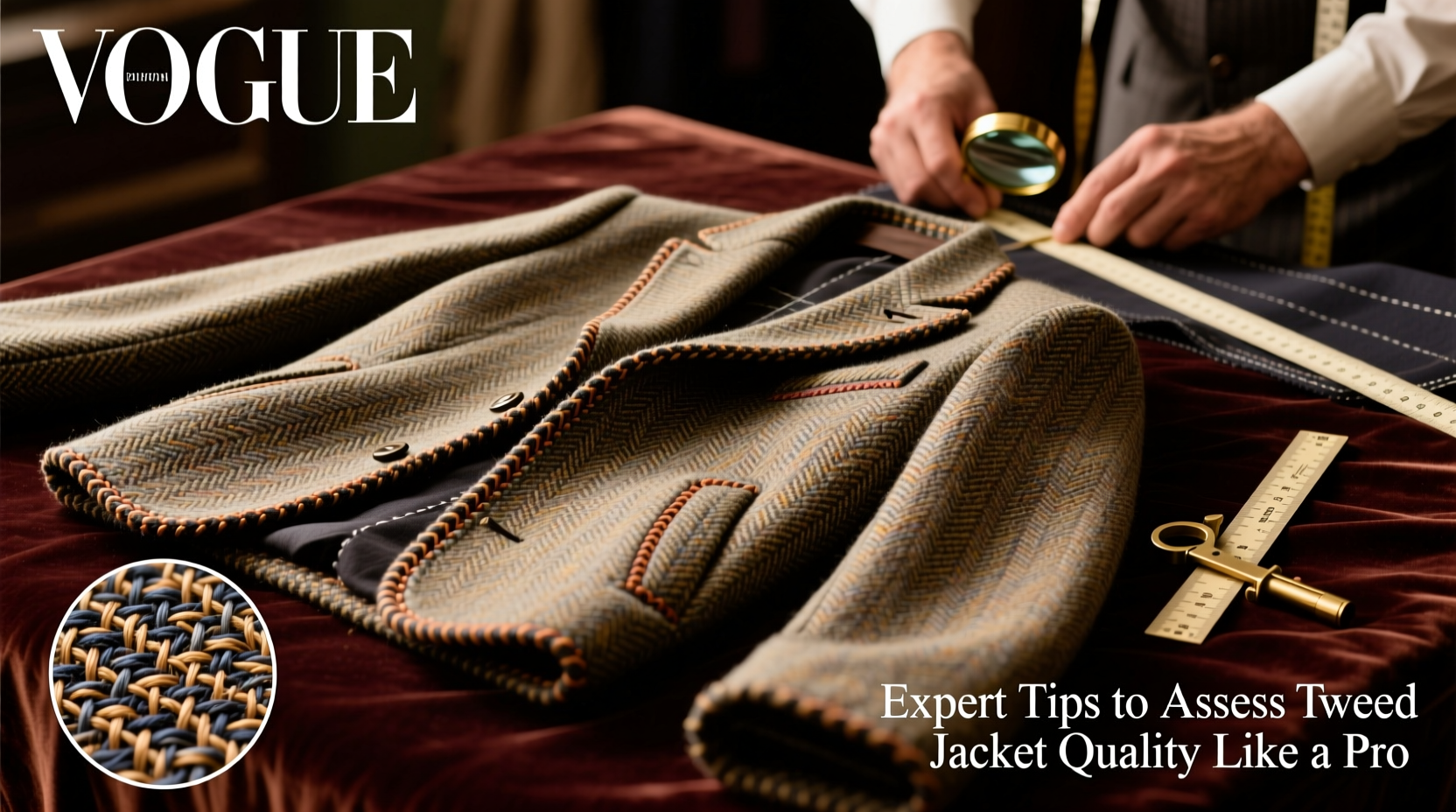
The foundation of any great tweed jacket lies in its fabric. Unlike synthetic or blended materials, high-quality tweed is typically made from pure wool, often sourced from specific regions known for their textile traditions—like Scotland, Ireland, or Yorkshire. The best jackets use wool with natural lanolin retained, which enhances water resistance and softness over time.
Pay close attention to the weave. Traditional patterns such as herringbone, houndstooth, and birdseye are not just aesthetic choices—they reveal structural integrity. A dense, tight weave indicates durability and wind resistance. Hold the jacket up to the light; if you see excessive gaps between threads, the fabric may lack resilience.
Avoid overly smooth or shiny tweed—it may be chemically treated or blended with synthetic fibers to cut costs. True tweed has texture, depth, and character. Look for labels indicating “100% wool” and, ideally, the mill or region of origin (e.g., Harris Tweed, certified by the Harris Tweed Authority).
2. Inspect the Construction: Hand-Stitching vs. Machine Work
How a jacket is constructed separates luxury garments from off-the-rack imitations. Begin by checking the shoulders. A well-constructed tweed jacket features full or three-quarter canvas construction—a layer of horsehair or linen interlining between the outer fabric and lining. This allows the jacket to mold to your body over time and maintain shape without collapsing at the chest.
To test this, press your fist gently into the chest area. If it springs back smoothly, there’s likely a quality canvas. If it crumples flat and stays dented, it’s probably fused (a cheaper method using glue), which can bubble or degrade with heat and wear.
Sleeve attachment is another telltale sign. Expert tailors set sleeves using a slightly puckered “ roped shoulder” technique, allowing natural movement. You’ll notice a subtle ridge where the sleeve meets the shoulder seam. Machine-sewn jackets often have flat, rigid seams that restrict motion and wear out faster.
“Canvas isn’t visible, but it’s the skeleton of the jacket. It determines how it ages. A fused jacket might look sharp on day one—but it won’t live past five years.” — Thomas Reed, Bespoke Tailor, Edinburgh
3. Evaluate the Lining and Internal Finishes
Flip the jacket inside out and examine the lining. High-end tweed jackets use Bemberg or cupro linings—silky, breathable materials that glide over clothing and resist pilling. Avoid polyester linings; they trap heat, generate static, and tear easily.
Look for clean, finished seams. Felled seams or taped edges indicate care in construction. Loose threads, raw fabric edges, or uneven stitching are red flags. Also check the internal pockets—do they have proper reinforcement? Are they stitched neatly?
The venting is equally important. Single-vented or double-vented backs should be cleanly finished with no fraying. Side vents, common in country-style tweed, should lie flat when worn and open naturally when sitting. Poorly attached vents gape or bunch.
Do’s and Don’ts When Checking Internal Quality
| Do | Don't |
|---|---|
| Look for Bemberg or silk lining | Accept polyester or paper-thin fabric |
| Check for full canvas in the chest | Ignore signs of glued or fused interlining |
| Inspect interior seams for finishing | Overlook loose threads or uneven stitching |
| Test vent functionality | Assume all vents are equally durable |
4. Assess Craftsmanship Details: Buttons, Pockets, and Stitching
Small details define excellence. Start with the buttons. Authentic tweed jackets often use horn, corozo nut, or real leather buttons—not plastic. Horn buttons vary slightly in color and texture, while plastic ones look uniform and lifeless. They should be securely attached with shanks (a loop on the back) rather than simple thread stems, allowing room for the lapel to drape naturally.
Pockets should be functional and structurally integrated. Patch pockets on tweed jackets are usually hand-stitched with reinforced corners. Flap pockets should sit upright without sagging. Check if the pocket bags are lined with the same quality fabric as the main lining—if not, it’s a shortcut.
Stitching density matters. Count the stitches per inch along a seam. Hand-stitched garments average 8–10 stitches per inch; machine stitching often exceeds 15 but lacks flexibility. Too many tiny stitches can make the garment stiff and prone to cracking under stress.
5. Real-World Example: Choosing Between Two Jackets
Consider James, a buyer comparing two similarly styled tweed jackets—one priced at £180, the other at £550. The cheaper option looks appealing: same pattern, similar cut. But upon inspection, differences emerge.
The £180 jacket uses a wool-polyester blend, fused chest piece, and polyester lining. The sleeves are set flat, and the pockets are machine-stitched with thin cotton bags. After six months of regular use, it begins to sag at the shoulders, the lining tears near the armhole, and the fabric loses its texture.
The £550 jacket, in contrast, is 100% Scottish wool with full canvas, Bemberg lining, horn buttons, and hand-finished seams. After three years of seasonal wear, it retains its shape, molds to James’ frame, and develops a rich patina. The investment pays off in longevity and appearance.
This isn’t about price alone—it’s about value. The higher upfront cost delivers decades of reliable wear, fewer repairs, and timeless appeal.
Step-by-Step Guide: How to Assess a Tweed Jacket in 7 Minutes
- Feel the fabric – Is it 100% wool? Does it have weight and texture?
- Check the label – Look for origin (e.g., “Made in Scotland”) and fiber content.
- Squeeze the chest – Press the lapel; does it bounce back? Resistance suggests canvas.
- Inspect the shoulders – Look for roped seams and natural drape.
- Turn it inside out – Examine lining material and seam finishes.
- Test the buttons – Are they horn or plastic? Do they have shanks?
- Move in it – Try raising your arms. Do the sleeves allow freedom?
Frequently Asked Questions
Is all Harris Tweed guaranteed high quality?
Yes, when authentic. Genuine Harris Tweed is protected by an Act of Parliament and must be handwoven by island weavers in the Outer Hebrides, using pure virgin wool. Look for the Orb Mark stamp on the selvedge for verification.
Can I machine-wash a tweed jacket?
No. Always dry clean or, better yet, air it out between wears. Steam lightly if needed. Machine washing will shrink, felt, and distort the fabric and structure.
How do I know if a jacket is hand-tailored versus machine-made?
Hand-tailored jackets show subtle imperfections: slight stitch variation, soft chest canvas, and greater flexibility. Machine-made versions are more uniform but stiffer. The presence of a floating canvas and pick stitching (tiny decorative stitches along the lapel) are strong indicators of handwork.
Final Thoughts: Invest in Knowledge as Much as in Cloth
Assessing tweed jacket quality isn’t about memorizing terms—it’s about developing a sense for what lasts. Each detail, from fiber origin to button type, contributes to how a jacket performs over time. With these tools, you’re no longer just buying a garment; you’re curating a piece of enduring style.




 浙公网安备
33010002000092号
浙公网安备
33010002000092号 浙B2-20120091-4
Comments
No comments yet. Why don't you start the discussion?