
Bangles are timeless accessories that blend elegance with cultural significance. Whether crafted from gold, silver, brass, or modern alloys, their rigid structure sets them apart from flexible bracelets—but that same rigidity can make achieving the perfect fit a challenge. Too tight, and the bangle pinches; too loose, and it slips off or rotates awkwardly. The good news is that with the right knowledge and tools, adjusting a bangle for both comfort and style is entirely achievable—even at home in many cases. This guide delivers expert-backed methods, real-world insights, and practical steps to help you customize your bangles with precision and care.
Understanding Your Wrist and Bangle Sizing
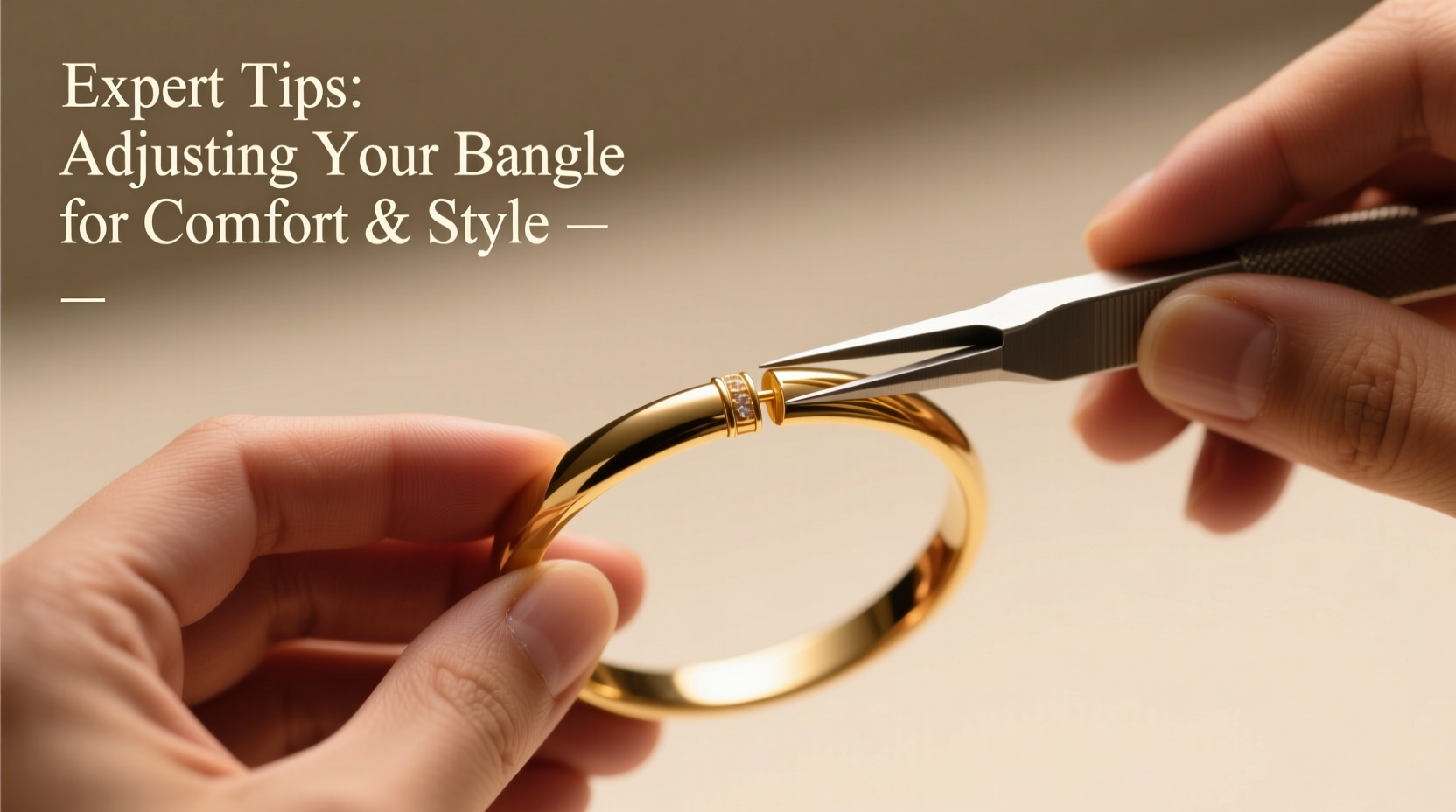
Before making any adjustments, it’s essential to understand how bangles are sized and what determines a proper fit. Unlike flexible bracelets, bangles are measured by internal diameter, not circumference. The standard range for adult women falls between 2.25 inches (57mm) and 2.75 inches (70mm), though sizes vary globally and across materials.
A well-fitted bangle should slide over the hand with slight resistance and rest comfortably on the wrist without sliding past the wrist bone. It should allow room for natural swelling but not rotate excessively. Men’s bangles typically start at 2.5 inches and go up to 3 inches or more, depending on wrist size and design.
Step-by-Step Guide to Adjusting a Bangle at Home
Not all bangles can be adjusted at home, but those made from softer metals like sterling silver, brass, or certain gold alloys often respond well to careful manipulation. Follow this safe sequence to resize a bangle without damaging it:
- Assess the material: Determine if the bangle is solid metal, hinged, or spring-loaded. Solid metal bangles are adjustable; fragile or stone-set pieces require professional help.
- Gather tools: Use soft-jaw pliers, a padded vise, or even thick fabric to protect the metal surface.
- Test the current fit: Try slipping the bangle over your hand. Note where resistance occurs—this indicates whether expansion or compression is needed.
- Adjust gradually: For a tighter bangle, gently squeeze the sides inward using pliers wrapped in cloth. For a looser fit, carefully pull the ends outward in small increments.
- Check frequently: Test the fit after each adjustment. Overstretching can weaken the metal or distort its shape.
- Smooth sharp edges: If the bangle develops rough spots, use a fine emery board or polishing cloth to restore smoothness.
This method works best for open-ended or slightly flexible bangles. Closed-loop designs may need professional resizing via cutting and soldering.
When to Seek Professional Help
While DIY adjustments work for simple cases, some situations demand expertise. Jewelers have calibrated tools and experience to resize bangles safely, especially when:
- The bangle is made of hard metal like platinum or titanium.
- It features intricate engravings, gemstones, or enamel work.
- You’re reducing the size significantly, which requires cutting and rejoining the metal.
- The bangle has sentimental or high monetary value.
“Even a millimeter matters when resizing a bangle. One wrong twist can compromise structural integrity. Always consult a jeweler for valuable or delicate pieces.” — Rafael Nguyen, Master Goldsmith & Jewelry Restorer
Professionals may use mandrels to reshape bangles evenly or laser welding for precise joins without visible seams. The cost varies, but it's a worthwhile investment for heirloom or custom pieces.
Do’s and Don’ts of Bangle Adjustment
| Action | Do | Don't |
|---|---|---|
| Resizing Method | Use padded pliers or a jeweler’s mandrel | Apply bare metal tools directly to the surface |
| Frequency of Adjustment | Make small changes over time | Force large size changes in one session |
| Material Handling | Work on soft metals like silver or gold-filled | Attempt to bend brittle or antique pieces |
| Post-Adjustment Care | Polish lightly to remove tool marks | Expose to water or chemicals immediately |
Real Example: Resizing an Inherited Silver Bangle
Sophia inherited a vintage sterling silver bangle from her grandmother. Though beautiful, it was too large and spun constantly on her smaller wrist. She first tried slipping it on—there was no resistance, indicating a poor fit. After researching, she visited a local artisan jeweler who assessed the piece. The bangle had delicate floral engraving but no stones, making it a candidate for resizing.
The jeweler used a steel mandrel to compress the bangle uniformly, reducing the diameter by 3mm. They polished the inner rim to maintain smoothness. The result? A secure, elegant fit that honored the original craftsmanship. Sophia now wears it daily, confident it won’t slip or scratch her skin.
Styling Tips for a Flawless Bangle Look
A perfectly fitted bangle enhances your style, but how you wear it matters just as much. Consider these styling strategies:
- Mix widths: Combine thin and thick bangles for visual interest without overcrowding.
- Stack strategically: Wear 3–5 bangles on one wrist, ensuring they’re balanced in weight and texture.
- Match metals to occasion: Gold tones suit warm outfits and formal events; silver complements cool tones and casual wear.
- Position intentionally: Place statement bangles near the wrist bone for prominence; thinner ones can sit higher.
FAQ: Common Questions About Bangle Adjustment
Can I resize a bangle that doesn’t open?
Yes, but only through professional intervention. A jeweler can cut the bangle, resize it using a mandrel, and solder it back together with a nearly invisible join. This process preserves integrity while altering fit.
Will adjusting my bangle weaken it over time?
Frequent bending can fatigue the metal, especially in cheaper alloys. However, a single, careful adjustment by hand or professional service rarely compromises durability. Avoid repeated resizing to maintain strength.
How do I know if my bangle is too tight?
If the bangle causes numbness, leaves deep indentations, or restricts blood flow, it’s too tight. You should be able to slide a finger between the bangle and your wrist comfortably. Remove it immediately if circulation feels impaired.
Final Checklist: Ensuring a Perfect Bangle Fit
- Measure your wrist and compare to standard bangle sizes.
- Determine if the bangle is adjustable based on material and design.
- Try the bangle on to assess initial fit and movement.
- Decide between DIY adjustment or professional resizing.
- Use protective tools and make gradual changes.
- Smooth any rough edges post-adjustment.
- Style with complementary pieces for a balanced look.
- Inspect regularly for signs of wear or loosening.
Conclusion: Wear Your Style with Confidence
A bangle should feel like an extension of your personal style—not a source of discomfort or anxiety. With the right approach, you can achieve a fit that’s both secure and graceful, whether you’re wearing a family heirloom or a bold fashion statement. Respect the material, know your limits, and don’t hesitate to seek expert help when needed. Every adjustment brings you closer to that effortless elegance bangles are meant to deliver.




 浙公网安备
33010002000092号
浙公网安备
33010002000092号 浙B2-20120091-4
Comments
No comments yet. Why don't you start the discussion?