
For many watch enthusiasts, legibility in low-light conditions is not just a convenience—it's a necessity. The luminous material on watch hands and markers, commonly referred to as \"lume,\" plays a crucial role in readability after dark. Over time, however, even high-quality lume can degrade, losing its initial brilliance. While you can't reverse aging, you can significantly improve and preserve the glow performance through safe, informed practices. This guide delivers expert-backed methods to enhance the brightness of your watch hands’ glow without risking damage to the timepiece.
Understanding Watch Lume: Types and Lifespan
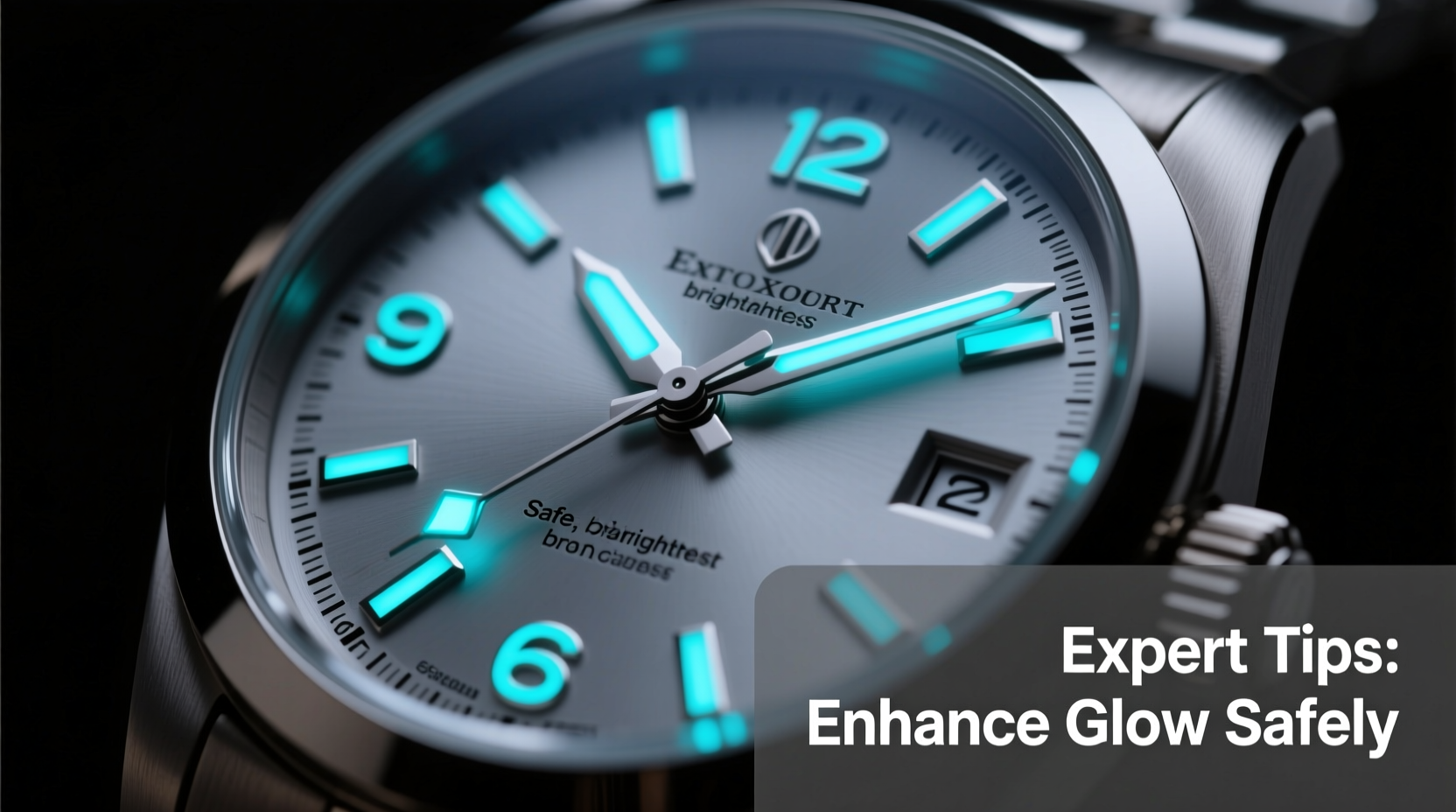
Luminous materials have evolved dramatically over the past century. Early watches used radium-based paint, which was hazardous due to radioactivity. Today, most modern watches use non-radioactive, photoluminescent compounds such as Super-LumiNova, LumiBrite, or tritium gas tubes (GTLS). Each has distinct properties affecting brightness and duration.
- Super-LumiNova: Charged by light exposure; emits glow for minutes to hours depending on charge and quality.
- LumiBrite (Seiko): Similar to Super-LumiNova but claims faster charging and longer persistence.
- Tritium (GTLS): Self-powered via radioactive decay of hydrogen-3; glows consistently for up to 25 years without charging.
The key difference lies in activation: photoluminescent materials require external light to \"charge,\" while tritium glows autonomously. Knowing your watch’s lume type is essential before attempting any enhancement.
“Maximizing lume performance starts with understanding what kind of material you’re working with. You wouldn’t treat tritium like Super-LumiNova—and vice versa.” — Daniel Hart, Horological Restoration Specialist
Safe Methods to Boost Glow Brightness
Enhancing lume brightness doesn’t require chemicals or invasive modifications. With proper technique, you can restore near-original visibility using only light and care.
1. Optimize Light Charging Conditions
Photoluminescent lume absorbs light energy and re-emits it as visible glow. The intensity and duration depend heavily on the quality and duration of the initial charge.
Natural sunlight is ideal, but direct sun exposure should be limited to under 15 minutes to avoid case or crystal damage. Artificial sources like UV flashlights (365–395 nm wavelength) are effective but must be used at a safe distance (6–12 inches) for no more than 5 minutes.
2. Clean the Crystal and Dial Surface
Dirt, oils, and micro-scratches on the watch crystal can diffuse or block light transmission, reducing both charging efficiency and emitted glow visibility.
Gently clean the crystal with a lint-free cloth dampened with isopropyl alcohol (70%). Avoid abrasive cleaners or paper towels. For sapphire crystals, this step maintains clarity without scratching. A clean surface allows more light in during charging and lets more glow out in darkness.
3. Store with Ambient Light Exposure
Watches stored in total darkness lose their charge completely and may take longer to reach peak brightness when next used. If your watch isn’t worn daily, place it near indirect daylight or under a low-wattage room light overnight.
This passive charging keeps the lume “topped up” and ready for immediate use. Avoid prolonged exposure to intense artificial light, which can contribute to long-term lume degradation.
Step-by-Step Guide to Maximizing Lume Performance
- Identify lume type: Check manufacturer specs or consult service documentation to confirm whether your watch uses Super-LumiNova, LumiBrite, or tritium.
- Clean the crystal: Wipe gently with alcohol-dampened microfiber cloth. Let dry completely.
- Charge under strong light: Expose dial to direct sunlight (morning or late afternoon) for 5–10 minutes, or use a UV flashlight for 3–5 minutes.
- Test in darkness: Turn off lights and observe glow intensity and duration. Note areas with weak emission.
- Maintain with routine exposure: Allow 1–2 hours of ambient indoor light daily if not worn regularly.
Do’s and Don’ts of Lume Care
| Do’s | Don’ts |
|---|---|
| Use natural light for charging | Expose to prolonged direct sunlight (risk of dial fading) |
| Clean crystal with soft, alcohol-dampened cloth | Use ammonia-based cleaners or abrasive pads |
| Store in semi-lit environment when not worn | Keep in sealed boxes or complete darkness for weeks |
| Inspect for lume degradation annually | Attempt DIY lume repainting without professional tools |
When Enhancement Isn’t Enough: Realistic Expectations
Even with optimal care, photoluminescent lume fades over time. Super-LumiNova typically retains strong performance for 10–15 years before noticeable dimming occurs. Tritium tubes last longer but eventually decay to imperceptible levels.
A collector in Geneva noticed his vintage 2003 Seiko SKX013 had diminished night visibility. After cleaning the crystal and testing under UV light, he discovered the markers still charged—but weakly. He adjusted his habits: placing the watch under a shaded skylight each morning. This restored functional glow for evening wear, proving that maintenance often outweighs replacement.
“Most lume issues aren’t failure—they’re neglect. A little consistent attention makes a dramatic difference.” — Lena Park, Watch Conservator at Swiss Time Preservation Lab
Advanced Options: Professional Refinishing and Upgrades
If your watch’s lume has severely degraded, consider professional refinishing. Re-luming involves carefully removing old material and applying fresh Super-LumiNova in precise amounts and patterns. Done correctly, it restores both function and aesthetic authenticity.
Some owners opt for lume upgrades—replacing standard-grade lume with higher-persistence variants like Super-LumiNova C3 (green) or BGW9 (blue-white), known for superior brightness. These modifications should only be performed by certified watchmakers with lume application experience.
Frequently Asked Questions
Can I recharge lume with my phone’s flashlight?
Yes, but standard phone LEDs lack the intensity and spectral range for optimal charging. While usable in emergencies, they provide only short-lived, dim glow. For best results, use bright white or UV-enriched lights.
Is it safe to use a UV flashlight on my watch?
Yes, when used responsibly. Limit exposure to 3–5 minutes at a distance of 6–12 inches. Prolonged UV exposure may yellow some plastics or adhesives over time, especially in older watches.
Why does my tritium watch seem dimmer now?
Tritium has a half-life of about 12.3 years. After a decade or more, the brightness naturally decreases by roughly 50%. This decay is unavoidable and indicates normal aging, not defect.
Conclusion: Shine Brighter, Wear with Confidence
Enhancing your watch hands' glow doesn’t require risky experiments or expensive gear. By understanding lume types, optimizing light exposure, maintaining cleanliness, and respecting material limits, you can significantly improve nighttime legibility. For older watches, professional refinishing offers a lasting solution. These strategies protect your investment while maximizing functionality.




 浙公网安备
33010002000092号
浙公网安备
33010002000092号 浙B2-20120091-4
Comments
No comments yet. Why don't you start the discussion?