
A leopard print handbag is more than a fashion statement—it’s an investment in bold style. But not all leopard bags are created equal. While some fade, crack, or fall apart after a few months, others remain pristine for years. The difference lies in quality: from material integrity to construction precision. Knowing how to distinguish between mass-market imitations and genuinely well-made pieces ensures you get lasting value, not just fleeting trend appeal.
1. Evaluate the Material: Real Leather vs. Faux Alternatives
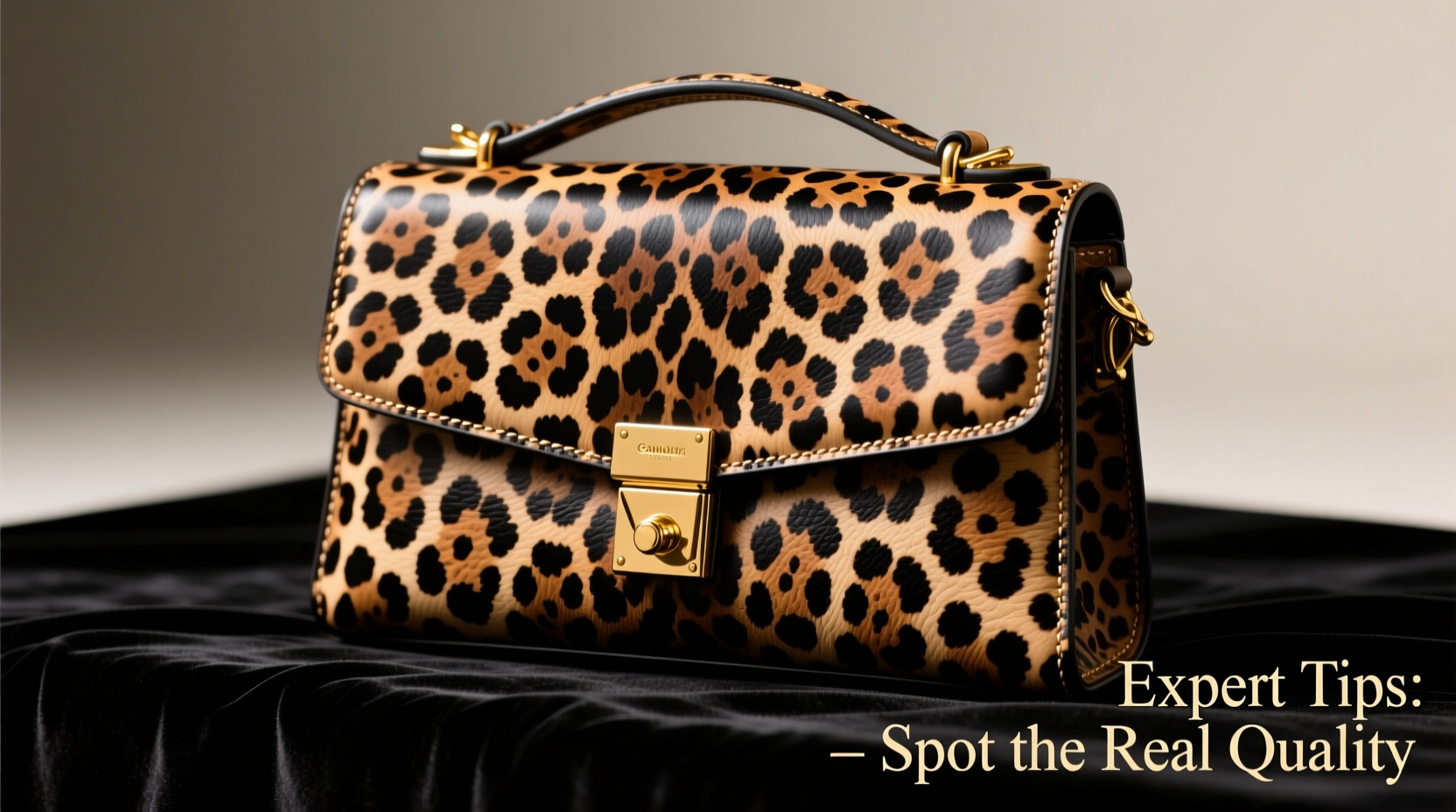
The foundation of any durable handbag is its material. When it comes to leopard print designs, this becomes even more critical because print quality and surface resilience go hand in hand with the base fabric.
Genuine leather remains the gold standard. It ages gracefully, develops a natural patina, and resists cracking when properly cared for. Look for full-grain or top-grain leather—these retain the strongest fibers and offer superior durability. A high-quality leopard print on real leather will have depth, with spots that feel slightly textured rather than flat or glossy.
Faux leather (PU or PVC) has improved over the years, but it still tends to peel, especially along stress points like corners and handles. If you're considering a synthetic option, check for thick, flexible backing and a matte finish, which usually indicates better manufacturing standards.
2. Inspect the Print Precision and Alignment
A hallmark of cheaply made leopard print bags is misaligned patterns. Spots that don’t flow seamlessly across seams, flaps, or gussets suggest rushed production and low attention to detail.
In premium bags, designers often match the print at every junction. This means the spots continue fluidly from one panel to the next, like a continuous image across multiple surfaces. While perfect alignment increases production costs, it significantly elevates visual polish.
Examine areas where panels meet—especially near zippers, side seams, and strap attachments. If the pattern abruptly cuts off or shifts direction unnaturally, it's likely a lower-tier product.
“Print alignment isn't just aesthetic—it reflects the manufacturer’s commitment to precision. A well-matched leopard motif signals care at every stage.” — Lena Moreau, Luxury Accessories Designer
3. Assess Construction Quality: Stitching, Hardware, and Structure
Even the finest materials can be undermined by poor construction. To judge build quality, focus on three key elements: stitching, hardware, and internal structure.
Stitching: High-quality bags use tight, even stitches with no loose threads or skipped lines. Ideally, there should be 8–12 stitches per inch. Double-stitching on stress points (like handle attachments) adds longevity.
Hardware: Zippers, clasps, and chain links should feel substantial, not lightweight or hollow. Test the zipper glide—it should move smoothly without catching. Branded hardware (e.g., YKK zippers or Riri pulls) often indicates better sourcing.
Structure: A well-constructed bag holds its shape without collapsing. Gently press the sides; they should resist deformation. Internal stiffeners or lining reinforcements are signs of thoughtful engineering.
| Feature | High-Quality Sign | Red Flag |
|---|---|---|
| Stitching | Even, tight, double-stitched at joints | Uneven tension, visible knots, thread fraying |
| Hardware | Solid metal, smooth operation, branded | Plastic-coated, wobbly, sticky zippers |
| Shape Retention | Holds form when empty | Sags or collapses inward |
| Lining | Dense fabric, securely attached | Thin, wrinkled, peeling at edges |
4. Step-by-Step Guide: How to Test a Leopard Print Bag In-Store or Online
Whether shopping in person or browsing online, follow this sequence to evaluate true quality:
- Touch the Surface: Feel for softness and grain texture. Avoid overly shiny or rubbery finishes.
- Check Pattern Continuity: Look at seam intersections. Do the spots align naturally?
- Inspect Interior Lining: Pull back gently if possible. Is it tightly sewn? Are there reinforced pockets?
- Test Functional Elements: Open and close zippers, snap clasps, adjust straps. Everything should operate smoothly.
- Examine Edges and Corners: Are edges painted or sealed neatly? Raw or peeling edges signal poor finishing.
- Review Brand Reputation: Research customer reviews focused on durability, not just appearance.
5. Real Example: Two Bags, Same Style, Different Outcomes
Consider Sarah, a stylist who purchased two leopard print crossbody bags within six months of each other. Both looked nearly identical at first glance—one cost $75, the other $220.
The cheaper bag started showing wear within three months: the print faded after light rain exposure, the strap rivets loosened, and the lining began detaching near the base. By month eight, the corners were peeling, and she retired it.
The pricier bag, however, remained in regular rotation for over two years. The leather developed a richer tone, the hardware stayed intact, and the print showed minimal fading despite frequent use. After comparing care routines (both cleaned monthly with appropriate products), Sarah concluded the difference was inherent quality—not usage.
This case underscores a simple truth: initial cost doesn’t always dictate value. Long-term performance does.
Essential Checklist Before You Buy
- ✅ Is the material genuine leather or high-grade vegan alternative?
- ✅ Does the leopard pattern align across seams and edges?
- ✅ Are stitches tight, consistent, and doubled at stress points?
- ✅ Does the hardware feel weighty and operate smoothly?
- ✅ Does the bag hold its shape when empty?
- ✅ Is the interior lining durable and fully secured?
- ✅ Has the brand received consistent feedback on long-term durability?
Frequently Asked Questions
Can a leopard print handbag be both stylish and practical for daily use?
Absolutely—if it’s built with durable materials and smart design. Choose compact silhouettes with adjustable straps and secure closures for everyday functionality. Avoid ultra-lightweight versions marketed solely on aesthetics.
How do I protect the print from fading?
Limit direct sun exposure and avoid prolonged contact with moisture. Use a leather protector spray designed for printed finishes (test on a small area first). Store away from heat sources and bright windows.
Are vintage leopard print bags a good investment?
Some are excellent investments, especially those from reputable luxury houses known for craftsmanship. However, inspect for dryness, cracking, or adhesive breakdown in linings. Authenticity verification is also crucial.
“Durability begins long before wear—it starts with intention. A quality bag is made to endure, not just impress.” — Marcus Tran, Handbag Archivist & Conservator
Final Thoughts: Invest in Integrity, Not Just Imagery
A leopard print handbag shouldn’t be a seasonal impulse. With the right selection criteria, it can become a signature piece in your wardrobe for years. Focus less on logo prominence and more on tactile details: the drape of the leather, the rhythm of the print, the strength of each seam.
When you prioritize construction integrity over superficial allure, you’re not just buying a bag—you’re acquiring a reliable companion for countless outings, transitions, and moments that demand confidence.




 浙公网安备
33010002000092号
浙公网安备
33010002000092号 浙B2-20120091-4
Comments
No comments yet. Why don't you start the discussion?