
Walking into a jewelry store or browsing online for a diamond ring can feel overwhelming. With so many options, settings, and price points, how do you distinguish a truly exceptional piece from one that merely looks impressive? The difference lies not in sparkle alone, but in precision, provenance, and professional-grade details. Whether you're purchasing an engagement ring, anniversary gift, or investment piece, knowing how to assess a high-end diamond ring elevates your confidence and protects your value.
The Four Cs: Beyond the Basics
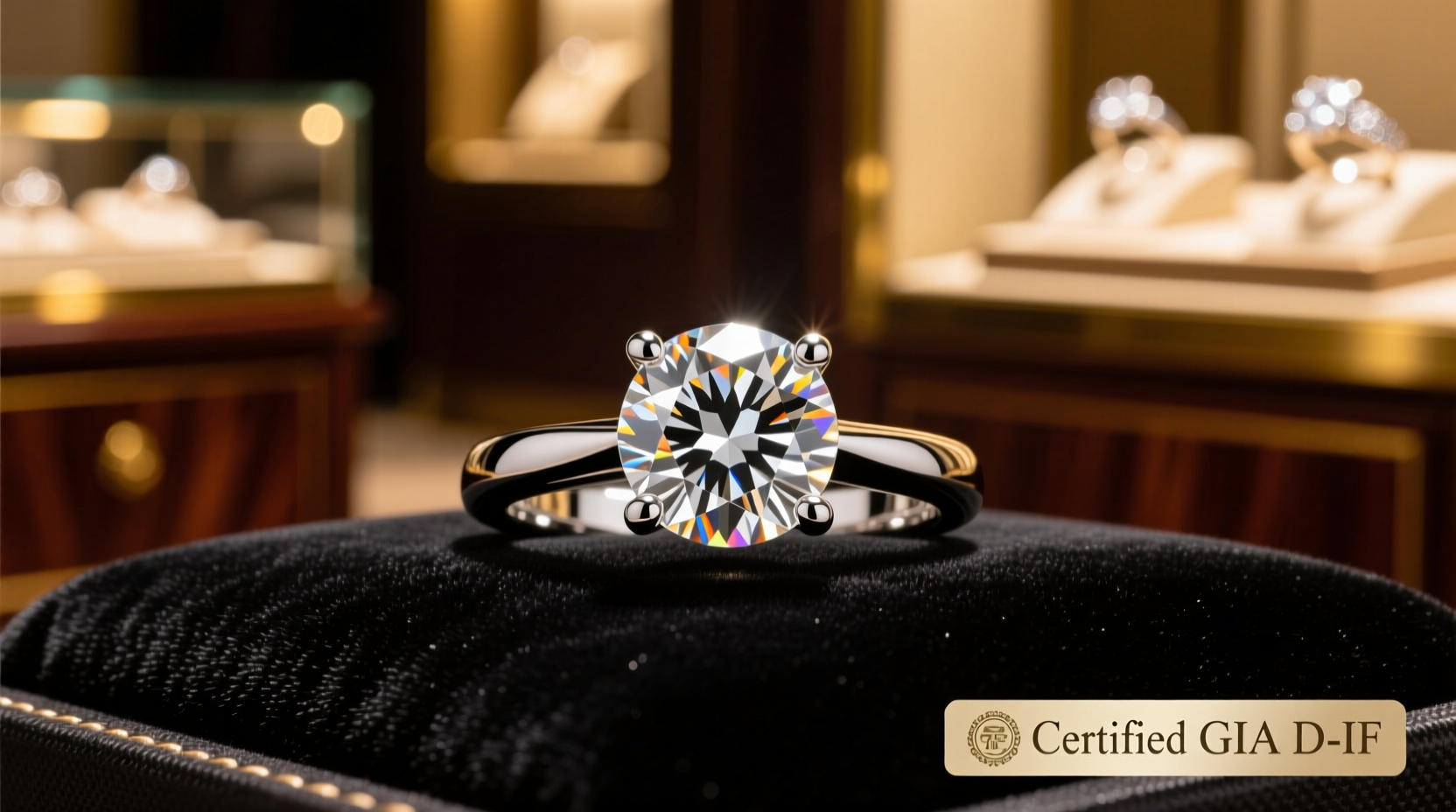
The Four Cs—Cut, Color, Clarity, and Carat—are foundational, but professionals interpret them with nuance. Mass-market sellers often highlight carat weight or color grade as standalone selling points, but connoisseurs evaluate how these elements interact.
- Cut: This is the most critical factor in brilliance. A well-cut diamond reflects light internally and returns it through the top (the table), creating fire and scintillation. Look for terms like “Excellent” or “Ideal” cut from GIA or AGS, not just “Good” or “Very Good.” Symmetry and polish grades should also be “Excellent.”
- Color: For white diamonds, D-F is considered colorless and top-tier. However, even within this range, subtle differences exist under controlled lighting. Professionals use master stones for comparison—a practice you can request at reputable jewelers.
- Clarity: FL (Flawless) and IF (Internally Flawless) are rare and costly. Most high-end rings fall in VVS1-VVS2—virtually invisible inclusions under 10x magnification. SI1 or lower may compromise transparency and durability if inclusions are near the surface.
- Carat: Size matters, but only when balanced with cut quality. A poorly cut 2-carat diamond will appear dull compared to a well-cut 1.5-carat stone.
Scrutinize Certification: Trust, But Verify
A legitimate grading report from the Gemological Institute of America (GIA) or American Gem Society (AGS) is non-negotiable. These labs maintain strict standards and impartial evaluations. Be wary of reports from lesser-known labs like IGI or EGL, which often overgrade by one to two levels.
When reviewing a certificate:
- Verify the report number matches the diamond’s laser-inscribed serial.
- Cross-check measurements and carat weight with the physical stone.
- Examine the plotting diagram—note inclusion location. Central or surface-reaching flaws reduce structural integrity.
- Check for “natural” or “indented naturals”—leftover rough crystal on the girdle. Minimal presence is acceptable; excessive marks indicate poor planning during cutting.
“GIA certification remains the gold standard. If a diamond isn’t GIA-graded, assume it hasn’t been objectively evaluated.” — Daniel Kim, Master Gemologist and Appraiser, New York City
Assess Craftsmanship and Setting Quality
A high-end diamond deserves equally refined craftsmanship. The setting should enhance, not distract from, the stone. Here’s what separates luxury workmanship from mass-produced designs:
| Feature | High-End Quality | Average or Low Quality |
|---|---|---|
| Metal Purity | Platinum, 18K gold (75% pure) | 10K gold, silver plating, or unspecified alloys |
| Prong Design | Footed prongs with secure seats; evenly spaced and polished | Thin, uneven prongs; filed crudely or misaligned |
| Undergallery | Openwork filigree or gallery rail for light entry | Solid metal blocking light; reduces sparkle |
| Finish | Hand-polished surfaces, no tool marks | Machining lines, pitting, or casting seams visible |
| Weight & Feel | Substantial but balanced; sits securely on finger | Lightweight or awkwardly weighted |
Real Example: How One Buyer Avoided a $20,000 Mistake
Jenna, a first-time buyer in Chicago, was drawn to a 2.2-carat round diamond advertised as “VVS1, D color, Ideal Cut” for $19,500. It sparkled beautifully in-store. However, upon requesting the GIA report, she noticed the cut grade was actually “Triple Excellent,” but the depth percentage was 65.8%—well above the ideal 59–62.5% range. Further inspection revealed poor light performance in an ASET (Angular Spectrum Evaluation Tool) image included in the report: large dark zones indicated light leakage.
She consulted an independent gemologist who explained that while the technical specs looked strong, the cut compromised brilliance. By opting instead for a slightly smaller 1.8-carat GIA Triple Excellent cut with optimal proportions, she gained superior sparkle and saved $3,000. The lesson? Numbers matter, but performance trumps paper.
Step-by-Step Guide: Evaluating a Diamond Ring Like a Pro
Follow this sequence when assessing any high-end diamond ring:
- Request the GIA or AGS Certificate – Confirm authenticity and cross-reference all data.
- Inspect Under Magnification – Use a 10x loupe to check symmetry, polish, and prong integrity.
- Evaluate Light Performance – Observe how the diamond interacts with light. Look for even contrast patterns and minimal darkness.
- Check Metal Hallmarks – Look for “PT950” (platinum), “750” (18K gold), or “585” (14K). Absence suggests inferior materials.
- Test Wearability – Try it on. Does it sit straight? Is the center stone protected from knocks?
- Ask About Origin & Ethics – Luxury buyers increasingly demand conflict-free, traceable diamonds. Reputable vendors provide sourcing details.
Frequently Asked Questions
Does fluorescence always devalue a diamond?
Not necessarily. In fact, faint to medium blue fluorescence can improve the appearance of near-colorless (I-J) diamonds in daylight, making them look whiter. However, strong fluorescence may cause a hazy or oily appearance in higher-color stones (D-F), potentially reducing value.
Is lab-grown diamond considered high-end?
While lab-grown diamonds offer ethical and cost advantages, they are generally not classified as “high-end” in the traditional sense due to lower rarity and market resale value. That said, some luxury brands now incorporate them into fine jewelry with premium craftsmanship, blurring the line.
How important is brand name when buying a high-end ring?
Brand adds prestige and markup—sometimes up to 300%. While names like Cartier or Tiffany bring assurance of quality control, many independent designers and boutique ateliers produce equivalent or superior work without the branding premium. Focus on the stone and craftsmanship first.
Final Checklist Before Purchase
- ✅ GIA or AGS certified with matching laser inscription
- ✅ Cut grade: “Excellent” or “Ideal” with ideal proportions (table 53–61%, depth 59–62.5%)
- ✅ Clarity: VVS1 or better, with no central inclusions
- ✅ Color: D-F for colorless preference, G-H for near-colorless balance
- ✅ Metal: 18K gold or platinum with clear hallmarks
- ✅ Prongs: Secure, symmetrical, and polished
- ✅ Independent appraisal available upon request
Conclusion
Identifying a high-end diamond ring isn’t about chasing size or brand logos—it’s about understanding what makes a piece endure in beauty, value, and significance. From reading certificates like a gemologist to feeling the weight of craftsmanship in your hand, each detail tells a story of quality. Armed with these insights, you’re no longer just a buyer; you’re an informed collector.




 浙公网安备
33010002000092号
浙公网安备
33010002000092号 浙B2-20120091-4
Comments
No comments yet. Why don't you start the discussion?