
Chrysoprase, a vibrant green variety of chalcedony quartz, is prized for its translucent apple-green hue and natural beauty. Often mistaken for jade or emerald due to its color, genuine chrysoprase can command high prices in the gemstone market. Unfortunately, this demand has led to an influx of imitations and synthetic alternatives. Whether you're a collector, jeweler, or enthusiast, knowing how to identify real chrysoprase is essential to avoid costly mistakes and ensure authenticity.
Understanding Chrysoprase: What Makes It Unique
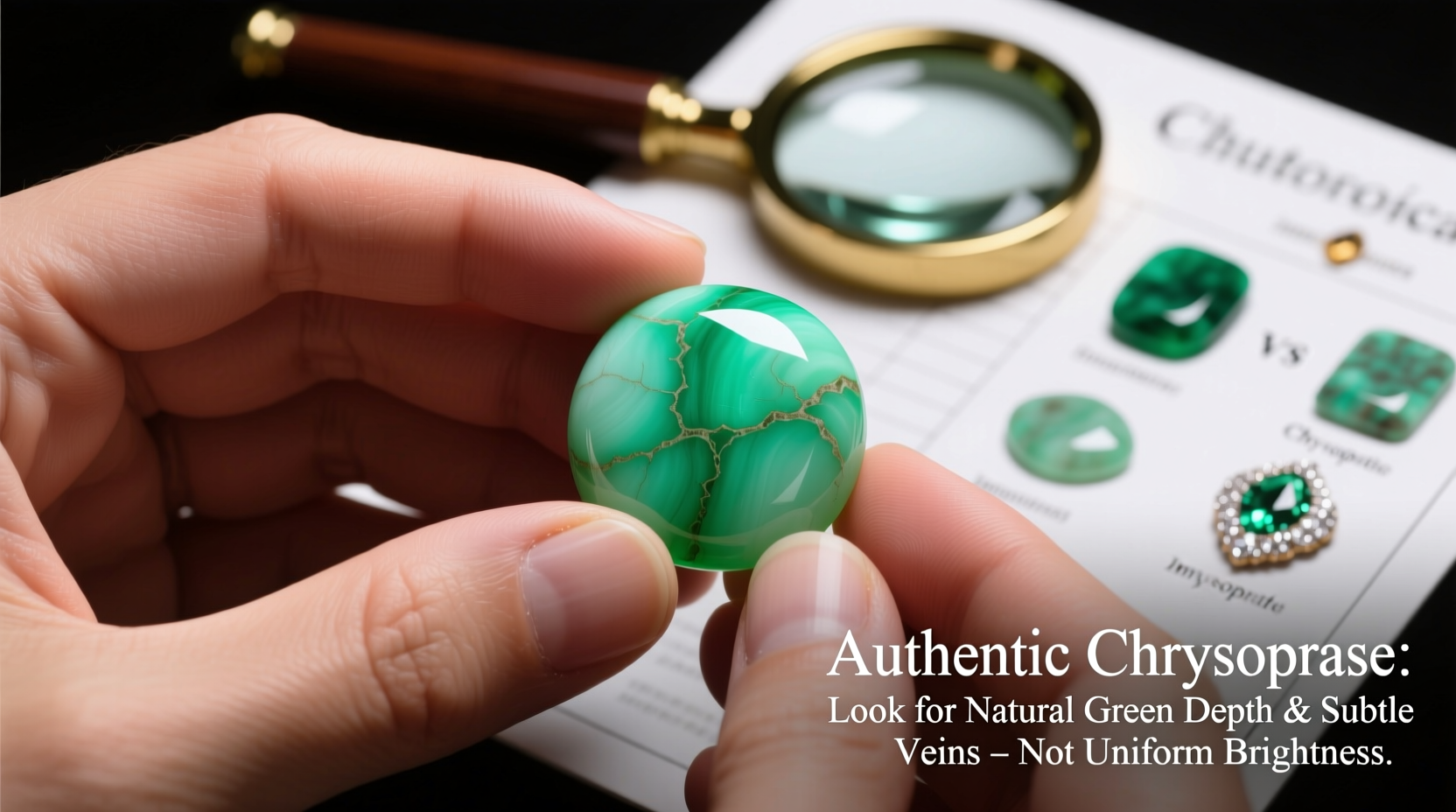
Chrysoprase gets its rich green color from trace amounts of nickel oxide embedded within microcrystalline quartz. Unlike dyed chalcedony or glass imitations, natural chrysoprase exhibits a soft, even color distribution that often includes subtle clouding or veining. It ranks between 6.5 and 7 on the Mohs hardness scale, making it durable enough for jewelry but still susceptible to scratches from harder materials like topaz or diamond.
The finest specimens come from Australia, particularly Western Australia’s Marlborough region, which produces up to 85% of the world’s high-grade material. Other sources include Poland, India, Brazil, and the United States. However, origin alone doesn’t guarantee authenticity—visual and physical testing remains critical.
“Chrysoprase is one of the most commonly faked green stones in the market today. Its popularity makes it a prime target for dyeing and resin infusion.” — Dr. Lena Petrov, Gemologist at the International Colored Stone Association
Physical & Visual Characteristics of Genuine Chrysoprase
Authentic chrysoprase has several distinguishing features that set it apart from counterfeits:
- Color: A uniform, translucent apple-green to leek-green tone. Avoid stones with overly bright, neon hues or uneven blotches—these are signs of dye.
- Translucency: High-quality chrysoprase allows light to pass through evenly when held to a source. Opaque pieces may be lower grade or artificially treated.
- Texture: Smooth to the touch with a waxy luster. Rough patches or grainy surfaces suggest poor quality or composite materials.
- Inclusions: Natural cloudiness or fine web-like patterns are common. Perfectly clear or unnaturally consistent color raises suspicion.
Step-by-Step Guide to Authenticating Chrysoprase
Follow this systematic approach to verify whether a chrysoprase specimen is genuine:
- Inspect the Color Distribution – Look closely for streaks, concentrated color along cracks, or surface-only green tints. Dye tends to pool in fissures. Real chrysoprase shows color throughout the body.
- Perform a Scratch Test (Carefully) – Using a piece of glass (Mohs ~5.5), gently attempt to scratch an inconspicuous area. Chrysoprase should not scratch easily. If the stone scratches the glass without damage, it’s likely authentic. If it gets scratched itself, it could be softer imitation material.
- Check for Bubbles or Seams – Glass imitations often contain tiny air bubbles or mold lines. Use a 10x loupe to inspect for these flaws, especially around edges.
- Conduct a UV Light Test – Under long-wave UV light (365 nm), some natural chrysoprases exhibit weak orange or yellow fluorescence. Dyed versions typically show no reaction or a bluish glow due to optical brighteners.
- Assess Thermal Conductivity – Press the stone against your lip or cheek. Natural chrysoprase feels cool and retains that sensation briefly. Plastics and resins warm up quickly.
Common Imitations and How to Spot Them
Fake chrysoprase appears in many forms, from dyed agate to plastic composites. The table below outlines key differences between real chrysoprase and common fakes:
| Material | Color Clue | Hardness | Tell-Tale Sign |
|---|---|---|---|
| Natural Chrysoprase | Soft, even green; slight cloudiness | 6.5–7 | Color runs deep; slight translucency variation |
| Dyed Chalcedony/Agate | Bright green concentrated in cracks | 6.5–7 | Dye pooling visible under magnification |
| Green Glass | Neon green, too perfect | 5–6 | Air bubbles, conchoidal fractures |
| Plastic Resin | Vivid, artificial-looking green | 2–3 | Very lightweight; melts near heat |
| Synthetic Quartz | Perfect clarity and color | 7 | No natural inclusions; lab-grown structure |
Expert Tools and When to Use Them
While visual inspection helps, advanced tools increase accuracy:
- Refractometer: Measures refractive index (~1.54–1.55 for chrysoprase). Most fakes fall outside this range.
- Polariscope: Chrysoprase is microcrystalline and shows aggregate extinction—unlike glass, which appears dark when rotated.
- Chelsea Filter: Not always reliable, but dyed stones may appear pink or red under the filter while natural ones remain green.
- Spectroscope: Can detect absorption bands caused by nickel, supporting natural origin.
For serious buyers, sending a sample to a certified gemological lab (such as GIA or IGI) provides definitive results, including confirmation of treatments or enhancements.
Mini Case Study: Identifying a Treated Specimen
A collector in Melbourne purchased a chrysoprase pendant online advertised as “natural Australian green quartz.” The price was unusually low—just $45 for a 20mm cabochon. Upon receiving it, he noticed the green color was unnaturally intense near the surface. Using a loupe, he observed green dye trapped in tiny surface fractures. A drop of acetone on a cotton swab revealed faint green residue—confirming dye treatment. He returned the item and reported the seller. This case highlights how affordable tests can prevent financial loss and reinforce vigilance.
Buying Tips and Best Practices Checklist
To protect yourself when purchasing chrysoprase, follow this actionable checklist:
- ✅ Buy from trusted jewelers or certified gem suppliers
- ✅ Ask for a detailed origin report if available
- ✅ Inspect the stone in multiple lighting conditions
- ✅ Request return policies in case of misrepresentation
- ✅ Avoid deals that seem too good to be true
- ✅ Use a jeweler’s loupe (10x) for close examination
- ✅ Keep receipts and documentation for insurance purposes
Frequently Asked Questions
Can chrysoprase fade over time?
Yes. Prolonged exposure to direct sunlight or heat can cause the green color to fade. Store chrysoprase in a dark, cool place away from windows or radiators to preserve its vibrancy.
Is all green chalcedony chrysoprase?
No. Only green chalcedony colored by nickel—not chromium or iron—is classified as chrysoprase. Many green chalcedony stones on the market are dyed and incorrectly labeled.
How much does real chrysoprase cost?
Prices vary widely. High-transparency, vivid green Australian chrysoprase can range from $20 to $100 per carat. Lower-grade or dyed material sells for under $5 per carat. Cabochons and beads are priced accordingly based on size and quality.
Final Thoughts: Confidence Through Knowledge
Spotting authentic chrysoprase isn’t about memorizing facts—it’s about developing a practiced eye and understanding what nature produces versus what factories replicate. With the right combination of observation, simple tests, and access to tools, you can confidently distinguish genuine specimens from impostors. As the gem market grows more complex, staying informed becomes your greatest asset.




 浙公网安备
33010002000092号
浙公网安备
33010002000092号 浙B2-20120091-4
Comments
No comments yet. Why don't you start the discussion?