
Moissanite has emerged as one of the most sought-after gemstone alternatives to diamonds, prized for its brilliance, durability, and ethical sourcing. In high-end jewelry, especially designer necklaces, it's increasingly common to find moissanite marketed as a premium choice. But with rising demand comes an influx of imitations—stones that mimic moissanite’s appearance but lack its chemical and optical integrity. Distinguishing authentic moissanite from look-alikes requires more than a keen eye; it demands knowledge, tools, and precision. Whether you're investing in a luxury piece or verifying an existing heirloom, understanding how to authenticate moissanite empowers you to make informed decisions and protect your investment.
Understanding Moissanite: What Makes It Unique?
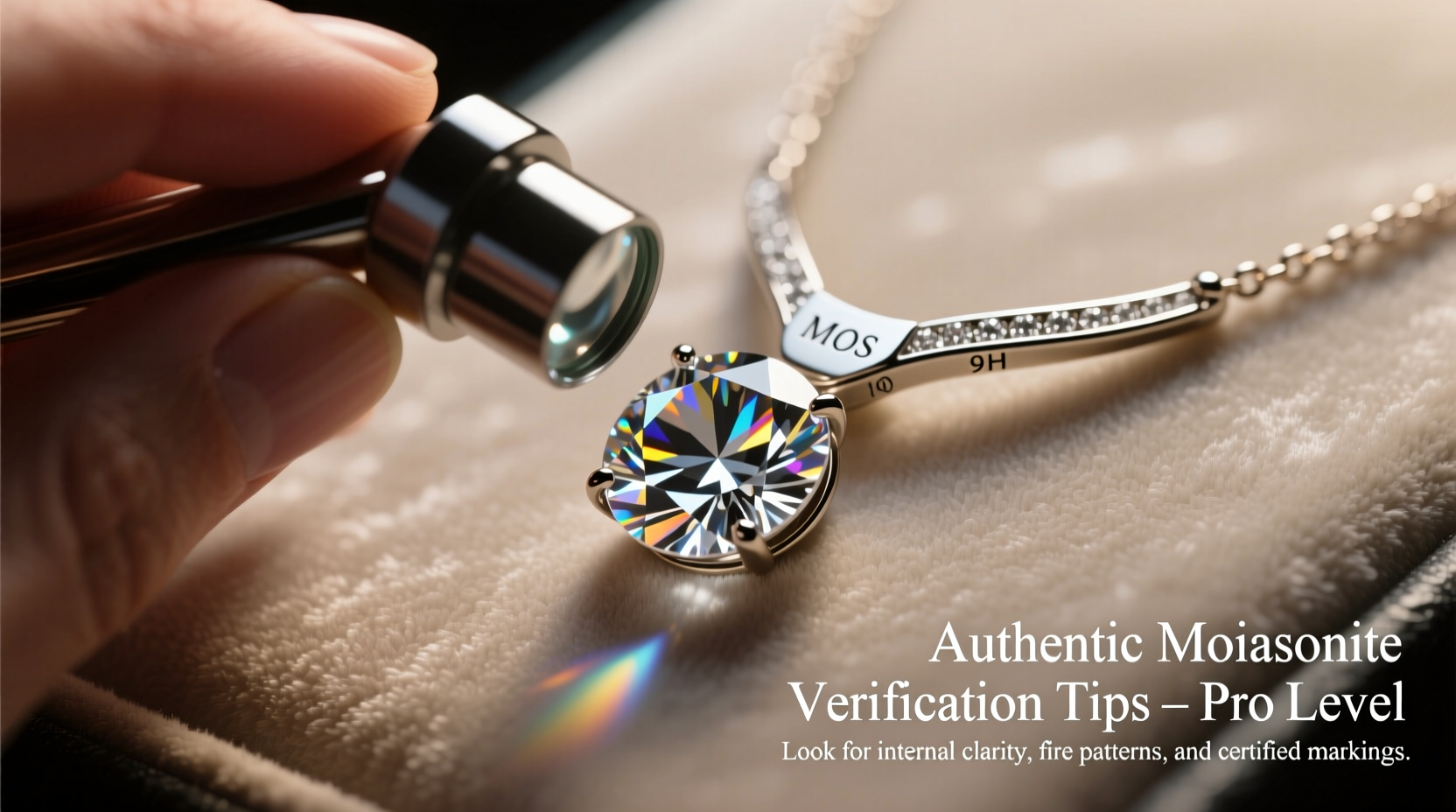
Discovered in 1893 by French scientist Henri Moissan in a meteorite crater, natural moissanite is extremely rare on Earth. Today’s moissanite is lab-created silicon carbide (SiC), engineered to replicate the gem’s exceptional fire and hardness (9.25 on the Mohs scale). Unlike cubic zirconia or glass simulants, moissanite has distinct physical properties that set it apart:
- Double refraction: Moissanite splits light into two rays, creating a signature sparkle different from diamonds.
- Higher refractive index: Ranging from 2.65 to 2.69, it exceeds even diamond (2.42), resulting in more brilliance.
- Thermal conductivity: Similar to diamond, making it difficult to distinguish using basic testers without advanced calibration.
- Electrical conductivity: A rare trait among gemstones, which professional testers can detect.
These characteristics are not just scientific trivia—they form the foundation of reliable authentication methods.
Step-by-Step Guide to Verifying Authentic Moissanite
Authenticating moissanite isn’t reserved for jewelers alone. With the right approach, consumers can perform preliminary checks at home and know when to seek professional help.
- Examine Under Natural Light: Observe the stone’s fire—the flashes of rainbow-colored light. Moissanite exhibits stronger dispersion than diamond, producing more vivid color flashes, especially in sunlight.
- Use a Loupe (10x Magnification): Look for double facet lines caused by double refraction. Rotate the stone; if edges appear doubled, it’s likely moissanite.
- Conduct a Fog Test: Breathe on the stone. Genuine moissanite disperses heat quickly, so fog clears almost instantly—similar to diamond. However, this test alone is inconclusive since CZ and glass may also clear fast.
- Check with a Moissanite Tester: Standard diamond testers often misidentify moissanite as diamond due to similar thermal conductivity. Use a dual-mode tester that measures both thermal and electrical conductivity.
- Inspect the Setting and Hallmarks: Designer necklaces should have precise craftsmanship. Look for brand engravings, metal purity stamps (e.g., “14K,” “PT”), and consistent prong settings.
- Request Lab Certification: Reputable sellers provide documentation detailing the stone’s measurements, cut, and origin. Verify the lab’s credibility before trusting the report.
Do’s and Don’ts When Assessing Moissanite Necklaces
| Action | Do | Don't |
|---|---|---|
| Testing | Use a calibrated moissanite/diamond tester | Rely solely on visual inspection or smartphone apps |
| Cleaning Before Inspection | Gently clean with warm water and soft cloth | Use ultrasonic cleaners on unknown stones—may damage settings |
| Purchasing | Buy from certified jewelers with return policies | Assume “diamond-like” means moissanite—could be CZ or white sapphire |
| Storage | Keep separate from other jewelry to prevent scratching | Store loosely in a pouch where stones can knock together |
Real Example: How One Collector Avoided a Costly Mistake
Sophia, a jewelry collector based in Austin, was offered a vintage-style platinum necklace advertised as “diamond-equivalent moissanite” at a luxury resale boutique. The price was 40% below market value for comparable designs. Intrigued, she applied several verification steps before buying.
First, she used a handheld loupe and noticed pronounced doubling of facet edges—a red flag for double refraction. Next, she borrowed a dual-probe tester from a local jeweler. The device confirmed electrical conductivity, a hallmark of moissanite. Finally, she verified the “Charles & Colvard Created Moissanite” laser inscription under magnification. Confident in her findings, she purchased the piece. Later appraisal revealed it was a limited-edition design worth nearly double her purchase price. Her diligence saved her from accepting a misrepresented cubic zirconia alternative sold under false pretenses.
“Moissanite has its own identity—it’s not a ‘fake diamond.’ Knowing how to verify it protects both buyers and the integrity of the gem industry.” — Dr. Lena Torres, GIA-Certified Gemologist
Essential Checklist for Buyers and Collectors
Before finalizing any purchase or accepting a gift, run through this checklist to ensure authenticity:
- ✅ Confirm the seller provides a certificate from a recognized lab (GCAL, EGL, etc.)
- ✅ Inspect for laser inscriptions (common on branded moissanite)
- ✅ Perform a double refraction check with a 10x loupe
- ✅ Use a dual-mode tester (thermal + electrical)
- ✅ Evaluate symmetry and finish of the necklace setting
- ✅ Compare fire and brilliance to known samples (if possible)
- ✅ Research the brand—reputable designers partner with licensed moissanite producers
Frequently Asked Questions
Can a jeweler tell the difference between moissanite and diamond?
Yes, but only with proper equipment. Visually, they are similar, especially in well-cut stones. A trained jeweler uses a combination of loupes, microscopes, and electronic testers to detect double refraction and electrical conductivity—key indicators of moissanite.
Is moissanite less valuable because it’s lab-created?
Value is subjective. While moissanite typically costs less than diamond, its ethical production, durability, and brilliance give it significant worth. In designer pieces, craftsmanship and brand prestige further enhance value. It’s not about being “less than”—it’s about offering a different kind of luxury.
Does all moissanite come with certification?
No, not all. High-quality brands like Charles & Colvard or Harro Gem provide detailed grading reports and laser inscriptions. However, generic or imported moissanite may lack documentation. Always ask for proof of origin and quality metrics such as cut grade, clarity, and carat weight.
Final Thoughts: Confidence Starts with Knowledge
Verifying authentic moissanite in designer necklaces isn’t about suspicion—it’s about respect for craftsmanship and personal investment. Armed with the right tools and awareness, you can navigate the market with confidence. Whether you're adding to a collection, shopping for a meaningful gift, or preserving family heirlooms, taking the time to authenticate ensures long-term satisfaction and trust in your choices.




 浙公网安备
33010002000092号
浙公网安备
33010002000092号 浙B2-20120091-4
Comments
No comments yet. Why don't you start the discussion?