
The modern home is no longer just a place to live—it's an ecosystem of interconnected devices designed to enhance comfort, security, and efficiency. At the heart of this transformation lies the smart home platform: the invisible conductor orchestrating lights, locks, thermostats, cameras, and more. Choosing the right platform isn't about picking the flashiest gadget; it's about selecting a reliable foundation that grows with your needs, supports your preferred brands, and delivers consistent performance. With so many options available, making an informed decision can mean the difference between seamless automation and daily frustration.
Understanding Smart Home Platforms
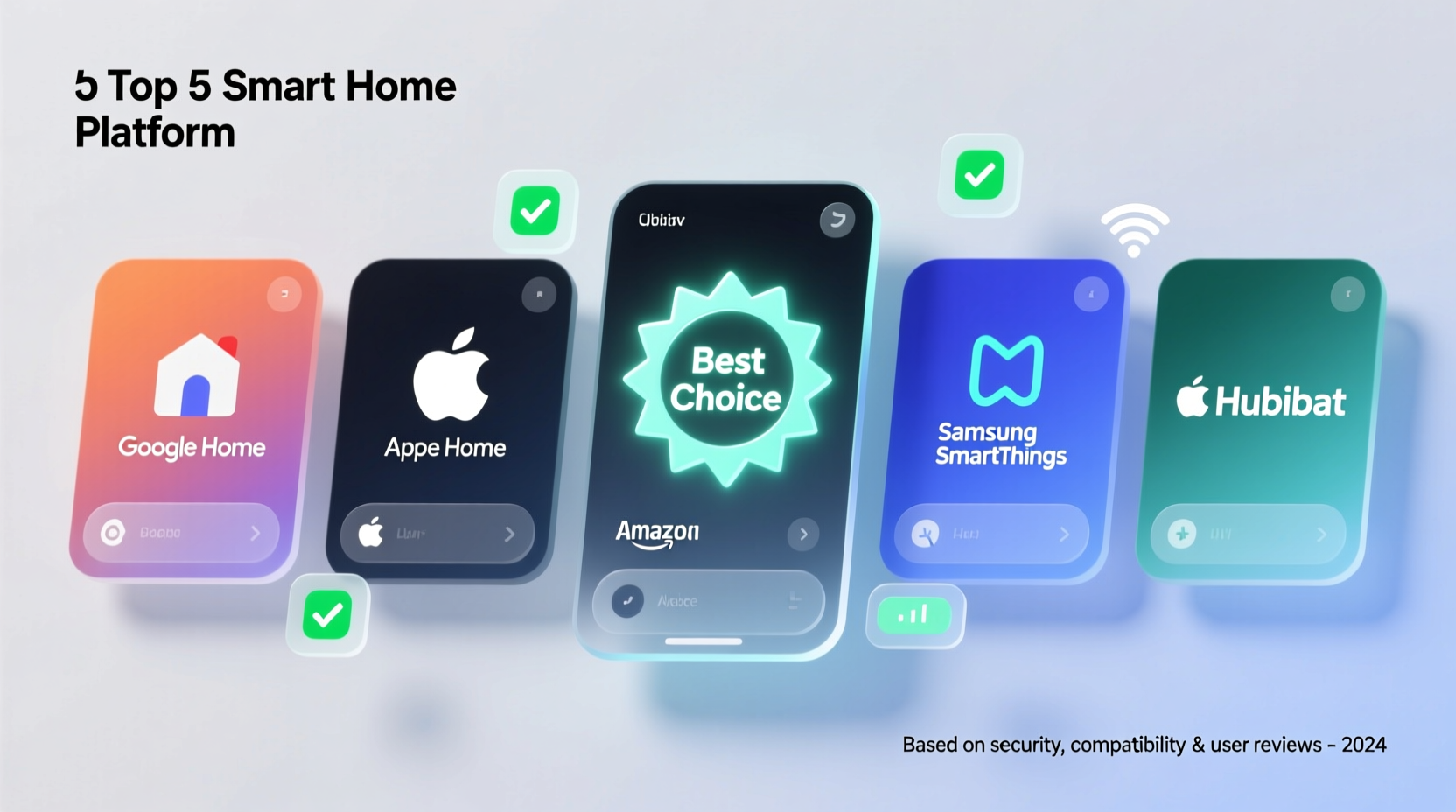
A smart home platform acts as the central nervous system of your connected environment. It enables communication between devices from different manufacturers, allows for unified control through apps or voice assistants, and supports automation routines. These platforms typically rely on wireless protocols such as Wi-Fi, Zigbee, Z-Wave, Matter, or Thread to maintain stable connections across your network.
Key functions include:
- Device integration and management
- Voice assistant compatibility (e.g., Alexa, Google Assistant, Siri)
- Automation rule creation (e.g., “Turn off lights when no motion is detected”)
- Remote access via smartphone apps
- Support for local processing (important for privacy and reliability)
The most effective platforms balance broad compatibility with strong security, intuitive interfaces, and minimal reliance on cloud services for core operations.
Top Contenders in the Smart Home Ecosystem
Several platforms dominate the market, each with distinct strengths and ideal user profiles. The best choice depends on your existing tech ecosystem, desired level of customization, and long-term goals.
1. Apple Home (HomeKit & Matter Support)
Apple’s platform emphasizes privacy, security, and tight integration with iOS devices. With native support for Siri and the Home app, users enjoy smooth control across iPhones, iPads, and Apple Watches. Since embracing the open Matter standard, Home has expanded beyond its historically limited device support.
“Apple Home offers one of the most secure and private smart home experiences, especially for users already invested in the Apple ecosystem.” — David Lin, IoT Security Analyst at TechSafe Labs
2. Google Home (formerly Google Assistant)
Google Home excels in voice recognition and natural language understanding. Its strength lies in AI-powered routines, deep integration with Android, YouTube, and Nest hardware, and robust third-party support. Automation is flexible, and the interface is accessible through both mobile apps and Google Display devices like Nest Hub.
3. Amazon Alexa (via Echo Devices and App)
Alexa leads in sheer device compatibility—over 150,000 certified products. The Alexa app and vast library of skills make it highly customizable. While early versions relied heavily on the cloud, newer Echo devices support Matter and Thread, improving local control and response speed.
4. Samsung SmartThings
SmartThings stands out for its hybrid architecture, combining cloud and local processing. It supports Zigbee, Z-Wave, Wi-Fi, and Matter, making it one of the most versatile hubs. Advanced users appreciate its customizable automations and developer-friendly environment.
5. Hubitat Elevation
For those prioritizing local control and minimizing cloud dependency, Hubitat is unmatched. All processing happens within your home network, ensuring faster responses and better uptime during internet outages. However, it requires more technical know-how and lacks native voice assistant integration without workarounds.
Comparison Table: Key Features at a Glance
| Platform | Best For | Local Control | Matter Support | Voice Assistant | Hub Required? |
|---|---|---|---|---|---|
| Apple Home | iOS users, privacy-focused households | Yes (Matter + Thread) | Yes | Siri | No (but Apple TV/HomePod recommended) |
| Google Home | Android users, AI-driven routines | Limited (growing with Matter) | Yes | Google Assistant | No |
| Amazon Alexa | Broad device support, voice-first homes | Moderate (via Matter/Thread on new devices) | Yes | Alexa | No (but Echo devices act as hubs) |
| Samsung SmartThings | Advanced automations, multi-protocol needs | Yes (with hub) | Yes | Multiple (via integrations) | Yes (for full Zigbee/Z-Wave support) |
| Hubitat Elevation | Tech-savvy users, maximum local control | Full local processing | Yes (via updates) | Third-party only | Yes |
Step-by-Step Guide to Choosing Your Platform
Selecting the right smart home platform doesn’t have to be overwhelming. Follow this structured approach to ensure a future-proof decision:
- Assess Your Current Devices – List all smart devices you own or plan to buy. Check their compatibility with major platforms.
- Evaluate Your Primary Ecosystem – Are you deeply invested in Apple, Google, or Amazon? Staying within one ecosystem often ensures smoother integration.
- Determine Automation Needs – Basic users may prefer simplicity; advanced users benefit from granular controls and scripting options.
- Prioritize Privacy and Reliability – Consider how much data you’re willing to share and whether local control matters for critical functions (e.g., door locks).
- Test Voice Assistant Performance – Try voice commands with your preferred assistant. Accuracy and responsiveness vary significantly.
- Check for Matter and Thread Readiness – Opt for platforms actively supporting these open standards to avoid obsolescence.
- Start Small, Then Expand – Begin with lighting or climate control before scaling to security or whole-home audio.
Mini Case Study: A Family’s Transition to Smart Living
The Thompson family in Portland wanted to improve energy efficiency and simplify daily routines. They owned several standalone smart bulbs and a Nest thermostat but struggled with fragmented control. After researching options, they chose Google Home due to their use of Android phones and YouTube Premium.
They migrated all devices into the Google Home app, created routines like “Good Morning” (which turns on lights, reads the weather, and starts the coffee maker), and added a smart plug for their holiday decorations. By leveraging Google’s AI, they reduced manual interactions by 70%. When they later added Matter-compatible sensors, the transition was seamless thanks to Google’s early adoption of the standard.
Their experience highlights the importance of ecosystem alignment and gradual, thoughtful expansion.
Essential Checklist Before Committing
Use this checklist to evaluate any smart home platform before adoption:
- ✅ Supports your current and planned devices
- ✅ Offers reliable app and voice control
- ✅ Provides clear automation tools (no coding required for basic tasks)
- ✅ Includes local processing capabilities or Matter support
- ✅ Has strong security practices (two-factor authentication, regular updates)
- ✅ Allows easy troubleshooting and device management
- ✅ Integrates with emergency systems (e.g., smoke detectors, water leak sensors)
Frequently Asked Questions
Can I mix multiple smart home platforms in one house?
Yes, but with caution. You can run Apple Home, Google Home, and Alexa simultaneously, but overlapping automations may cause conflicts. Use one primary platform for core functions and others selectively for niche devices.
Is Matter going to replace existing platforms?
No. Matter is a connectivity standard, not a platform. It enhances interoperability between platforms like Apple, Google, and Amazon, allowing devices to work together regardless of brand. Think of Matter as a universal language—platforms still provide the user interface and intelligence.
Do I need a hub for a smart home?
It depends. Wi-Fi-based systems (like most Alexa or Google setups) don’t require a separate hub. However, if you use Zigbee or Z-Wave devices (common in sensors and switches), a hub like SmartThings or HomePod is necessary for communication.
Conclusion: Building a Smarter, More Reliable Home
The best smart home platform isn’t defined by popularity alone—it’s the one that aligns with your lifestyle, respects your privacy, and adapts as technology evolves. Whether you value Apple’s end-to-end encryption, Google’s intelligent routines, or Hubitat’s offline resilience, the key is choosing a system built on openness, reliability, and long-term viability.
As Matter gains traction, the era of walled gardens is fading. Now is the perfect time to lay a foundation that unifies convenience, control, and peace of mind. Evaluate your priorities, test what works in your space, and start building a home that truly works for you.




 浙公网安备
33010002000092号
浙公网安备
33010002000092号 浙B2-20120091-4
Comments
No comments yet. Why don't you start the discussion?