
In an era where digital distractions are constant and communication happens across multiple platforms, staying focused and connected can feel overwhelming. Apple has responded to this challenge not with flashy gimmicks, but with intelligent, user-centric features powered by machine learning and deep ecosystem integration. These tools—collectively part of what’s known as Apple Intelligence—are designed to reduce friction in daily interactions, streamline communication, and help users maintain mental clarity throughout the day. Unlike generic AI assistants, Apple’s approach emphasizes privacy, contextual awareness, and seamless functionality across iPhone, iPad, Mac, and Apple Watch.
1. Priority Notifications and Focus Modes
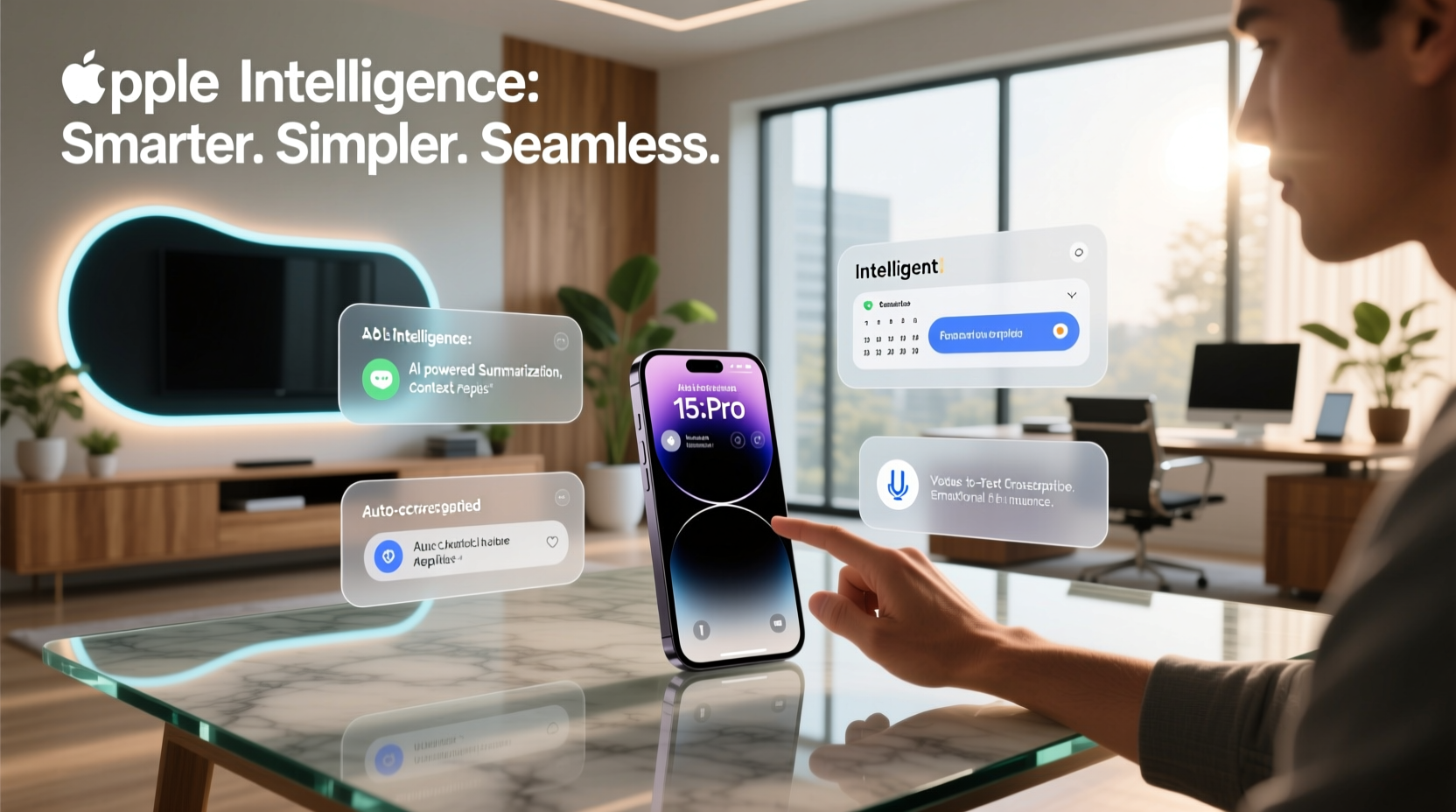
One of the most impactful ways Apple Intelligence enhances focus is through its evolved Focus Mode system. Instead of simply silencing notifications, Focus Modes now use on-device intelligence to determine which alerts are truly important based on your habits, calendar events, and app usage patterns.
For example, if you activate “Work Focus” during business hours, your device learns which contacts and apps demand immediate attention. Messages from your manager or urgent emails from clients are allowed through, while social media updates and promotional newsletters are deferred until later. This selective filtering reduces cognitive load and prevents unnecessary interruptions.
The integration between Focus Modes and Communication Safety (in Messages) also ensures that sensitive conversations remain private while still being accessible when appropriate. For families, parents can set up child accounts with restricted notifications during homework or bedtime hours, promoting healthier digital boundaries.
2. Summarize Messages, Emails, and Notifications
A standout feature introduced with iOS 17 and expanded in subsequent updates is the ability to summarize long messages, emails, and notification threads. Using on-device natural language processing, Apple Intelligence distills lengthy content into concise bullet points, preserving key details without requiring full reading.
This is particularly useful for managing communication overload. Imagine receiving a 50-message group chat about weekend plans. Instead of scrolling through every exchange, your iPhone presents a summary: “Dinner at 7 PM Saturday, reservations confirmed at Bistro Verde. Carpool available from Sarah.” The original thread remains accessible, but the summary saves time and mental effort.
Email summaries work similarly. In the Mail app, Apple Intelligence identifies action items, dates, and attachments in incoming messages and generates a digest view. No more scanning paragraphs to find meeting times or deadlines.
“Summarization isn’t just about saving time—it’s about reducing decision fatigue. When information is distilled intelligently, users can act faster and return to their tasks with less disruption.” — Dr. Lena Patel, Human-Computer Interaction Researcher at Stanford University
Supported Apps for Summarization
| App | Summary Type | Availability |
|---|---|---|
| Messages | Group chat highlights, key decisions | iOS 17+ |
| Action items, dates, requests | iOS 17+, macOS Sonoma+ | |
| Notifications | Threaded alert summaries | iOS 18 beta |
| Reminders | Smart suggestions from message content | iOS 17.4+ |
3. Live Voicemail and Intelligent Call Handling
Live Voicemail is a quiet revolution in call management. When someone leaves a voicemail, your iPhone transcribes it in real time and displays the text on screen—even before the caller finishes speaking. This allows you to decide instantly whether to pick up, send to voicemail, or respond later.
For professionals juggling back-to-back meetings or parents managing household logistics, this feature eliminates the anxiety of missing critical calls. You might see a transcription like: “Hi, it’s Dr. Kim’s office calling to confirm your child’s vaccination appointment for tomorrow at 3:15.” Without answering, you’ve already captured the essential detail.
Apple Intelligence also powers smarter call screening. Unknown numbers are analyzed in real time, and robotic or spam-like speech patterns trigger automatic labeling. Legitimate callers are transcribed and presented with options to reply via text (“Call me back after 5”) or silence the call entirely.
4. Writing Tools Across Apps
Apple Intelligence includes a suite of writing enhancements that refine communication across Messages, Mail, Notes, and third-party apps. These tools go beyond basic grammar correction—they adapt tone, shorten sentences, and even rewrite messages to sound more polite or professional.
For instance, if you type a rushed message like “Can’t make the meeting, sorry,” the system suggests: “I won’t be able to attend the meeting today—apologies for the late notice. Let me know how I can catch up.” This helps maintain professionalism without slowing down communication.
- Proofreading: Catches typos and grammatical errors in real time.
- Concise Mode: Shortens long sentences for clarity.
- Tone Adjustment: Offers alternatives to sound more formal, friendly, or neutral.
- Fill-In Suggestions: Predicts common phrases in emails (e.g., “Looking forward to hearing from you”)
These tools are especially valuable for non-native English speakers or those with dyslexia, leveling the playing field in workplace communication.
Step-by-Step: Enable Writing Tools on iPhone
- Open Settings and tap General.
- Select Keyboard, then Writing Tools.
- Toggle on Auto-Correction, Concise Mode, and Tone Suggestions.
- Open any messaging or email app and start typing.
- Tap the blue suggestion bar above the keyboard to apply edits.
5. Personal Context Awareness with Siri and Shortcuts
Apple Intelligence elevates Siri from a voice command tool to a context-aware assistant. By analyzing your calendar, location, recent messages, and app usage, Siri can anticipate needs and offer proactive help.
For example, if you have a meeting scheduled at a new client’s office, Siri might say: “Your meeting starts in 30 minutes. Traffic is light—leave now for a 9:15 arrival. Would you like driving directions?” It pulls data from Maps, Calendar, and real-time traffic without requiring explicit commands.
This intelligence extends to Shortcuts, where automation workflows become smarter. A custom shortcut like “Start Workday” can now check your calendar, silence non-urgent notifications, open your task manager, and play focus music—all triggered by a single phrase or geofence.
Mini Case Study: Reducing Communication Overload for Remote Teams
Sarah Chen, a project manager at a distributed tech startup, struggled with constant Slack pings, overlapping Zoom calls, and missed email threads. After implementing Apple Intelligence features across her team’s devices, she noticed a dramatic shift.
She enabled Focus Mode during core working hours, allowing only direct messages and calendar alerts. Her team began using message summarization to review long discussion threads before stand-ups. When clients called outside business hours, Live Voicemail transcribed their requests, which were automatically added to her reminders.
“I used to spend 90 minutes a day just catching up on communication,” Sarah said. “Now, I process everything in under 30 minutes. The mental space it freed up was transformative.”
FAQ
Does Apple Intelligence work offline?
Yes, many core features—including message summarization, Focus Mode logic, and writing tools—run entirely on-device using on-board machine learning models. This ensures functionality even without internet access and reinforces Apple’s commitment to privacy.
Is Apple Intelligence available on older devices?
Most advanced features require iPhone XS or later, iPad Pro (2nd gen+) or iPad Air (4th gen+), and Macs with Apple Silicon. Older devices may support basic Focus Modes and Siri improvements but lack summarization and advanced AI writing tools.
How does Apple protect user privacy with these AI features?
Apple processes sensitive data like messages and emails directly on your device whenever possible. When cloud processing is needed (e.g., certain visual intelligence tasks), data is protected with end-to-end encryption and never stored permanently. Apple does not build user profiles for advertising.
Conclusion
Apple Intelligence isn’t about replacing human judgment—it’s about augmenting it. By quietly managing the noise of modern communication and automating routine cognitive tasks, these features give users back something priceless: focus. Whether it’s summarizing a chaotic group chat, shielding you during deep work, or helping you phrase a message with confidence, the system works in the background to make technology feel less intrusive and more intuitive.




 浙公网安备
33010002000092号
浙公网安备
33010002000092号 浙B2-20120091-4
Comments
No comments yet. Why don't you start the discussion?