
The fascination with dinosaurs transcends generations, fueling curiosity in science, education, and popular culture. Behind every lifelike museum display or classroom model lies decades of paleontological research and meticulous fossil preservation. With over 3,726,530 documented fossil specimens cataloged globally—each a piece of Earth’s ancient puzzle—the replication of these prehistoric remains has evolved into a precise art and science. Today, the most accurate dinosaur fossil models are not just replicas; they are data-driven reconstructions grounded in real fossil evidence. This article explores how these models are created, which ones stand out for their fidelity, and how institutions and collectors use them to bring the Mesozoic era to life.
The Foundation: Fossil Data and Scientific Accuracy
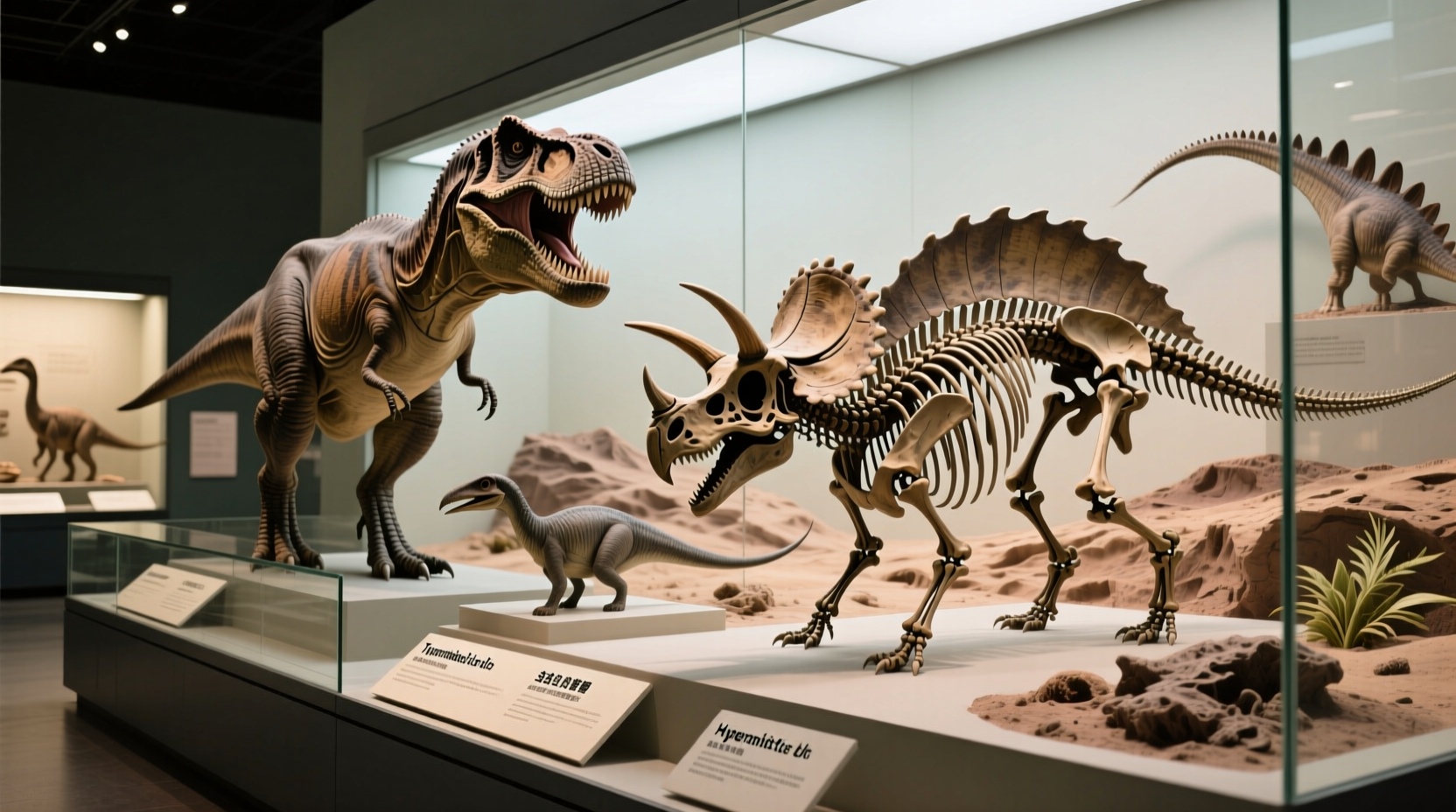
The creation of high-fidelity dinosaur fossil models begins long before sculpting or molding. It starts with access to comprehensive fossil records. As of recent global paleontological inventories, more than 3.7 million individual fossil specimens have been formally recorded across museums, universities, and research centers. These include bones, teeth, footprints, skin impressions, and even fossilized soft tissues. Among them, approximately 653 major dinosaur species have been identified through well-preserved skeletal remains—forming the backbone of today’s most trusted reconstructions.
Each model is developed using comparative anatomy, phylogenetic bracketing, and biomechanical analysis. Scientists compare fossil structures with living relatives (birds and crocodilians) to infer muscle placement, posture, and movement. CT scans of original fossils allow digital modeling of internal structures, ensuring that even the brain cavity and sinus systems are accurately represented in educational casts.
“Every bone tells a story. The quality of a fossil model depends on how closely it reflects the taphonomic reality—how the animal died, was buried, and fossilized.” — Dr. Elena Torres, Vertebrate Paleontologist, University of Alberta
Top 5 Most Accurately Preserved Dinosaur Fossil Models
Based on fossil completeness, scientific validation, and replication quality, the following models represent the gold standard in paleontological reproduction:
- Tyrannosaurus rex “Sue” (FMNH PR 2081) – Discovered in 1990 and housed at the Field Museum in Chicago, Sue is over 90% complete. Its cast replicas are used worldwide for research and exhibition, featuring detailed cranial sutures and pathologies visible in the jaw.
- Velociraptor mongoliensis (IGM 100/981) – Known for the famous \"Fighting Dinosaurs\" specimen locked in combat with a Protoceratops, this fossil provides direct behavioral evidence. Replicas show the sickle claw in its natural hyperextended position.
- Triceratops horridus (YPM 1820) – One of the first nearly complete Triceratops skulls ever found. Modern models reflect revised horn curvature based on histological studies of growth patterns.
- Bambiraptor feinbergi (BAM 100) – A juvenile dromaeosaur with exceptional feather impressions. Its model includes scientifically reconstructed plumage based on melanosomes extracted from associated sediment.
- Diplodocus carnegii (CM 84) – The first sauropod mounted for public display. Contemporary replicas correct earlier assumptions about neck posture, now shown in a more horizontal, energy-efficient stance.
How Museums and Researchers Use Fossil Models
Fossil models serve multiple purposes beyond display. In research, they allow non-destructive manipulation of rare originals. For example, 3D-printed replicas of Allosaurus vertebrae have been stress-tested to understand spinal flexibility without risking damage to the actual fossils.
Educational institutions use scaled models to teach anatomy, evolution, and geologic time. Interactive exhibits often feature touchable casts of theropod teeth or hadrosaur skin impressions, helping students grasp texture, scale, and biological function.
| Model Type | Purpose | Material | Accuracy Level |
|---|---|---|---|
| Holotype Cast | Museum Display & Research | Polyurethane resin | ★★★★★ |
| Composite Reconstruction | Public Exhibits | Fiberglass | ★★★★☆ |
| 3D-Printed Miniature | Classroom Use | PLA plastic | ★★★☆☆ |
| Feathered Restoration | Behavioral Studies | Silicone & synthetic fibers | ★★★★☆ |
Step-by-Step: How a Fossil Model Is Created
The journey from excavation site to museum-grade model involves several precise stages:
- Fossil Preparation – After discovery, fossils are cleaned using air scribes and chemical treatments to remove matrix without damaging bone structure.
- Digitization – High-resolution photogrammetry or laser scanning creates a 3D digital twin of each bone.
- Anatomical Reconstruction – Missing elements are filled in using mirror imaging or phylogenetic comparisons (e.g., using Deinonychus to estimate missing parts of Utahraptor).
- Mold Making – Silicone molds are taken from original or 3D-printed prototype bones.
- Casting & Assembly – Resin or fiberglass copies are produced, then assembled on steel armatures to replicate natural articulation.
- Finishing & Validation – Surface textures like vascular grooves or tooth wear are hand-sculpted and reviewed by paleontologists before approval.
“The best models don’t just look real—they behave like real animals would have.” — Dr. Rajiv Menon, Biomechanics Lab, Royal Ontario Museum
Real Example: The “Stan” T. rex Replica Controversy
In 2020, the sale of Stan (BHI 3033), one of the most complete T. rex skeletons ever found, sparked debate when its cast replicas began appearing in private collections. While the original fossil was auctioned for $31.8 million, dozens of high-quality casts were distributed globally. However, some replicas lacked updated anatomical corrections—such as the revised nasal horn shape based on micro-CT scans conducted in 2019.
This case highlighted a critical issue: not all \"museum-quality\" models are equal. Institutions like the Natural History Museum of Los Angeles County now require third-party certification for any replica used in exhibitions, ensuring alignment with the latest peer-reviewed findings.
Checklist: Evaluating a Dinosaur Fossil Model’s Quality
- ✔ Based on a published holotype or well-documented specimen?
- ✔ Includes citation of the original fossil repository (e.g., AMNH, IVPP)?
- ✔ Reflects current scientific consensus (e.g., upright vs. tail-dragging posture)?
- ✔ Made from durable, museum-safe materials (no PVC that off-gasses)?
- ✔ Accompanied by a provenance certificate and scaling information?
FAQ
Are replica fossils considered valuable in science?
Yes. While not substitutes for originals, high-fidelity replicas enable broader access to rare specimens. They are essential for collaborative research, especially when transporting originals is too risky or prohibited.
Can I buy an accurate dinosaur model for home use?
Absolutely. Companies like Papo, Safari Ltd., and CollectA work with paleontologists to produce scientifically vetted models. Look for lines labeled “Paleo Series” or those co-developed with institutions like the Smithsonian.
How do scientists ensure models reflect soft tissue features like feathers?
Through evidence from exceptionally preserved fossils—especially from the Jehol Biota in China—where melanosomes (pigment cells) and quill knobs are visible. These inform both coloration and feather type in modern reconstructions.
Conclusion
The over 3.7 million cataloged dinosaur fossil specimens represent humanity’s collective effort to decode life from deep time. From Sue the T. rex to tiny Microraptor casts with iridescent plumage, today’s best-preserved fossil models are more than static displays—they are dynamic tools bridging past and present. Whether used in classrooms, research labs, or personal collections, these replicas honor the rigor of paleontology while inspiring wonder. As new fossils emerge and technologies improve, the line between fossil and model continues to blur—ushering in an era where even a desktop figurine can carry the weight of scientific truth.




 浙公网安备
33010002000092号
浙公网安备
33010002000092号 浙B2-20120091-4
Comments
No comments yet. Why don't you start the discussion?