
The three-point shot has evolved from a novelty to the cornerstone of modern basketball strategy. Behind every swish from deep range lies years of repetition, biomechanical precision, and mental fortitude. The greatest NBA shooters aren’t just marksmen—they’re artists who have mastered timing, spacing, and efficiency under pressure. Their ability to stretch defenses and change games with a single shot has redefined how basketball is played.
From the pioneers who dared to launch from long distance in an era skeptical of the three-pointer, to today’s high-volume snipers who average over 10 attempts per game, the evolution of shooting excellence tells a story of innovation, dedication, and unmatched skill. This article examines the most influential shooters in NBA history, analyzes their techniques, and highlights the qualities that set them apart.
The Evolution of Shooting in the NBA
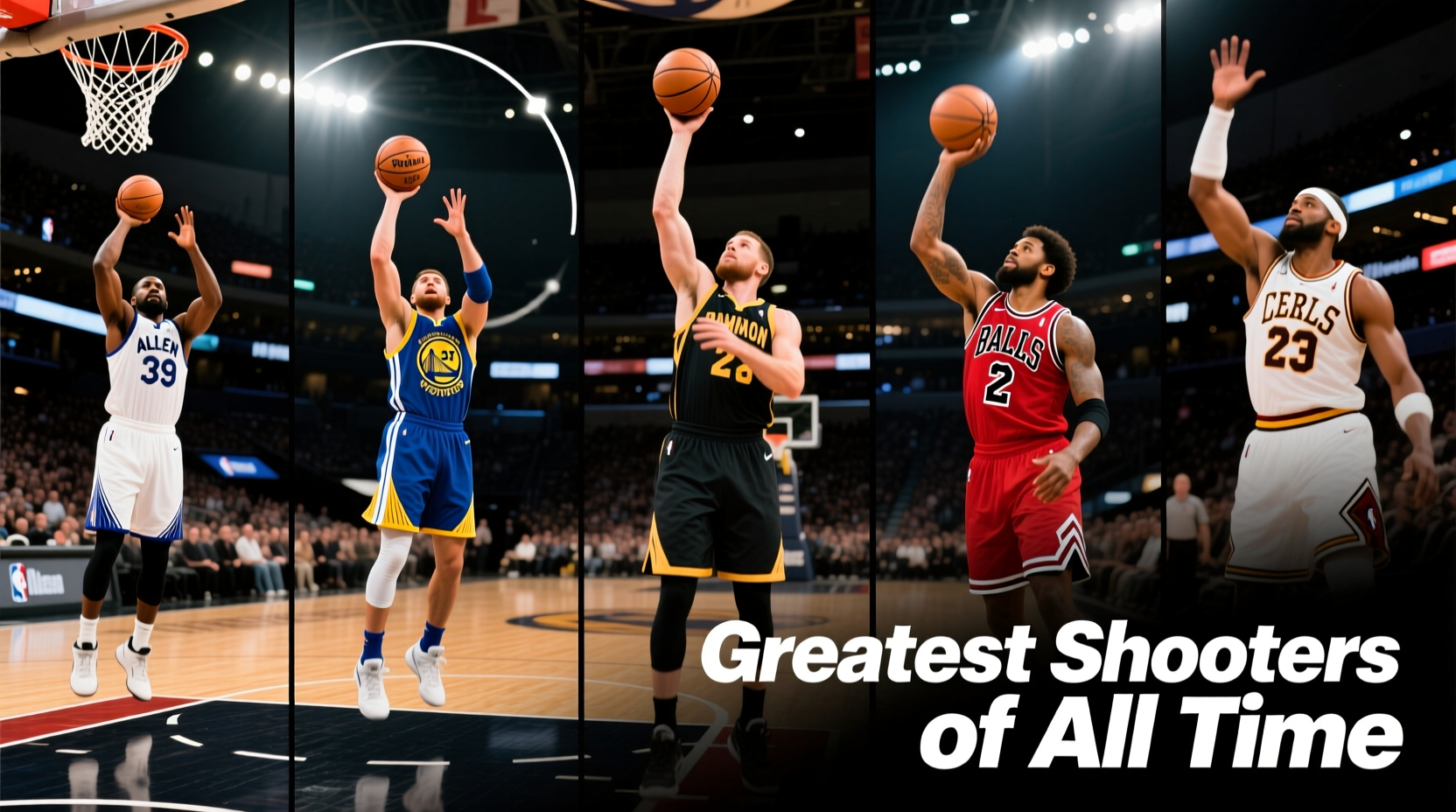
In the early days of the NBA, the three-point line didn’t exist. It wasn’t until 1979 that the league officially adopted it, met with widespread skepticism. Coaches questioned its value, players avoided it, and fans viewed it as a gimmick. Yet, a few visionaries saw its potential.
Players like Chris Ford and Craig Hodges began proving that consistent outside shooting could be a weapon. But it was Larry Bird who brought legitimacy to long-range shooting at scale. His textbook form, quick release, and clutch performances helped shift perceptions. Bird wasn’t just a shooter—he was a complete forward who used his range to open up the floor for teammates.
The real transformation came decades later, fueled by analytics. Teams began quantifying the value of three-pointers versus mid-range jumpers. A 33% three-point shooter effectively scores more per attempt than a 45% two-point shooter from mid-range. This math reshaped rosters, strategies, and player development. Today, every team prioritizes shooting—and the legacy of the all-time greats paved the way.
Criteria for Greatness: What Makes a Legendary Shooter?
Being labeled among the best requires more than just making shots. True greatness in shooting combines several measurable and intangible factors:
- Accuracy: High career and peak three-point percentages, especially under volume.
- Volume: Ability to shoot consistently from distance without sacrificing efficiency.
- Clutch Performance: Delivering in high-pressure situations—overtime, playoffs, elimination games.
- Range: Shooting comfortably well beyond the line, even from “logo” distance.
- Release Speed: Quick, repeatable motion that defenders can’t disrupt.
- Influence: Changing how the game is played or how opponents defend.
When evaluating the all-time greats, these criteria separate specialists from transformative figures.
All-Time Great Shooters: A Closer Look
Certain names stand out not only for their stats but for their lasting influence on the sport.
Larry Bird – The Original Sniper
Bird won three consecutive three-point contests in the 1980s, a feat unmatched at the time. Despite lower volume by today’s standards (averaging around 3 attempts per game), he shot 37.6% from deep—a strong number in an era when threes were rare. His footwork, balance, and confidence made him deadly off screens and in transition.
Reggie Miller – Clutch Personified
Miller tormented the Knicks and became synonymous with playoff heroics. He ranks among the top 10 in all-time three-pointers made, despite playing before the high-volume era. His ability to get hot quickly and deliver in elimination games earned him respect across generations. “He’s the guy you want taking the last shot,” said coach Pat Riley.
“Shooting is the easiest thing to practice and the hardest thing to master under pressure.” — Reggie Miller
Ray Allen – The Gold Standard
Widely regarded as one of the purest shooters ever, Ray Allen combined flawless mechanics with relentless work ethic. His record for most three-pointers made was eventually broken, but his 2013 NBA Finals Game 6 corner three remains one of the most iconic shots in history. Allen shot 40% from beyond the arc over his career—a remarkable figure given his volume and longevity.
Stephen Curry – The Revolution
Curry didn’t just break records—he redefined them. He shattered the single-season three-point record multiple times, once hitting 402 in a season. His career three-point percentage sits above 42%, despite launching from 30+ feet regularly. Curry’s influence extends beyond stats: he forced defenses to guard beyond the arc, changed player development priorities, and inspired a generation to shoot earlier and farther.
As Hall of Famer Chris Mullin put it: “Steph doesn’t just shoot well—he shoots in ways we didn’t think were possible.”
Statistical Comparison of Elite Shooters
| Player | Career 3P% | Total 3PM | Peak Season 3PM | Championships |
|---|---|---|---|---|
| Larry Bird | 37.6% | 649 | 131 (1987) | 3 |
| Reggie Miller | 39.5% | 2,560 | 229 (1997) | 0 |
| Ray Allen | 40.0% | 2,973 | 269 (2006) | 2 |
| Stephen Curry | 42.8% | 3,747+ | 402 (2016) | 4 |
| Klay Thompson | 41.3% | 2,685+ | 378 (2023) | 4 |
Note: Totals are as of end of 2023-24 season. Curry and Thompson continue active careers.
What Made These Shooters Different? A Breakdown
While each legend had unique traits, common threads emerge:
- Relentless Practice: Curry reportedly takes over 500 shots per day in the offseason. Allen was known for his military-like routine, including stretching before shooting drills.
- Mental Toughness: Great shooters miss often—Curry has air-balled crucial shots—but they never hesitate on the next opportunity.
- Footwork & Balance: Most use a consistent gather-and-rise motion, keeping their body aligned and release point high.
- Game Awareness: They read defenses, move without the ball, and know when to spot up versus drive.
Mini Case Study: The 2016 NBA Finals Game 7
No moment better illustrates the psychological weight of elite shooting than Game 7 of the 2016 NBA Finals. With the Warriors leading early, Klay Thompson hit four three-pointers in the first quarter, building momentum. But as the Cavaliers adjusted, the Warriors’ offense stalled. Curry finished 0-for-9 from three. Meanwhile, Kyrie Irving, often overlooked in shooting conversations, knocked down a cold-blooded step-back three over Curry with 53 seconds left—a shot requiring immense nerve and technique. That moment underscored a truth: in critical junctures, only those with proven shooting confidence dare to rise up.
How to Develop Elite Shooting Habits
Great shooting isn’t magic—it’s method. Here’s a practical checklist based on the routines of NBA legends:
📋 Shooting Development Checklist- Practice with game-like conditions: fatigue, distractions, timed drills.
- Focus on form consistency—especially foot alignment and follow-through.
- Shoot at least 100 catch-and-shoot reps daily.
- Record your shot monthly to analyze mechanics.
- Work on shooting off the dribble and in motion.
- Simulate pressure: add consequences to missed shots in practice (e.g., extra sprints).
- Study defensive closeouts to improve decision-making post-catch.
Frequently Asked Questions
Who holds the record for most three-pointers in NBA history?
Stephen Curry holds the record for most career three-pointers made, surpassing Ray Allen in 2021. As of 2024, he has over 3,700, a milestone no one else has approached.
Is three-point shooting more important than ever?
Absolutely. Modern offenses prioritize spacing and efficient scoring. Teams now average over 35 three-point attempts per game, compared to fewer than 15 in 2000. Shooting isn’t just valuable—it’s foundational.
Can anyone become a great shooter with enough practice?
While genetics play a role in coordination and release, shooting is one of the most trainable skills in sports. With proper technique, feedback, and thousands of repetitions, most players can significantly improve. The key is deliberate, focused practice—not just volume.
Moving Forward: The Future of Shooting
The legacy of the NBA’s greatest shooters lives on in today’s game. Young players grow up idolizing Curry, emulating his handles and limitless range. High school coaches teach shooting mechanics earlier than ever. Even big men are expected to stretch the floor.
Analytics departments track shot quality, release height, and defender distance. Wearable tech helps refine form. The standard for shooting excellence continues to rise. Yet, the fundamentals remain unchanged: discipline, repetition, and courage to take—and miss—the big shot.
“The best shooters aren’t afraid to be wrong. They’re committed to being ready when it matters.” — Geno Auriemma, UConn Women’s Basketball Coach
Final Thoughts
The best NBA shooters have done more than fill stat sheets—they’ve transformed the geometry of the game. From Bird’s icy glare to Curry’s gravity-defying launches, their precision and skill continue to inspire. Whether you're a player, coach, or fan, understanding their craft offers deeper appreciation for basketball’s evolving artistry.




 浙公网安备
33010002000092号
浙公网安备
33010002000092号 浙B2-20120091-4
Comments
No comments yet. Why don't you start the discussion?