
In an age where digital presence shapes first impressions, standing out isn’t just about visibility—it’s about authenticity. The concept of “Social Duck” traits—playful, observant, adaptable, and emotionally intelligent behaviors modeled after the natural grace of ducks—offers a refreshing framework for expressing individuality in social and online environments. Unlike rigid personal branding models, Social Duck traits emphasize fluidity, empathy, and subtle confidence. This guide explores how to harness these characteristics to reflect your true self while building meaningful connections.
Understanding Social Duck Traits
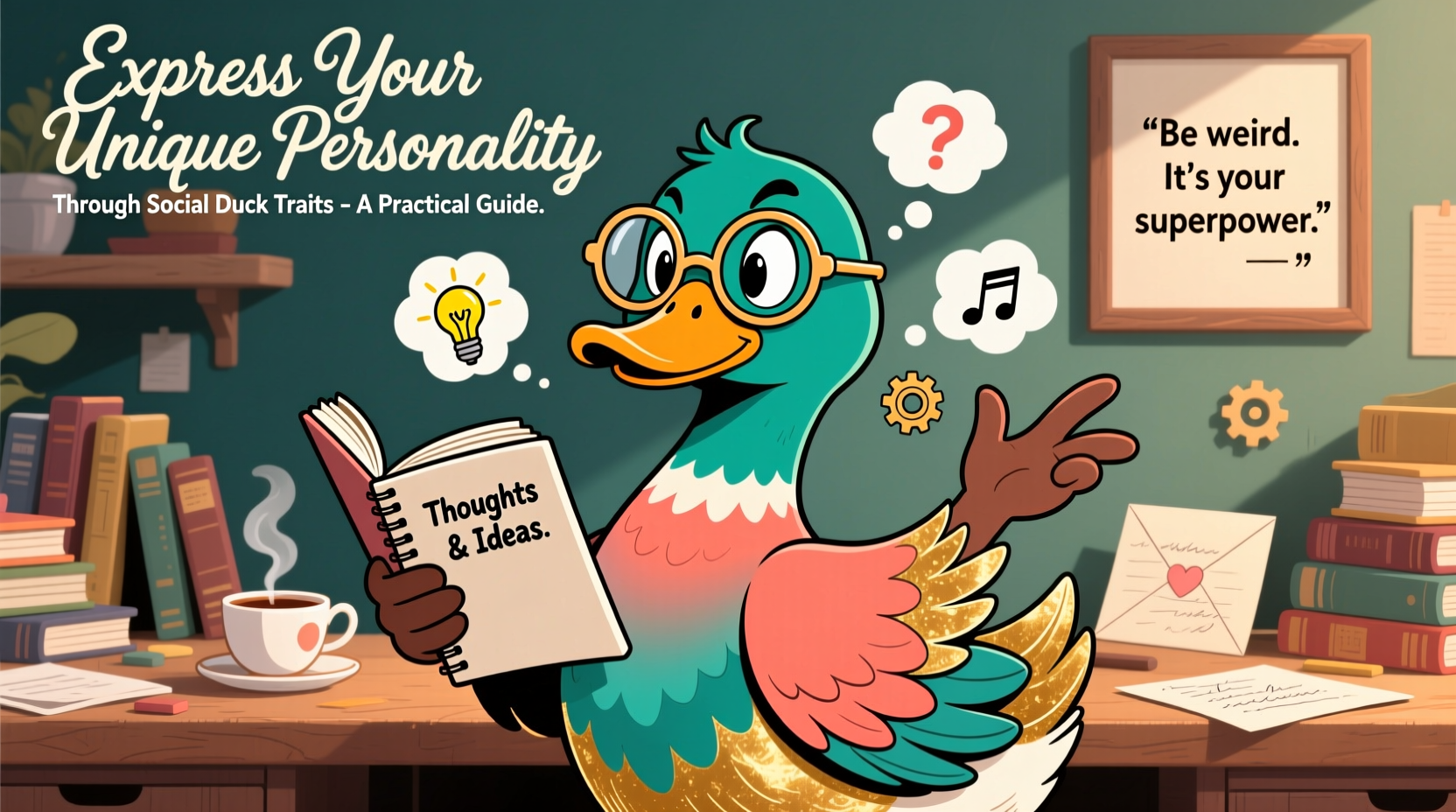
The term “Social Duck” isn’t derived from zoology but from behavioral metaphor. Ducks glide effortlessly on water, appearing calm while paddling steadily beneath the surface. They’re social yet independent, vocal when needed but often observant. In human interaction, Social Duck traits embody emotional resilience, situational awareness, and a balanced approach to communication.
These traits include:
- Calm Presence: Remaining composed under pressure or in crowded digital spaces.
- Observant Listening: Absorbing context before engaging—reading the room, so to speak.
- Adaptive Communication: Shifting tone and style based on audience without losing authenticity.
- Playful Authenticity: Expressing quirks and humor naturally, not for likes, but for connection.
- Emotional Buoyancy: Bouncing back from misunderstandings or negative interactions with grace.
“People don’t connect with perfection—they connect with presence. The most memorable personalities are those who listen deeply and respond with warmth.” — Dr. Lena Patel, Social Psychologist
How to Identify Your Natural Social Duck Profile
Not all Social Ducks behave the same way. Some lead with humor, others with insight. To align your expression with your core personality, start by identifying your dominant traits. Reflect on past social interactions: When did you feel most like yourself? When did others respond positively without you trying too hard?
Consider this simple self-assessment:
| Trait | Signs You Lean Into It | Expression Opportunity |
|---|---|---|
| Calm Presence | You’re often described as “grounded” or “a good listener” | Host discussions, moderate groups, offer stability during conflict |
| Observant Listening | You notice nonverbal cues and remember small details | Personalize messages, acknowledge others’ efforts publicly |
| Adaptive Communication | You adjust your tone between professional and casual settings easily | Bridge gaps between different social circles or teams |
| Playful Authenticity | You use humor or creativity to break tension | Share relatable stories, use light metaphors in posts |
| Emotional Buoyancy | You recover quickly from disagreements or setbacks | Model constructive responses to criticism online |
A Step-by-Step Guide to Expressing Yourself Through Social Duck Behaviors
Authentic self-expression doesn’t require grand gestures. It grows from consistent, intentional micro-behaviors. Follow this five-step process to integrate Social Duck traits into your daily interactions:
- Observe First, Respond Second
Before commenting in a group chat or replying to a post, pause. Ask: What’s the emotional temperature here? Who needs space, and who needs encouragement? Like a duck scanning the pond, take inventory before diving in. - Highlight Others Before Promoting Yourself
Share someone else’s idea in a meeting. Repost a peer’s content with a thoughtful comment. Recognition builds trust far faster than self-promotion. - Use Humor That Includes, Not Excludes
Self-deprecating jokes? Fine. Sarcasm at someone’s expense? Risky. Playfulness should invite people in, not create hierarchies. A well-placed meme or witty observation can make you memorable without making others uncomfortable. - Respond to Conflict with Curiosity
If someone misinterprets your message, resist defensiveness. Instead, ask, “I’m curious—what part of my comment came across that way?” This maintains dignity while opening dialogue. - Recharge Publicly, Not Just Privately
Social energy is finite. Announce breaks gracefully: “Taking a quiet week to recharge—back with fresh ideas soon!” This normalizes boundaries without disappearing silently.
Real Example: How Maya Used Social Duck Traits to Grow Her Influence
Maya, a freelance designer, struggled to gain traction on LinkedIn. She posted polished project updates, but engagement was low. After studying her interactions, she realized she was broadcasting, not connecting.
She shifted her approach using Social Duck principles:
- She began commenting on others’ work with specific praise: “Love how you used negative space in Slide 3—it makes the CTA pop.”
- She shared a short video of her sketching with her cat walking over her tablet—captioned, “Creative process: 70% inspiration, 30% feline oversight.”
- When a client criticized her draft publicly, she replied: “Thanks for flagging this. I see what you mean—let me revise with more contrast. Appreciate the clarity.”
Within two months, her profile grew 4x in reach. More importantly, collaborators described her as “easy to work with” and “authentically talented.” She hadn’t changed her skills—she’d changed how she showed up.
Checklist: Are You Embodying Social Duck Traits?
Use this checklist weekly to assess your social alignment:
- ✅ Did I listen more than I spoke in group settings?
- ✅ Did I acknowledge someone else’s contribution before sharing my own?
- ✅ Did I respond to feedback with openness, not defensiveness?
- ✅ Did I express a personal quirk or interest without seeking validation?
- ✅ Did I step back when overwhelmed, and communicate that kindly?
- ✅ Did I avoid sarcasm or humor that might exclude others?
Common Pitfalls and How to Avoid Them
Even with the best intentions, missteps happen. Here’s what to watch for:
| Pitfall | Why It Happens | How to Correct It |
|---|---|---|
| Over-adapting to fit in | Trying to mirror everyone dilutes your voice | Anchor your message in one core value (e.g., honesty, creativity) |
| Using humor as armor | Jokes to deflect vulnerability feel distancing | Pair humor with moments of sincerity: “This failed… and honestly, I’m disappointed.” |
| Staying silent to avoid conflict | Observation shouldn’t become avoidance | Speak up once per conversation—even if just to agree thoughtfully |
| Mistaking passivity for calmness | Being quiet ≠ being present | Engage with intention: “I’ve been thinking about what you said…” |
FAQ
Isn’t being a “Social Duck” just code for being passive?
No. Social Ducks are strategically engaged. They choose when to speak, act, or support—not out of fear, but discernment. Their power lies in timing and emotional intelligence, not silence.
Can introverts really use this approach?
Absolutely. Social Duck traits favor depth over volume. Introverts often excel at observation and meaningful response—two core strengths of this model. It’s not about talking more; it’s about connecting better.
What if my personality is bold or dramatic? Does this still work?
Yes. Boldness and drama can coexist with Social Duck principles. The key is grounding high-energy expression in empathy. Ask: Is my boldness inviting others in, or centering only me?
Conclusion: Start Paddling With Purpose
Your personality doesn’t need to be loud to be unforgettable. The Social Duck approach teaches us that authenticity thrives not in performance, but in presence. By cultivating calm, practicing attentive communication, and embracing playful sincerity, you create ripples that last longer than any viral post.
You don’t have to overhaul your identity. Begin with one trait. Notice before reacting. Compliment sincerely. Recover gracefully. Over time, people won’t just remember your name—they’ll remember how you made them feel.




 浙公网安备
33010002000092号
浙公网安备
33010002000092号 浙B2-20120091-4
Comments
No comments yet. Why don't you start the discussion?