
For anyone with thin or patchy eyebrows, achieving a full, natural look is often a top beauty priority. The right brow product can frame the face, enhance expression, and even boost confidence. But when it comes to filling in sparse brows, two products dominate the conversation: eyebrow pencils and powders. Each offers distinct advantages and challenges, especially when the goal is realism over perfection. Understanding their differences in texture, application technique, and finish helps determine which one delivers the most undetectable, hair-like results.
Natural-looking brows mimic real growth—soft, feathery, and subtly shaded—not sharply drawn lines or flat color blocks. This standard has shifted consumer preferences toward products that offer buildable coverage and blendability. While both pencils and powders can meet this demand under the right conditions, their performance varies significantly depending on skin type, brow condition, and skill level.
Texture and Finish: How Pencil and Powder Mimic Natural Hairs
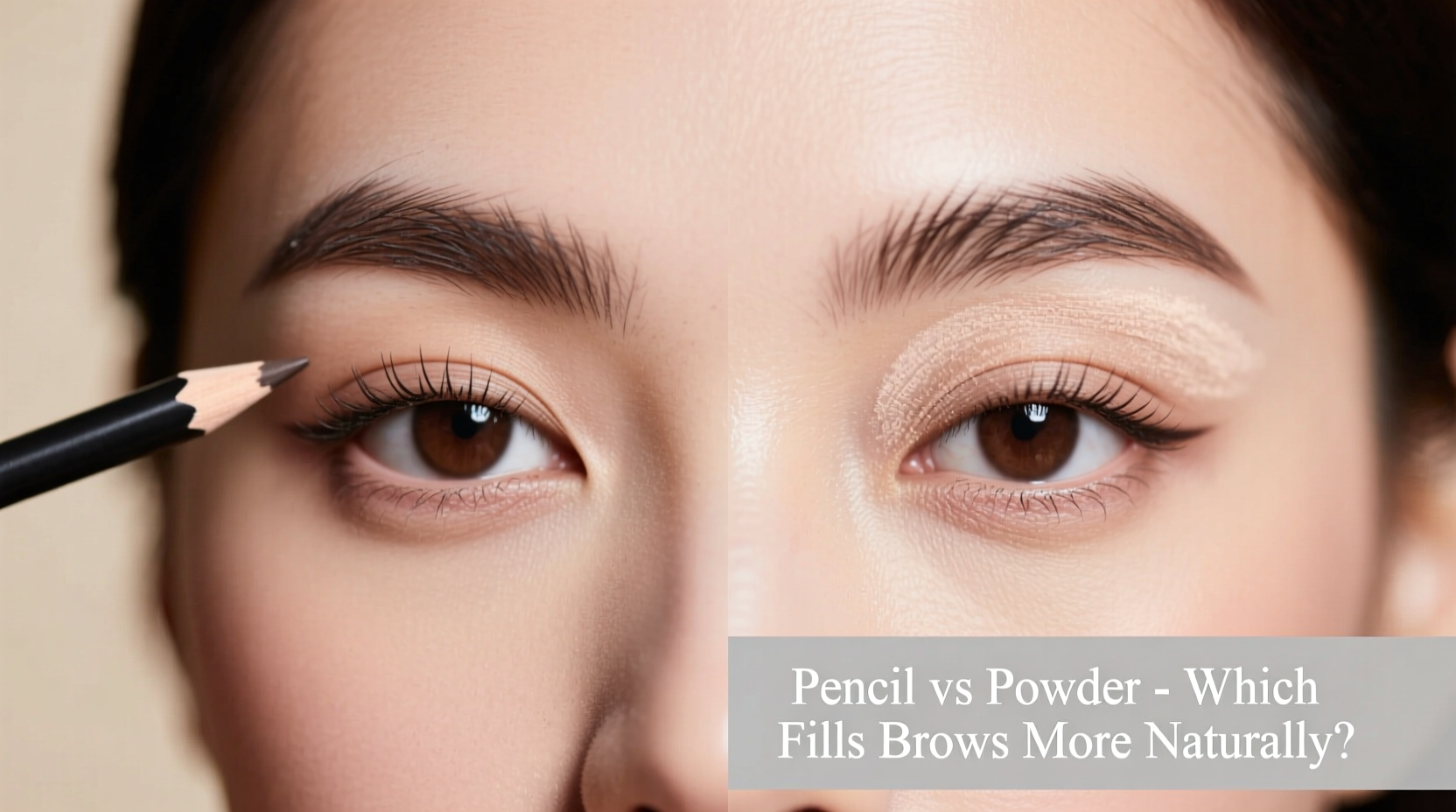
The core difference between eyebrow pencils and powders lies in their formulation and resulting texture. Eyebrow pencils are typically wax- or polymer-based, designed to deliver precise strokes. Their firm consistency allows users to draw individual hair-like marks, making them ideal for defining sparse areas where structure is missing. However, this same precision can become a drawback if applied too heavily, leading to unnatural, tattooed appearances—especially on oily skin or mature complexions with fine lines.
In contrast, eyebrow powders are finely milled pigments, usually applied with an angled brush or sponge tip. They diffuse softly into the skin and existing brow hairs, creating a diffused, shadow-like effect that closely resembles naturally shaded brows. Because powder doesn’t sit on top of the skin as starkly as pencil, it tends to integrate better with real hair, avoiding harsh outlines. It’s particularly effective for softening sharp edges left by other products or toning down overly dark brows.
When Precision Matters: The Case for Eyebrow Pencils
Pencils excel in situations requiring targeted correction. If you have noticeable gaps—especially near the start or tail of the brow—a well-sharpened pencil allows you to place tiny strokes exactly where needed. Dermatologists and makeup artists alike note that this level of control benefits those with very sparse brows due to over-plucking, hormonal changes, or medical conditions like alopecia areata.
Modern formulas have improved dramatically. Many pencils now include conditioning agents such as panthenol or jojoba oil, reducing drag and flakiness. Some dual-ended versions pair a pencil with a spoolie or gel tint, enhancing realism through blending. Still, success depends heavily on technique. Applying short, upward flicks that follow the direction of natural hair growth produces the most convincing illusion of fullness.
“A good brow pencil isn’t about outlining—it’s about mimicking nature stroke by stroke.” — Lila Chen, Celebrity Makeup Artist
Softness and Depth: Why Powder Wins for Diffused Realism
Powder, whether pressed or loose, provides a matte, airbrushed finish that closely matches how light interacts with real eyebrow hair. Unlike pencils, which deposit concentrated pigment, powders disperse evenly across the surface, allowing for seamless gradation from front to back. This makes them ideal for replicating the natural gradient of brows—lighter at the inner corner, denser toward the arch.
Application usually involves dipping an angled brush into the product, tapping off excess, and pressing (not dragging) the pigment along the brow line. The pressure deposits color primarily into the skin beneath the hairs while lightly coating the strands themselves, creating dimension. For those with oily lids or combination skin, powder also resists smudging better than creamy pencils when set with a clear gel.
Another advantage is versatility. A single neutral taupe or ash brown powder can be adjusted in intensity simply by changing brush pressure or adding water to create a creamier paste. This adaptability makes powder suitable not only for sparse brows but also for unifying mismatched natural tones or correcting discoloration from aging.
Comparative Performance: Pencil vs Powder Across Skin Types
Skin condition plays a crucial role in determining which product performs better. Oily skin can cause pencil lines to feather or bleed into fine lines around the eyes, undermining the clean look. In contrast, powder adheres well to slightly damp skin and sets cleanly, especially when used with a setting spray or primer.
Dry or mature skin poses different challenges. Pencils may catch on flakes or emphasize texture if not properly prepped, while powder applied without hydration can appear chalky. In these cases, a hydrating base—like a lightweight facial oil or balm—smooths the canvas before powder application, preventing patchiness.
| Skin Type | Eyebrow Pencil Performance | Eyebrow Powder Performance |
|---|---|---|
| Oily | Moderate – prone to smudging; requires setting | High – long-lasting, blends well |
| Dry | Good with prep – may skip without moisture | Fair – can look dry if not prepped |
| Combination | Variable – works best on dry zones | Excellent – balances shine and texture |
| Mature | Risky – can settle into lines | Best choice – soft focus effect |
Step-by-Step Application Guide for Natural-Looking Brows
Regardless of your chosen product, technique determines outcome. Follow this universal method to achieve believable fullness:
- Prep the brows: Cleanse the area and groom hairs upward with a spoolie. If using powder on dry skin, apply a pea-sized amount of facial oil and let absorb for one minute.
- Map the shape: Use a brow pencil or concealer wand to mark the ideal start, arch, and tail based on facial symmetry.
- Fill sparse areas:
- With pencil: Hold vertically and use short, upward strokes to simulate hairs. Focus only on empty zones.
- With powder: Load an angled brush, tap off excess, and press pigment into the skin beneath sparse regions. Blend outward.
- Blend and soften: Use a clean spoolie to brush through the brows, dispersing pigment and breaking up any hard lines.
- Set the look: Apply a clear brow gel to lock everything in place without adding shine or stiffness.
Realistic Example: Transforming Thin Brows with the Right Product
Sarah, a 34-year-old teacher with fair skin and light brown hair, struggled for years with patchy brows caused by chronic over-tweezing in her teens. She initially relied on a mechanical brow pencil, believing its precision would solve her issues. However, she found the results looked “drawn-on” and obvious, especially during video calls. After consulting a makeup artist, she switched to a matte taupe brow powder applied with a stiff angled brush.
Within days, her routine changed. Instead of outlining and filling, she lightly pressed color into the lower half of her brows, focusing on building density beneath the existing hairs. She finished with a tinted gel to lift and separate. The result was visibly fuller brows that colleagues complimented as “so natural—you must have great genetics.” Sarah now uses pencil only for a single defining stroke at the tail, relying on powder for 90% of her coverage.
Expert Insight: What Professionals Recommend
Makeup artists who work regularly with clients ranging from brides to film actors consistently emphasize that powder offers superior blending capabilities for everyday wear. According to Marcus Reed, a lead artist at a New York-based beauty studio:
“Powder gives you control over softness. You can build it slowly, match it to skin tone, and make it disappear into the hair. Pencil has its place—but it’s a tool for detail, not foundation.”
This philosophy reflects a broader industry shift toward “skin-first” makeup, where products enhance rather than mask. In editorial and red-carpet settings, powders are frequently layered under pencils to add depth before fine lines are added on top. For average users seeking low-maintenance, realistic results, starting with powder and supplementing with pencil only where necessary proves most effective.
Checklist: Choosing Between Pencil and Powder
- ✅ Do you have large, visible gaps needing definition? → Lean toward pencil.
- ✅ Is your skin oily or acne-prone? → Powder will last longer and resist transfer.
- ✅ Are you aiming for a soft, makeup-free look? → Powder provides a more diffused finish.
- ✅ Do you already have decent brow hair but lack density? → Powder enhances what’s there.
- ✅ Are you new to brow makeup? → Powder is more forgiving and easier to correct.
- ✅ Do you prefer long-wear and minimal touch-ups? → Consider waterproof pencil or powder with setting spray.
Frequently Asked Questions
Can I use both eyebrow pencil and powder together?
Absolutely. Many professionals recommend combining both: use powder first to establish a soft base and even out color, then use a pencil to add fine strokes in sparse areas. Finish by brushing through with a spoolie to unify the layers.
Which lasts longer throughout the day?
Waterproof or waxy pencils generally last longer without fading, especially on oily skin. However, powder can achieve similar staying power when set with a clear brow gel or finishing spray. Without setting, powder may fade slightly by midday.
Does powder work for very sparse brows?
Yes, but with limitations. Powder adds overall tone and shadow, which helps create the illusion of fullness. However, it cannot replicate isolated hairs in completely bare areas. For total bald spots, pairing powder with micro-strokes from a pencil or considering semi-permanent options may be necessary.
Final Recommendation: Prioritize Softness Over Structure
While eyebrow pencils offer unmatched precision, powder consistently delivers a more natural appearance when filling sparse brows. Its ability to blend seamlessly with skin and hair, adapt to various skin types, and provide a soft-focus effect makes it the preferred choice for achieving “no-makeup” brows that still look intentional and polished.
That said, dismissing pencils entirely overlooks their value in targeted correction. The smartest approach combines both: use powder as your base layer for volume and shading, then reserve pencil for strategic detailing. This hybrid method leverages the strengths of each product while minimizing their weaknesses.
Ultimately, the most natural result isn’t determined by the product alone—it’s shaped by technique, patience, and understanding your unique brow needs. Whether you reach for a compact of matte powder or a slim retractable pencil, remember that subtlety is the hallmark of authenticity.




 浙公网安备
33010002000092号
浙公网安备
33010002000092号 浙B2-20120091-4
Comments
No comments yet. Why don't you start the discussion?