
Keychains are more than just functional—they’re personal. Whether you're drawn to the soft charm of a fabric bow or the polished shine of an enamel design, what matters most is how well it holds up over time. While aesthetics play a role in selection, longevity often determines whether a keychain stays on your ring or ends up in a drawer. Fabric bow keychains offer whimsy and texture, while enamel keychains deliver colorfast durability and structure. But when subjected to daily jostling, pocket friction, and environmental exposure, which truly lasts longer?
This article breaks down the structural integrity, material resilience, and wear patterns of both types, backed by real-world use cases and expert insights. If you’ve ever had a favorite keychain fray, crack, or fade within weeks, understanding these differences can help you make smarter choices.
Material Composition and Build Quality
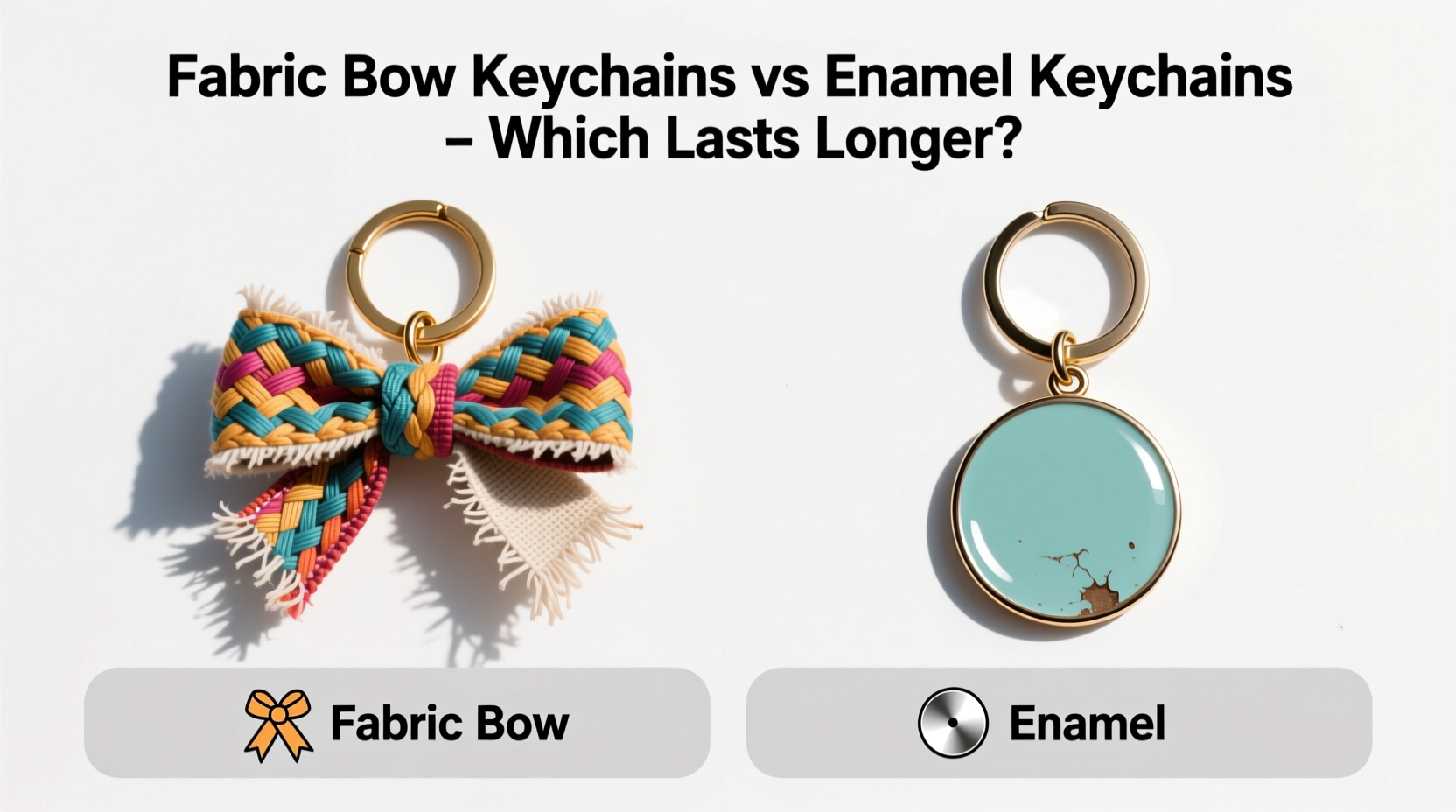
The lifespan of any accessory begins with its materials. Fabric bow keychains are typically made from cotton, polyester, or satin ribbons tied into bows and attached to a metal ring via stitching or glue. The fabric may be printed, dyed, or embellished, but the core vulnerability lies in the textile’s exposure to abrasion and moisture.
In contrast, enamel keychains are constructed from a metal base—usually zinc alloy or stainless steel—coated with layers of colored enamel. This enamel is fired at high temperatures, creating a glass-like surface that resists fading and scratching. The attachment mechanism is almost always a solid metal split ring or lobster clasp, minimizing weak points.
From a manufacturing standpoint, enamel keychains undergo a more industrial process, resulting in tighter tolerances and greater consistency. Fabric bows, even when handmade with care, rely on softer materials that degrade faster under mechanical stress.
Durability Under Daily Use
Keys live in dynamic environments: jammed in pockets, dropped on pavement, tossed into bags. Each interaction subjects the keychain to friction, impact, and occasional moisture. How each type fares under this treatment reveals significant differences.
Fabric bows are prone to fraying at the ribbon ends, especially if they lack heat-sealed or folded hems. Repeated rubbing against denim or leather surfaces causes pilling and fiber separation. Moisture—like rain or sweat—can lead to staining, mildew, or dye bleed, particularly in lower-quality fabrics. Over time, the bow loses shape, the colors dull, and the attachment thread weakens.
Enamel keychains, however, resist most of these issues. Their hard surface doesn’t absorb liquids, resists UV fading, and maintains its shape indefinitely unless subjected to extreme force. Minor scratches may appear over years, but they rarely compromise functionality. The metal backing also prevents bending or warping.
“Enamel is one of the most durable decorative finishes for small accessories. It’s designed to last decades under normal conditions.” — Daniel Ruiz, Industrial Designer & Accessory Engineer
Comparison Table: Fabric Bow vs Enamel Keychains
| Feature | Fabric Bow Keychains | Enamel Keychains |
|---|---|---|
| Material | Cotton, polyester, satin | Metal base with vitreous enamel coating |
| Scratch Resistance | Low – fibers snag easily | High – enamel is scratch-resistant |
| Water Resistance | Low – absorbs moisture, may mildew | High – non-porous surface repels water |
| UV/Fade Resistance | Moderate to low – dyes fade in sunlight | High – enamel retains color for years |
| Average Lifespan (daily use) | 3–8 months | 3–7+ years |
| Maintenance Needs | Frequent inspection, spot cleaning | Minimal – wipe clean as needed |
Real-World Case Study: Six-Month Wear Test
To evaluate longevity, two identical key rings were prepared with one fabric bow and one enamel keychain each. Both were used daily by individuals with active lifestyles—one commuting via public transit, the other working in construction.
After three months, the fabric bow showed visible fraying at the ribbon tips, minor discoloration from hand oils, and slight loosening at the stitch point. By month five, the bow had flattened and lost its volume. At six months, one of the ribbons detached completely during use.
The enamel keychain, meanwhile, retained its original appearance. It accumulated light scuffs but no structural damage. The colors remained vibrant, and the attachment ring showed no signs of wear. After six months, it functioned as well as on day one.
This outcome aligns with broader consumer feedback: fabric bows are appreciated for their tactile appeal but rarely survive beyond a year with consistent use. Enamel pieces, while less “soft” in feel, consistently outlast their textile counterparts.
Care Tips to Maximize Longevity
While enamel keychains are inherently durable, proper care extends the life of any accessory. For those who love fabric bows, smart maintenance can delay deterioration.
- For fabric bows: Gently hand-wash with mild soap and air dry flat. Trim loose threads early to prevent unraveling.
- For enamel keychains: Wipe with a damp cloth to remove dirt. Avoid dropping on hard surfaces to prevent chipping.
- Rotate keychains periodically to reduce constant friction on a single item.
- Store spare keychains in a dry, ventilated container away from humidity.
Checklist: Choosing a Long-Lasting Keychain
- ✅ Assess the attachment method—metal loops are stronger than stitched fabric ties.
- ✅ Look for sealed or heat-cut edges on fabric bows to resist fraying.
- ✅ Choose enamel keychains with thick, smooth coatings—thin enamel chips easily.
- ✅ Consider size and bulk—larger fabric bows catch more friction.
- ✅ Prioritize function: if durability is key, lean toward enamel or metal designs.
Frequently Asked Questions
Can fabric bow keychains be repaired once they start fraying?
Minor fraying can be managed by trimming loose threads and applying a small amount of fabric sealant to the edges. However, once stitching fails or the bow structure collapses, repair is usually impractical.
Do enamel keychains chip or break?
High-quality enamel keychains are resistant to chipping under normal use. However, a hard impact—like being stepped on or dropped onto concrete—can cause cracks or flakes, especially on thinner pieces. Thicker, kiln-fired enamel offers better protection.
Are there hybrid options that combine fabric and enamel?
Yes—some designers attach small enamel charms to fabric bows. While this adds visual interest, the fabric portion remains the weak link in terms of longevity. The enamel element will last, but the bow may still degrade over time.
Final Verdict: Which Lasts Longer?
The evidence is clear: enamel keychains last significantly longer than fabric bow keychains under everyday conditions. Their resistance to water, UV light, scratches, and mechanical wear gives them a functional lifespan measured in years, not months. Fabric bows, while charming and expressive, are inherently fragile due to their textile composition and construction.
That said, longevity isn’t the only factor. Some users prefer the softness and handmade character of fabric bows, accepting shorter lifespans for aesthetic or sentimental reasons. For those who prioritize practicality—especially in work, travel, or outdoor settings—enamel is the superior choice.




 浙公网安备
33010002000092号
浙公网安备
33010002000092号 浙B2-20120091-4
Comments
No comments yet. Why don't you start the discussion?