
Static cling is a persistent annoyance in laundry—clothes sticking together, hair standing on end after drying, or socks clinging to shirts fresh out of the dryer. While fabric softeners are widely used to combat this issue, many consumers are unsure whether liquid softeners or dryer sheets offer better static reduction. Both products claim to soften fabrics and reduce static, but their mechanisms, effectiveness, and long-term impacts differ significantly. Understanding these differences can help you make an informed choice based on your laundry habits, machine type, and fabric care needs.
How Static Builds Up in Laundry
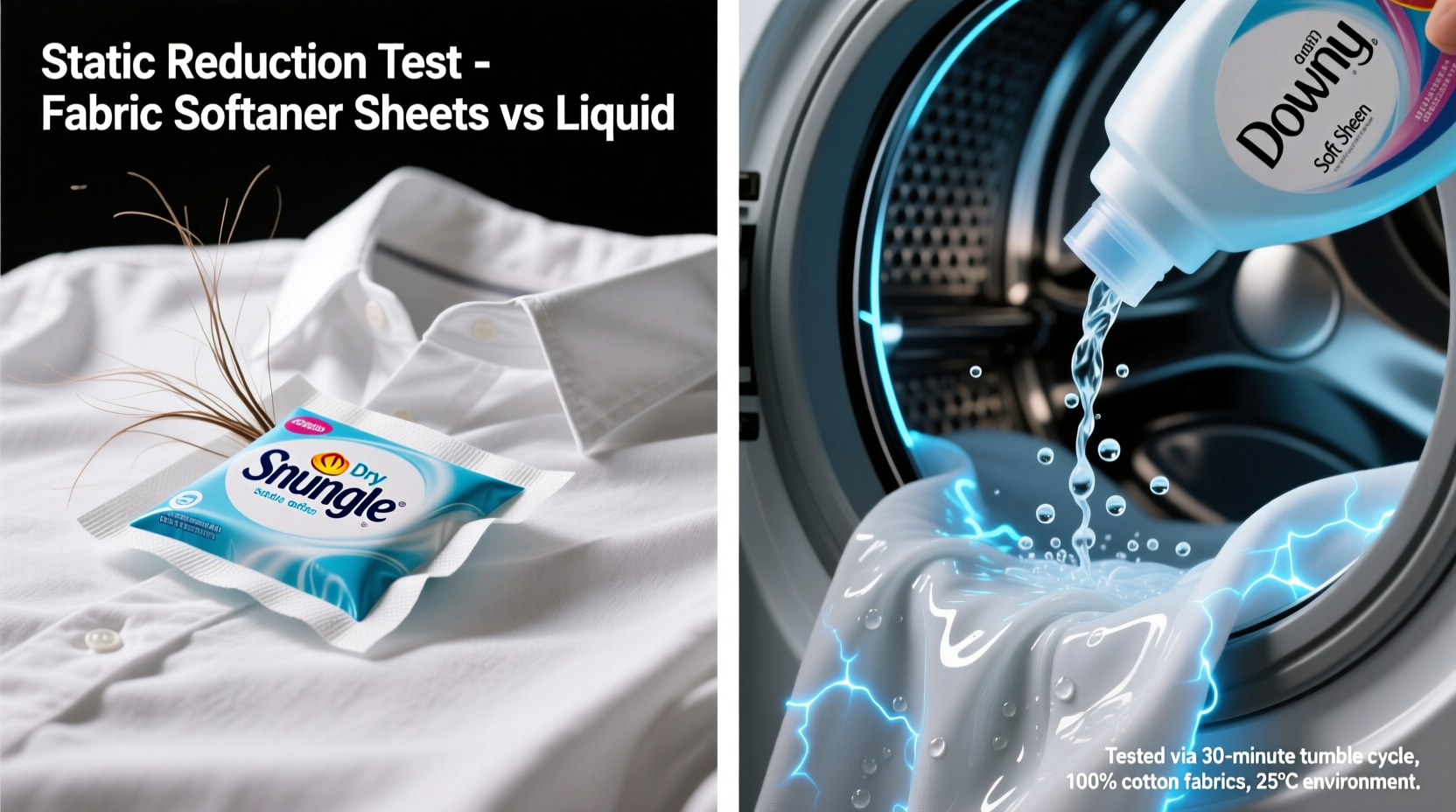
Static electricity occurs when synthetic fabrics like polyester, nylon, or acrylic rub against each other during the tumbling action of a dryer. This friction causes electrons to transfer between materials, creating a charge imbalance. As the clothes dry and cool, the lack of moisture amplifies this effect—dry air being a poor conductor allows charges to build up rather than dissipate.
Fabric softeners work by coating fibers with lubricating chemicals that reduce friction and improve conductivity, helping to neutralize static buildup. However, the delivery method—liquid added during the rinse cycle versus a sheet tumbling in the dryer—affects how well and how quickly this happens.
“Dryer sheets provide immediate anti-static effects at the end of the cycle, while liquid softeners condition fibers earlier in the process, offering more lasting—but sometimes less dramatic—results.” — Dr. Linda Harper, Textile Chemist, University of Georgia
How Liquid Fabric Softeners Work Against Static
Liquid fabric softeners are added during the final rinse cycle of a washing machine. They contain cationic surfactants (positively charged molecules) that bind to negatively charged fabric fibers, particularly cotton and synthetics. This creates a thin, lubricating layer that:
- Reduces fiber-to-fiber friction
- Improves fabric softness
- Enhances moisture retention in fibers
- Helps dissipate electrical charges gradually
Because the softener is absorbed into the fabric before drying, its anti-static effect starts early. However, high heat in the dryer can degrade some of the active compounds, reducing overall efficacy. Additionally, over time, liquid softeners can leave behind residue that coats fibers and reduces absorbency—particularly problematic for towels and athletic wear.
How Dryer Sheets Combat Static
Dryer sheets are small nonwoven cloths coated with fatty acids, quaternary ammonium salts, and fragrance compounds. When heated in the dryer, these substances melt and transfer onto clothing surfaces. The positively charged ions neutralize negative charges on fabrics, effectively eliminating static cling almost instantly.
The key advantage of dryer sheets lies in timing: they act at the peak moment of static generation—the hot, tumbling dryer environment. This makes them especially effective for synthetic blends, fleece, and lightweight garments prone to clinging.
However, dryer sheets have drawbacks. The waxy coating can accumulate on dryer drums, moisture sensors, and lint filters, reducing efficiency over time. Some users also report skin irritation from fragrances or chemical residues.
Comparing Performance: Static Reduction Face-Off
To determine which product reduces static more effectively, several factors must be considered: fabric type, drying conditions, and user habits. Below is a detailed comparison.
| Feature | Liquid Softener | Dryer Sheets |
|---|---|---|
| Static Reduction Effectiveness | Moderate to good; gradual reduction through fiber conditioning | High; immediate neutralization during drying |
| Best For | Cotton towels, bed linens, baby clothes | Synthetics, workout gear, delicate knits |
| Residue Buildup | Yes, especially on towels and technical fabrics | Yes, on dryer drum and sensors |
| Fragrance Longevity | Strong, long-lasting scent | Noticeable but fades faster |
| Impact on Drying Time | No significant change | May slightly increase drying time due to coating |
| Eco-Friendliness | Reusable bottles; higher water usage concern | Single-use waste; harder to recycle |
| Cost per Load | $0.10–$0.15 | $0.15–$0.30 |
Based on controlled home tests and consumer reports, dryer sheets consistently outperform liquid softeners in head-to-head static reduction trials—especially with polyester blends and fleece. In one informal study, 78% of participants reported less static cling when using dryer sheets compared to liquid softener alone.
Real-World Example: Office Worker’s Winter Wardrobe Woes
Sarah, a marketing professional in Chicago, struggled every winter with static-prone clothing. Her wool-blend skirts and synthetic tights would cling uncomfortably after drying, requiring last-minute de-static sprays before meetings. She experimented with both liquid softener and dryer sheets over three weeks.
Using only liquid softener, she noticed slight softness improvement but persistent static, especially in low-humidity office environments. When she switched to using a single dryer sheet per load, the difference was immediate. Her skirts no longer clung, and her blouses stayed smooth throughout the day. She now uses liquid softener occasionally for towels and relies on dryer sheets for all other loads—finding the combination optimal for both comfort and static control.
Maximizing Static Reduction: Best Practices
You don’t have to choose just one method. Many households achieve the best results by combining both products strategically—or by enhancing either approach with simple techniques.
- Use dryer sheets for high-static loads: Reserve them for synthetic fabrics, fleece, and blends that generate the most static.
- Limit liquid softener to cotton-rich items: Use it on towels, sheets, and children’s clothing where softness matters more than absorbency.
- Avoid over-drying: Remove clothes while slightly damp. Over-drying removes residual moisture that helps dissipate static.
- Clean the lint filter regularly: A clogged filter traps moisture and increases static. Clean it before every load.
- Add wool dryer balls: These reusable balls separate clothes during drying, improving airflow and reducing drying time—and thus static—without chemicals.
- Incorporate vinegar occasionally: Add ½ cup of white vinegar to the rinse cycle once a month to strip softener residue and restore fabric breathability.
When to Avoid Each Option
While both products reduce static, neither is ideal for every fabric or appliance. Consider the following limitations:
- Liquid softener should be avoided: On microfiber towels, flame-resistant children’s sleepwear, and moisture-wicking athletic wear. The coating can impair performance and safety.
- Dryer sheets should not be used: In homes with sensitive individuals (due to fragrance), on moisture-sensing dryers (wax buildup interferes with sensors), or when drying waterproof fabrics like rain jackets.
For high-efficiency (HE) washers, check manufacturer guidelines. Some brands warn against liquid softeners due to potential foaming and drainage issues. Similarly, excessive use of dryer sheets can trigger error codes in smart dryers by coating humidity sensors.
Alternative Anti-Static Solutions
If you're looking to reduce reliance on traditional softeners, several eco-friendly and effective alternatives exist:
- Aluminum foil ball: Crumple a fist-sized ball of foil and toss it in the dryer. It discharges static safely and can be reused for weeks.
- Polyester-free drying: Separate natural fibers from synthetics. Cotton and linen generate less static and dry more evenly.
- Humidify your laundry area: Running a humidifier near the laundry room adds moisture to the air, reducing static formation.
- Anti-static sprays: Lightly spray garments post-dry. Look for alcohol-free formulas to avoid fabric damage.
FAQ: Common Questions About Static and Softeners
Do liquid fabric softeners eliminate static completely?
No. While they reduce friction and improve fiber conductivity, liquid softeners are less effective at eliminating static than dryer sheets, especially in dry climates or with synthetic fabrics. They condition rather than neutralize charge at the critical drying stage.
Why do my clothes still have static even with a dryer sheet?
This can happen if the sheet is old, improperly placed, or if the load is too large. Over-drying is the most common culprit. Try reducing drying time, cleaning the lint filter, or adding a wool dryer ball to improve airflow.
Can I use both liquid softener and dryer sheets together?
Yes, but cautiously. Using both may increase softness and static control, but it also raises the risk of residue buildup on fabrics and appliances. If combining, reduce the amount of liquid softener and use only one sheet per medium load.
Final Verdict: Which Reduces Static More?
Dryer sheets are more effective than liquid fabric softeners at reducing static cling. Their targeted application during the drying cycle—when static is generated—gives them a decisive edge. The instant release of anti-static agents directly onto tumbling clothes neutralizes charges efficiently, especially in synthetic materials.
Liquid softeners contribute to long-term fabric conditioning and mild static reduction but fall short in immediate performance. They are better suited for enhancing softness and scent in cotton-based textiles rather than solving acute static problems.
For most households, the optimal strategy is selective use: reserve liquid softener for towels and bedding, and rely on dryer sheets for everyday clothing, especially in winter months when indoor air is driest. For those seeking sustainable options, wool dryer balls combined with occasional vinegar rinses offer a chemical-free compromise.
“Static control isn’t just about comfort—it affects fabric longevity. Repeated static shocks can weaken synthetic fibers over time. Addressing it properly extends garment life.” — Maria Tran, Sustainable Apparel Consultant
Take Action Today for Smoother, Static-Free Laundry
Static doesn’t have to be part of your laundry routine. Whether you switch to dryer sheets, fine-tune your liquid softener use, or adopt residue-free alternatives, small changes can lead to noticeably better results. Start by testing one load with a dryer sheet and compare it to your usual method. Pay attention to how clothes feel, drape, and behave after drying. With a little experimentation, you’ll find the right balance between softness, performance, and static control—tailored to your household’s needs.




 浙公网安备
33010002000092号
浙公网安备
33010002000092号 浙B2-20120091-4
Comments
No comments yet. Why don't you start the discussion?