
When it comes to accessories that blend style with function, bow clips are a subtle yet impactful choice. Whether used in hair styling, bag closures, or fashion accents, the material of the bow clip—particularly fabric versus leather—plays a crucial role in how well it performs over time. For those who rely on these accessories daily, longevity, comfort, and appearance under regular wear are key concerns. While both materials offer distinct aesthetic advantages, their resilience in everyday conditions varies significantly. Understanding the structural, environmental, and maintenance-related differences between fabric and leather bow clips helps users make informed decisions that align with their lifestyle.
Durability: How Each Material Responds to Daily Wear
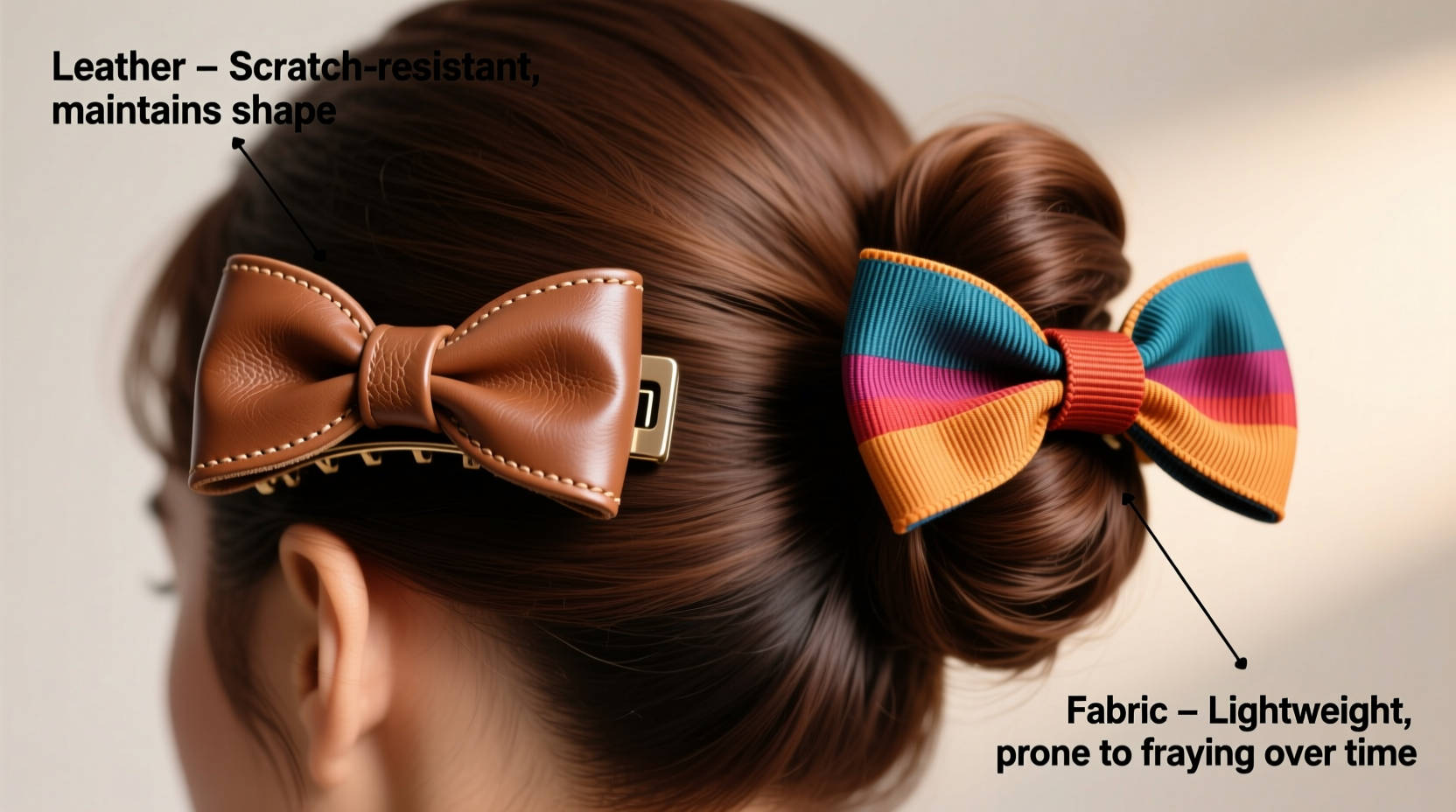
Fabric and leather react differently to friction, moisture, and physical stress—all common elements of daily use. Fabric bow clips, typically made from cotton, satin, polyester, or blends, provide softness and vibrant color options. However, repeated handling often leads to fraying at the edges, especially along folded seams or where the clip attaches. Over time, frequent exposure to hair products, sweat, or sunlight can cause fading, staining, or weakening of fibers. Lightweight fabrics may also lose shape after being compressed or bent during storage.
In contrast, leather—especially full-grain or top-grain varieties—is inherently more resilient. Its tightly woven fiber structure resists tearing and abrasion far better than most textiles. Leather maintains its form even after prolonged use and develops a natural patina rather than showing signs of deterioration like pilling or unraveling. When properly conditioned, leather remains flexible and less prone to cracking under stress. In high-contact applications such as hair accessories clipped and unclipped multiple times per day, leather generally outlasts fabric due to its tensile strength and resistance to deformation.
Maintenance Requirements Compared
Care routines directly influence how long a bow clip remains functional and attractive. Fabric clips require gentle cleaning methods; many cannot be machine washed without damaging the structure or adhesive used to attach them to the clip base. Spot cleaning with mild detergent is usually necessary, but this doesn’t always remove embedded oils or product buildup. Some fabrics absorb odors easily, making deodorizing a challenge without risking discoloration.
Leather demands different attention. It should never be submerged in water or cleaned with harsh chemicals. Instead, periodic wiping with a damp cloth followed by application of leather conditioner preserves suppleness and prevents drying. While this routine may seem more involved, it’s infrequent—typically every few months—and highly effective. Unlike fabric, leather does not trap odor as readily, and surface stains can often be buffed out or treated with specialized solutions.
“Leather’s longevity isn’t just about toughness—it’s about how it ages. With minimal care, it improves over time, whereas fabric tends to decline.” — Marcus Lin, Accessory Design Consultant
Environmental and Lifestyle Factors
The environment in which bow clips are used heavily influences material performance. In dry climates, fabric holds up reasonably well unless subjected to excessive sun exposure, which accelerates fading. In humid or coastal areas, however, fabric is vulnerable to mildew, especially if stored while still slightly damp. Sweat and salt air further contribute to degradation, particularly in hair accessories worn near the scalp.
Leather performs better across variable conditions, provided it's not left soaking wet. It tolerates moderate humidity and resists UV damage more effectively than dye-sensitive fabrics. That said, extreme heat (such as being left in a hot car) can cause leather to stiffen or crack, so mindful storage remains essential. For individuals with active lifestyles—frequent travelers, athletes, or parents managing daily routines—leather’s ability to endure accidental drops, spills, and temperature shifts makes it a more dependable option.
Comparison Table: Fabric vs Leather Bow Clips
| Feature | Fabric Bow Clips | Leather Bow Clips |
|---|---|---|
| Durability (Daily Use) | Moderate – prone to fraying and fading | High – resistant to tearing and deformation |
| Moisture Resistance | Poor – absorbs liquids, risks mildew | Good – repels light moisture when conditioned |
| Color Retention | Varies – dyes fade with UV exposure | Excellent – develops rich patina over time |
| Cleaning Difficulty | High – limited washability, spot clean only | Low – wipe and condition periodically |
| Lifespan (With Care) | 6–18 months | 2–5 years or more |
| Eco-Friendliness | Higher (if natural fibers) | Lower (animal-based, tanning impact) |
Real-World Example: A Stylist’s Experience
Jessica Reed, a professional hairstylist based in Austin, TX, uses bow clips daily for client styling and personal wear. Over two years, she rotated between fabric and leather versions for behind-the-scenes work. After six months, nearly all her fabric bows showed visible wear: loose threads, dulled colors, and weakened grips from repeated clipping. The leather models, though initially stiffer, retained their shape and color with only monthly conditioning. “I was surprised how much longer the leather ones lasted,” she noted. “Even after salon product buildup, a quick wipe brought them back to life. The fabric ones just looked tired.” Her experience underscores the practical advantage of leather in high-use settings.
Step-by-Step Guide to Extending Bow Clip Lifespan
- Rotate Usage: Avoid relying on a single clip every day. Rotate between multiple pieces to distribute wear evenly.
- Clean Gently: For fabric, use a soft brush and mild soap solution. For leather, wipe with a barely damp cloth and allow to air-dry away from direct heat.
- Condition Leather Monthly: Apply a small amount of pH-balanced leather conditioner with a lint-free cloth, then buff lightly.
- Store Properly: Keep clips in a breathable pouch or drawer compartment. Avoid stacking heavy items on top.
- Avoid Extreme Conditions: Never leave clips in cars, near radiators, or in damp bathrooms for extended periods.
Choosing Based on Your Needs: A Quick Checklist
- ✅ Choose leather if you prioritize longevity, low maintenance, and consistent appearance.
- ✅ Choose fabric if you value soft texture, wide color variety, and eco-conscious materials (e.g., organic cotton).
- ✅ Opt for reinforced stitching and metal-backed clips regardless of material.
- ✅ Prioritize brands that specify material quality (e.g., “genuine leather” vs. “bonded leather”).
- ✅ Consider hybrid designs—leather exteriors with fabric accents—for balanced aesthetics and durability.
Frequently Asked Questions
Can I repair a frayed fabric bow clip?
Minor fraying can sometimes be stabilized with clear fabric glue or a small stitch using matching thread. However, once significant unraveling occurs, restoration is rarely effective. Prevention through gentle handling and proper storage is more reliable than repair.
Do leather bow clips stretch over time?
Leather itself doesn’t stretch significantly in the way elastic does, but repeated bending at stress points (like fold lines) can lead to creasing or micro-tears. High-quality leather with proper backing minimizes this risk. Conditioning helps maintain flexibility without deformation.
Are vegan leather bow clips as durable as real leather?
Most vegan leathers (polyurethane or PVC-based) are less breathable and more prone to peeling or cracking within 1–2 years of daily use. While improvements in bio-based alternatives are emerging, they still generally fall short of full-grain leather in long-term resilience.
Final Thoughts: Making the Right Choice for Everyday Use
While fabric bow clips offer charm and versatility, leather consistently proves superior in enduring the rigors of daily wear. Its resistance to physical stress, ease of maintenance, and graceful aging process make it the preferred choice for those who value lasting quality. That said, personal preference, ethical considerations, and intended use case matter. Someone seeking seasonal flair might embrace fabric’s disposability, while a minimalist focused on sustainability will lean toward well-made leather that lasts for years.
Ultimately, the best accessory is one that aligns with both your lifestyle and values. By understanding the strengths and limitations of each material, you invest not just in appearance—but in performance that stands the test of time.




 浙公网安备
33010002000092号
浙公网安备
33010002000092号 浙B2-20120091-4
Comments
No comments yet. Why don't you start the discussion?