
Choosing the right backdrop is one of the most critical yet underrated decisions in photography. Whether you're shooting portraits, product photos, or editorial content, your backdrop sets the tone. Two of the most common options—fabric and paper—are often pitted against each other. While both have their place, understanding their differences in appearance, durability, and professional impact can significantly influence your final image quality and long-term investment.
Aesthetic Impact: Which Looks More Professional?
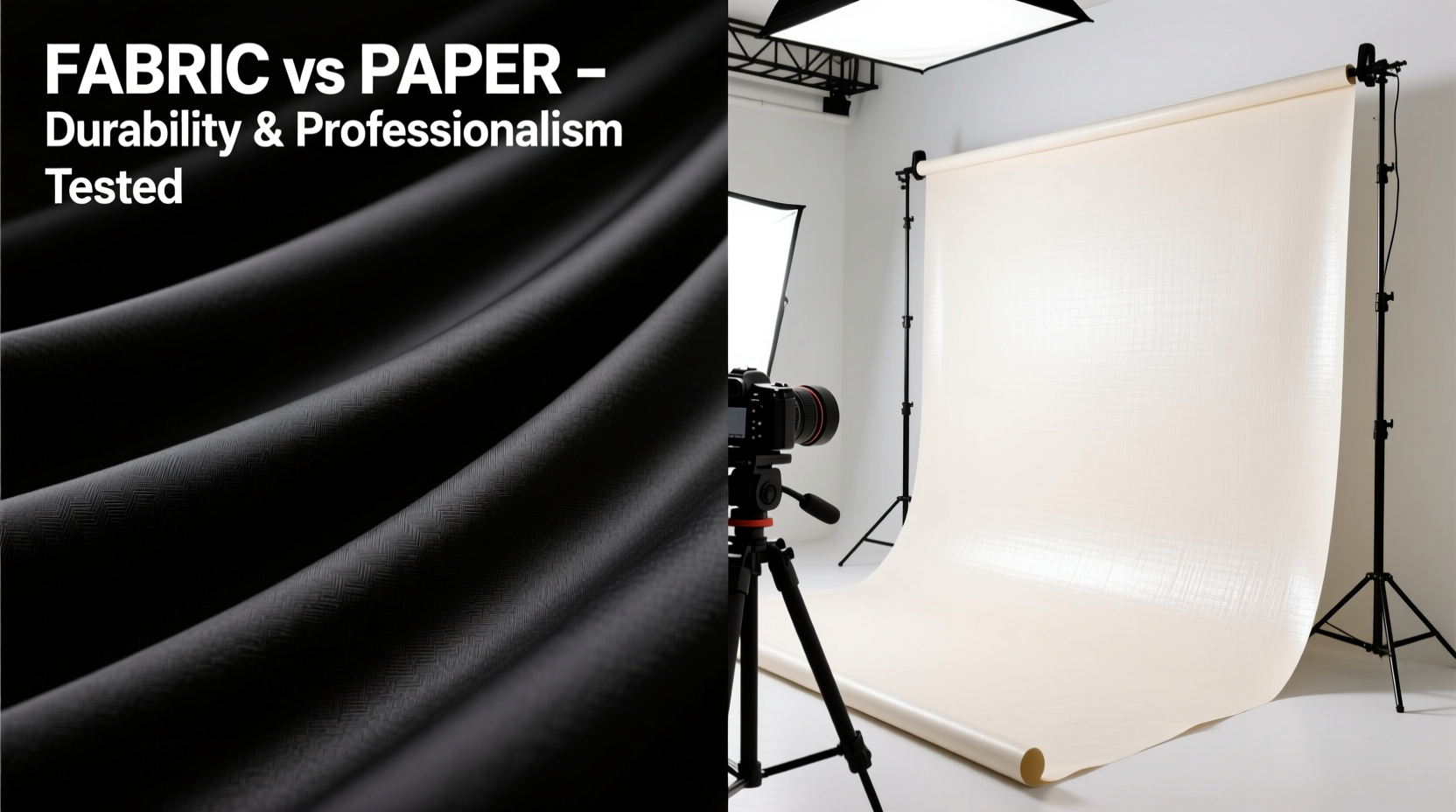
The perceived professionalism of a backdrop hinges on texture, consistency, and how it interacts with light. Paper backdrops, typically seamless rolls made from kraft or vinyl-coated paper, offer a clean, uniform surface. This makes them ideal for studio environments where minimalism and precision are key—think e-commerce product shots or headshots with solid colors.
Fabric backdrops, usually made from muslin, cotton-poly blends, or canvas, bring depth and character. Their subtle weave adds dimension, especially under directional lighting. When properly lit, fabric backdrops create soft gradients and elegant shadows, lending an artistic, high-end feel to portraits and fashion photography.
“Fabric elevates the mood of a shoot. It doesn’t just serve as a background—it becomes part of the story.” — Lena Torres, Commercial Portrait Photographer
That said, poorly maintained fabric can look frayed or wrinkled, instantly undermining professionalism. Conversely, crumpled or torn paper appears sloppy and unpolished. So while fabric has greater aesthetic potential, its success depends heavily on care and presentation.
Durability and Longevity: What Lasts Longer?
When evaluating lifespan, fabric clearly outperforms paper. High-quality cotton or polyester fabric backdrops can last years with proper care—even decades if stored correctly and used indoors. They’re washable, repairable, and resistant to minor scuffs and creases.
Paper backdrops, by contrast, are inherently disposable. Even heavy-duty 9-weight paper is prone to tearing, creasing, and staining. Once damaged, there’s no repair option. Most photographers replace paper backdrops every few months, depending on usage frequency.
If sustainability and cost-efficiency matter, fabric wins hands down. Although the initial price is higher, the per-use cost drops significantly over time. Paper may seem economical upfront, but recurring replacements add up—both financially and environmentally.
Real Example: Studio Workflow Comparison
Consider two photographers: Maya uses premium muslin backdrops for her boutique portrait studio. She owns five hand-painted fabrics that she rotates monthly. After two years, they still look vibrant after gentle machine washing and careful folding.
Jason, shooting product photos daily, relies on seamless paper. He goes through a 10-foot roll every three weeks due to spills, tears, and dust accumulation. In two years, he’s gone through over 30 rolls—spending more than Maya did on all her fabric combined.
Both achieve professional results, but Maya’s setup proves more sustainable and cost-effective in the long run.
Practical Use Cases: Where Each Excels
Understanding context helps determine the best choice:
- Paper backdrops shine in controlled environments where consistency and sterility are paramount—medical product photography, catalog shoots, or chroma key setups needing perfect color uniformity.
- Fabric backdrops excel in creative genres like maternity, fine art portraiture, or lifestyle shoots where texture and atmosphere enhance storytelling.
Fabric also handles outdoor use better. Unlike paper, which degrades quickly in wind, humidity, or direct sunlight, tightly woven fabrics can withstand mild outdoor conditions when used with proper support.
Checklist: Choosing the Right Backdrop for Your Needs
- Will I use this backdrop frequently or occasionally?
- Do I need absolute color consistency (e.g., white balance-critical work)?
- Am I shooting indoors or outdoors?
- Is budget a constraint over the next 12–24 months?
- Can I commit to regular cleaning and storage maintenance?
Side-by-Side Comparison: Fabric vs Paper Backdrops
| Feature | Fabric Backdrops | Paper Backdrops |
|---|---|---|
| Lifespan | 2+ years with care | Weeks to months |
| Cost Over Time | Lower (long-term) | Higher (replacement costs) |
| Texture & Depth | Rich, dimensional | Flat, uniform |
| Wrinkle Resistance | Moderate (requires ironing) | Poor (prone to creasing) |
| Eco-Friendliness | High (reusable, washable) | Low (single-use) |
| Portability | Good (foldable or rollable) | Excellent (lightweight roll) |
| Setup Speed | Moderate (may need steaming) | Fast (clip and go) |
| Repairability | Possible (stitching, patching) | None |
Maintenance and Care: Maximizing Lifespan
To get the most value from your investment, follow these steps based on material type:
Fabric Backdrop Care Routine
- After each use: Shake out dust and inspect for stains.
- Monthly: Machine wash cold on gentle cycle (if label allows) or spot-clean with mild detergent.
- Drying: Air dry flat or hang—never tumble dry, as heat can shrink or warp fibers.
- Storage: Fold loosely with acid-free tissue between layers or roll on a tube to prevent permanent creases.
- Before shoot: Steam or iron on low heat to remove wrinkles.
Paper Backdrop Best Practices
- Always unroll and re-roll in the opposite direction before mounting to reduce curling.
- Use clamps or a backdrop stand with smooth edges to avoid punctures.
- Keep away from moisture and sharp objects.
- Trim only with clean scissors—jagged cuts lead to faster tearing.
- Store vertically in a dry cabinet to prevent warping.
“Treat paper like printer paper—functional, temporary, and fragile. Treat fabric like a garment—something that ages gracefully with care.” — David Kim, Studio Equipment Manager
FAQ: Common Questions Answered
Can I use fabric backdrops for product photography?
Yes, especially textured products like jewelry, clothing, or artisan goods. Just ensure the fabric color complements the item and doesn’t distract. Avoid overly patterned fabrics for minimalist branding shots.
Are paper backdrops recyclable?
Standard kraft paper backdrops are technically recyclable if uncontaminated by ink, makeup, or adhesives. However, mixed-material vinyl-coated papers are not. Check local recycling guidelines before disposal.
Do fabric backdrops fade over time?
All fabrics fade with prolonged UV exposure. To minimize this, avoid direct sunlight and store rolled or folded in a dark, dry space. Hand-painted designs may require touch-ups after several years.
Final Verdict: Which Should You Choose?
If your priority is long-term value, visual richness, and sustainability, fabric backdrops are the superior choice. They age well, adapt to diverse styles, and reflect a photographer who invests in craft. While they demand more upkeep, the payoff in image depth and cost savings is substantial.
Paper remains unmatched for fast-paced, high-volume studios needing flawless, consistent backgrounds. Its disposability ensures hygiene and color accuracy—critical in commercial and medical imaging.
Many top photographers keep both. They use paper for client sessions requiring sterile simplicity and reserve fabric for personal projects or premium shoots where atmosphere matters.




 浙公网安备
33010002000092号
浙公网安备
33010002000092号 浙B2-20120091-4
Comments
No comments yet. Why don't you start the discussion?