
Puffiness around the eyes and jawline is a common concern, often caused by fluid retention, poor circulation, or lack of lymphatic drainage. As interest in at-home facial sculpting grows, two tools have risen to prominence: the jade roller and the gua sha. Both are rooted in traditional Chinese medicine and promise depuffing, lifting, and improved skin tone. But when it comes to reducing puffiness specifically, which one delivers superior results? The answer isn’t straightforward—it depends on technique, consistency, and individual skin needs.
This article breaks down the science, mechanics, and real-world effectiveness of both tools, offering a clear comparison to help you make an informed decision.
Understanding Facial Puffiness and Lymphatic Drainage
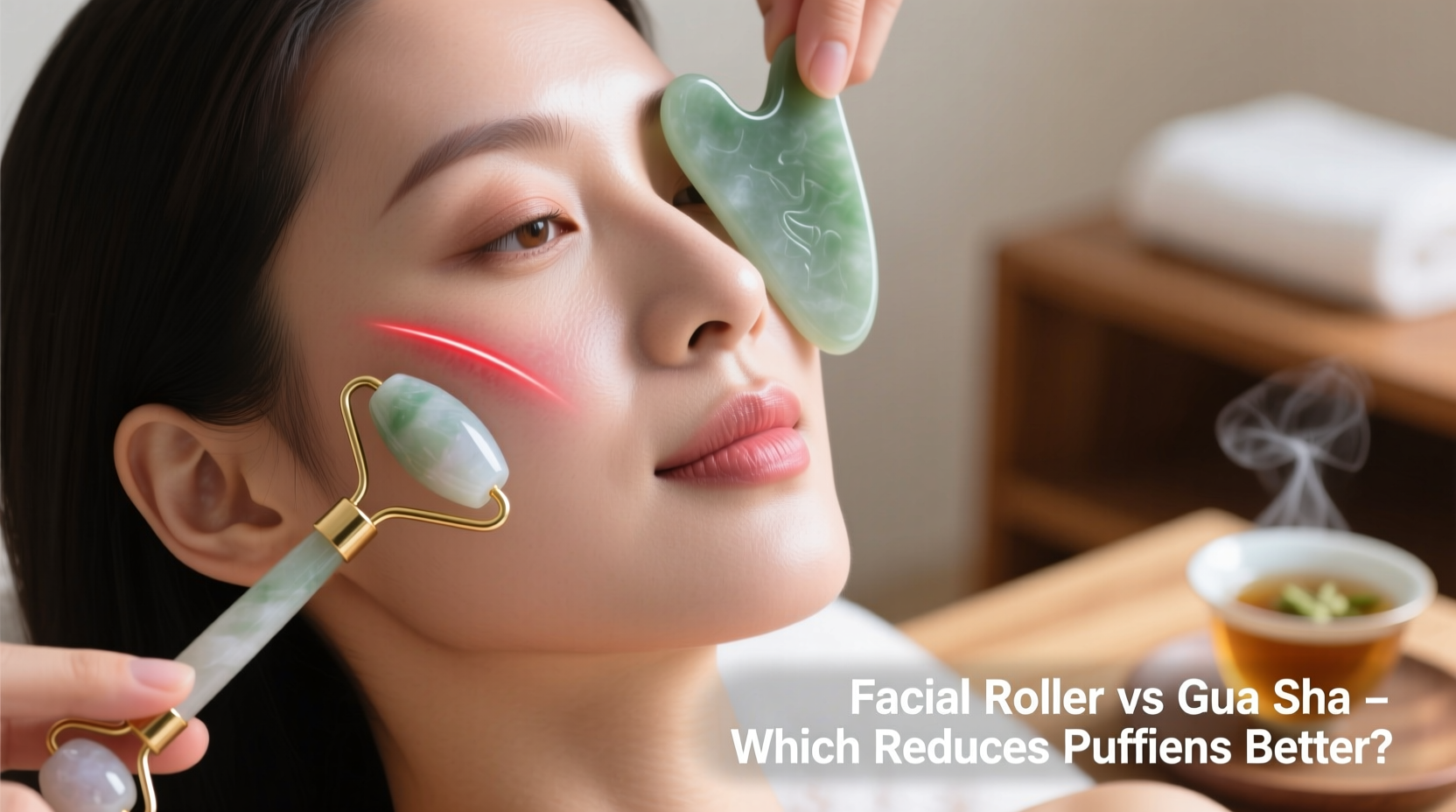
Facial puffiness occurs when excess fluid accumulates in the tissues, particularly under the eyes and along the jaw. This can be due to dehydration, high salt intake, allergies, hormonal fluctuations, or simply gravity pulling fluids downward overnight. The body’s lymphatic system, responsible for removing waste and excess fluid, moves slowly—especially in the face, where there are no active pumping muscles.
Lymphatic drainage massage helps stimulate this system manually, encouraging fluid to move toward lymph nodes in the neck and collarbone. When done correctly, this reduces swelling, enhances circulation, and promotes a more contoured appearance. Both facial rollers and gua sha tools are designed to support this process—but they do so in different ways.
“Facial massage with either tool can significantly reduce morning puffiness when performed consistently, especially when paired with proper skincare and hydration.” — Dr. Lin Zhao, Board-Certified Dermatologist and Integrative Skin Health Specialist
How Facial Rollers Work: Simplicity Meets Soothing Relief
The facial roller—typically made of jade, rose quartz, or stainless steel—features a small handle with a rolling stone on each end (one large for cheeks and forehead, one small for under-eyes). It's used by gliding over cleansed skin in upward and outward motions.
The cooling effect of the stone provides immediate relief from puffiness. Cold constricts blood vessels and tightens the skin temporarily, making it ideal for quick morning routines. The rolling motion applies gentle pressure that encourages fluid movement, though its repetitive, linear strokes offer less targeted manipulation than other methods.
Rollers are beginner-friendly, easy to clean, and require minimal technique. However, their rigid shape limits adaptability to facial contours, especially along the jawline and cheekbones.
Gua Sha: Precision Sculpting Through Targeted Pressure
Gua sha, meaning “scraping” in Chinese, uses a flat, curved tool—often made of jade, bian stone, or nephrite—to apply controlled pressure along specific meridians and muscle groups. Unlike the roller’s passive glide, gua sha involves deliberate, directional strokes that lift, sculpt, and stimulate deeper tissue layers.
When used for puffiness, gua sha excels because of its ability to follow lymphatic pathways precisely. Practitioners use the edge of the tool to press and glide along the jaw, under the chin, up the sides of the nose, and around the orbital bone—areas where fluid tends to pool. These movements create micro-stimulation that activates lymph flow more effectively than broad rolling.
Studies suggest that consistent gua sha practice improves microcirculation and may reduce edema (fluid buildup) over time. A 2020 pilot study published in *Complementary Therapies in Clinical Practice* found that participants who practiced facial gua sha three times per week reported visible reductions in facial swelling and improved skin elasticity after four weeks.
Key Gua Sha Techniques for Reducing Puffiness
- Neck Release: Start at the base of the neck, using downward strokes to open drainage pathways.
- Jawline Sweep: Place the curved edge under the chin and sweep backward along the jaw toward the lymph nodes behind the ears.
- Under-Eye Lift: Use the smaller curve gently from the inner corner of the eye outward, avoiding excessive pressure.
- Forehead Detox: Move from the center of the forehead outward and upward to prevent fluid accumulation.
Facial Roller vs Gua Sha: A Direct Comparison
| Feature | Facial Roller | Gua Sha |
|---|---|---|
| Best For | Quick depuffing, cooling relief, beginners | Deep lymphatic drainage, facial contouring, long-term toning |
| Technique Complexity | Low – simple rolling motions | Medium to high – requires knowledge of anatomy and stroke direction |
| Time Required | 2–5 minutes | 8–15 minutes |
| Cooling Effect | High – especially when chilled | Moderate – depends on material and storage |
| Effect on Puffiness | Immediate but temporary reduction | Gradual, cumulative improvement with consistent use |
| Skin Tightening | Mild | Noticeable over time due to increased circulation |
| Durability & Maintenance | High – easy to clean and store | High – but edges require careful handling |
While both tools reduce puffiness, gua sha offers more comprehensive results due to its targeted approach. The roller provides instant gratification—ideal for mornings when you wake up with puffy eyes—but gua sha builds lasting improvements through disciplined use.
Mini Case Study: Two Weeks of Morning Depuffing Routines
Amy, a 34-year-old marketing executive, struggled with chronic under-eye puffiness exacerbated by late nights and high stress. She decided to test both tools over two weeks.
In Week 1, she used only a chilled jade roller every morning for five minutes. She noticed mild improvement in eye swelling, but results faded by midday. In Week 2, she switched to a nephrite gua sha tool, following a structured lymphatic routine for 10 minutes daily. By Day 5, her jawline appeared more defined, and under-eye puffiness decreased noticeably—even without refrigerating the tool.
“I was skeptical at first,” Amy said, “but the gua sha really made a difference. My skin feels firmer, and I don’t need as much concealer anymore.”
Her experience reflects a broader trend: while rollers offer comfort and convenience, gua sha delivers measurable changes when applied with correct technique.
Step-by-Step Guide: Effective Morning Routine for Puffiness Reduction
Follow this 10-minute routine to maximize depuffing results using either tool (gua sha recommended for best outcomes):
- Prep Your Skin (1 min): Cleanse your face and apply 4–5 drops of facial oil or serum. This ensures smooth gliding and prevents tugging.
- Chill the Tool (optional): If using a roller, take it from the fridge. Gua sha can also be cooled, but avoid extreme temperature shifts.
- Open Drainage Pathways (2 min): Begin at the base of the neck. Use gentle downward strokes from the collarbone to encourage lymph flow. Repeat 5 times per side.
- Treat the Jawline (3 min): With the gua sha edge or roller, start under the chin and sweep backward along the jaw toward the ears. Apply light-to-medium pressure. Repeat 7–10 times per side.
- Address Under-Eye Area (2 min): Using the smaller end or curve, glide from the inner corner of the eye outward, following the orbital bone. Do not press hard—this area is delicate.
- Finish with Forehead and Cheeks (2 min): Move from the center of the forehead outward, then from the nose outward along the cheekbones toward the ears.
- Final Press (1 min): Lightly press the tool against key lymph nodes (below ears, side of neck) to help flush fluid.
Perform this routine daily for at least two weeks to assess visible changes.
Common Mistakes That Reduce Effectiveness
- Using too much pressure: Especially with gua sha, aggressive scraping can irritate the skin or cause micro-tears.
- Incorrect stroke direction: Always move toward lymph nodes (down the neck, out toward ears). Going against the grain traps fluid.
- Skipping prep products: Dry rubbing causes friction and damages the skin barrier.
- Inconsistent use: Neither tool works overnight. Results build over time with regular practice.
- Ignoring overall health: No amount of facial massage compensates for poor sleep, dehydration, or high sodium intake.
FAQ: Your Top Questions Answered
Can I use both a facial roller and gua sha?
Yes—and many skincare experts recommend combining them. Use the gua sha first for targeted sculpting and lymphatic work, then finish with a chilled roller for soothing, cooling relief. This dual approach maximizes both immediate and long-term benefits.
How soon will I see results for puffiness?
With daily use, most people notice reduced morning puffiness within 5–7 days. More defined contours and lasting improvements typically appear after 3–4 weeks. Consistency is key.
Are there any skin types that should avoid these tools?
Those with active acne, rosacea flare-ups, or sensitive, inflamed skin should proceed with caution. Avoid pressing directly on breakouts or irritated areas. Consult a dermatologist if you have vascular conditions like severe couperose.
Expert Insight: Why Technique Matters More Than the Tool
“The tool itself is secondary to how you use it. I’ve seen patients get better results with a spoon than a $100 jade roller because they understood lymphatic pathways. Learn the anatomy, apply consistent pressure in the right directions, and you’ll see change—regardless of whether it’s a roller or gua sha.” — Dr. Mei Tran, Holistic Aesthetic Physician
This insight underscores a critical point: mastery of method outweighs material value. While gua sha is inherently more versatile, even a basic roller can yield benefits when used properly.
Checklist: Optimizing Your Anti-Puffiness Routine
- ✅ Perform facial massage in the morning for best depuffing results
- ✅ Use a facial oil or serum to minimize friction
- ✅ Focus on lymphatic drainage zones: neck, jaw, under-eyes
- ✅ Apply light to moderate pressure—skin should not turn red
- ✅ Move in upward and outward directions, ending at lymph nodes
- ✅ Clean your tool weekly with mild soap and water
- ✅ Stay hydrated and reduce nighttime salt intake to support results
- ✅ Be patient—visible changes take 2–4 weeks of consistent use
Conclusion: Choosing What Works for Your Lifestyle and Goals
When comparing facial roller vs gua sha for reducing puffiness, gua sha emerges as the more effective option due to its precision, anatomical alignment with lymphatic flow, and capacity for deeper tissue engagement. However, the facial roller remains a valuable tool—particularly for those seeking a fast, calming ritual with instant visual improvement.
Your choice should align with your commitment level and desired outcomes. If you're looking for a quick refresh, the roller suffices. If you want lasting depuffing, contouring, and skin vitality, gua sha is worth the learning curve.




 浙公网安备
33010002000092号
浙公网安备
33010002000092号 浙B2-20120091-4
Comments
No comments yet. Why don't you start the discussion?